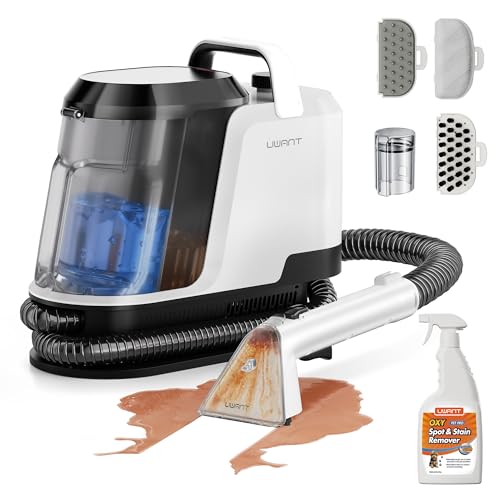
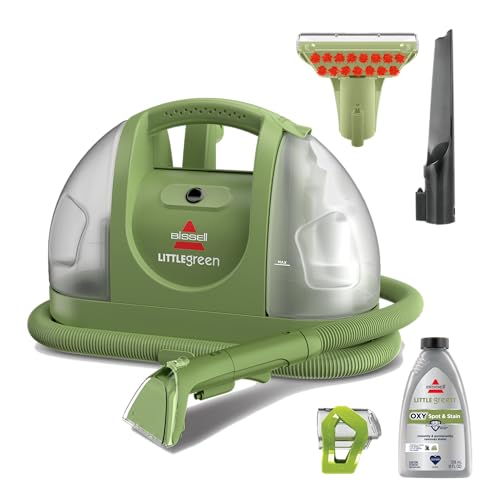
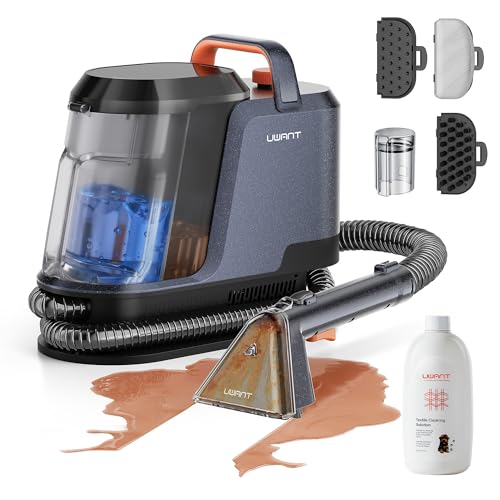
Complete Sofa Maintenance Guide
Cleaning, protection, and repair strategies to keep your sofa looking new and lasting longer — saving you thousands in premature replacement costs
START LEARNINGPhanMarket Philosophy: A quality sofa is a significant investment — often the most-used piece of furniture in your home. Proper maintenance doesn't just preserve appearance; it extends lifespan by 5-10 years, maintains hygiene for your family, and protects the comfort and support you originally paid for. This guide covers every aspect of sofa care so you can protect your investment with confidence.
Most sofa owners wait until visible damage appears before taking action — stains set permanently, cushions lose their shape beyond recovery, and leather cracks deepen beyond repair. The truth is, 90% of sofa deterioration is preventable with a consistent maintenance routine tailored to your specific material and usage patterns.
Whether you own a leather sofa that needs conditioning, a fabric sofa collecting pet hair, or a delicate velvet piece prone to crushing, the principles in this guide will help you create an effective care schedule. We break down every maintenance category — from weekly vacuuming to annual deep cleaning — so you know exactly what to do, when to do it, and which products actually work.
The payoff is substantial: a well-maintained sofa retains its resale value, avoids costly professional repairs, and continues to provide the comfort and aesthetic appeal that made you choose it in the first place.

Routine Cleaning by Material Type
The most important rule of sofa maintenance is that different materials require completely different cleaning approaches. Using a leather cleaner on fabric can leave oily residue. Using water on velvet can cause watermarks. Using the wrong technique on microfiber can permanently alter its texture. Understanding your material is the foundation of effective care. If you are unsure about your sofa's material composition, check the tag underneath the cushions — it typically contains a care code (W, S, W-S, or X) that tells you exactly which cleaning agents are safe.

Fabric Sofas
Fabric is the most common upholstery material and the most forgiving to clean, but it's also the most absorbent. Regular vacuuming with an upholstery attachment removes dust, crumbs, and pet hair before they embed into fibers. For spot cleaning, check the care code first — "W" means water-based cleaners are safe, "S" requires solvent-based products, and "X" means vacuum only. A fabric sofa should be deep-cleaned every 12-18 months using a steam cleaner or extraction method.
Full fabric cleaning guide →
Leather Sofas
Leather requires a two-step process: cleaning followed by conditioning. Dust weekly with a soft cloth — never use a vacuum directly on leather, as the nozzle can scratch the surface. Every 2-3 months, apply a pH-balanced leather cleaner to remove body oils and dirt, then follow immediately with a leather conditioner to restore moisture and flexibility. Understanding leather grades helps you choose the right products — full-grain leather needs heavier conditioning than bonded leather.
Full leather cleaning guide →
Velvet Sofas
Velvet is the most delicate upholstery and demands the gentlest approach. Never rub velvet — instead, use a soft-bristle brush to lift the pile and remove dust in the direction of the nap. For spills, blot immediately with a clean, dry cloth without pressing. Water-based cleaning should be done sparingly and always on the entire panel to avoid watermarks. A velvet sofa benefits from professional cleaning annually to maintain its luxurious texture and prevent matting.
Full velvet cleaning guide →
Microfiber Sofas
Microfiber is surprisingly one of the easiest materials to maintain, largely due to its tight weave that resists staining. The secret weapon is rubbing alcohol — spray it on stains, let it sit briefly, then scrub with a soft-bristle brush in a circular motion. The alcohol evaporates quickly and won't leave watermarks. After cleaning, brush the entire area to restore the uniform nap direction. A microfiber couch is an excellent choice for families with children because of its inherent stain resistance.
Full microfiber cleaning guide →Look for the manufacturer's tag under the cushions or on the underside of the sofa. You'll find codes like "W" (water-safe), "S" (solvent-only), "W-S" (water or solvent), or "X" (vacuum only — no liquids). Following these codes prevents irreversible damage. If the tag is missing, test any cleaning product on a hidden area first, such as the back or bottom edge of the sofa.
Stain Removal Essentials
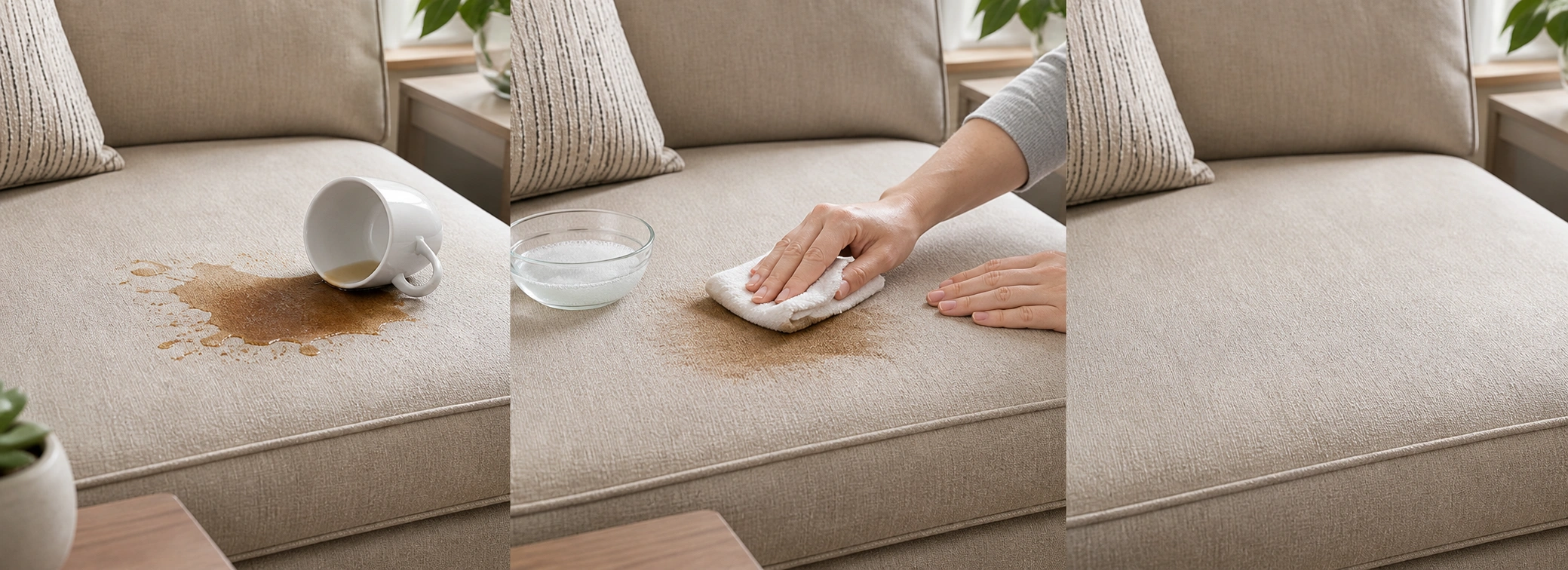
The single most important factor in stain removal is speed. The longer a substance sits on upholstery, the deeper it penetrates into fibers or pores, and the more likely it becomes permanent. Most common household stains can be removed entirely if treated within the first 30 minutes. After that window closes, success rates drop dramatically. Here's how to handle the most frequent offenders you'll encounter in daily life.
☕ Coffee & Tea
Blot immediately with a dry cloth. Mix 1 tablespoon of liquid dish soap with 2 cups of warm water. Dab the stain (never rub) working from the outside in. Rinse with a damp cloth and blot dry. For set-in stains on fabric, a white vinegar solution (1:1 with water) can break down tannins.
🍔 Grease & Food Oils
Sprinkle baking soda liberally over the stain to absorb surface oil. Let it sit for 15-30 minutes, then vacuum. For remaining residue, apply a small amount of dish soap directly and work it in with a soft brush. On leather, use a dedicated leather degreaser — never use dish soap, which strips natural oils.
🐶 Pet Accidents
Blot (never rub) to absorb as much liquid as possible. Apply an enzymatic cleaner specifically formulated for pet urine — these break down odor-causing proteins at a molecular level. Avoid ammonia-based products, which mimic urine scent and may encourage repeat marking. For persistent odors in pet-friendly sofas, consider pet-proof sofa covers as a preventive measure.
🎨 Ink & Marker
On fabric, apply rubbing alcohol to a cotton ball and dab gently — do not pour directly. On leather, use a cotton swab with rubbing alcohol, working in small sections. Test first on a hidden area, as alcohol can remove dye from some materials. For permanent marker, acetone-free nail polish remover may work on leather but should never be used on fabric.
🍻 Red Wine
Act fast: blot with a clean white cloth to absorb excess. Pour a small amount of white wine over the stain — the alcohol in white wine helps dissolve the red pigments. Then blot with a mixture of dish soap and hydrogen peroxide (3%). On leather, use a leather-specific stain remover immediately, as wine can permanently dye the surface.
🪨 Mud & Dirt
Let mud dry completely — attempting to clean wet mud pushes it deeper into fibers. Once dry, vacuum or brush off the crusted dirt. For remaining residue, use a fabric-safe upholstery cleaner. On leather, wipe with a damp cloth and follow with leather conditioner since water can strip moisture from the surface.
Bleach will permanently strip color from fabric and can cause irreversible discoloration on leather. Even on white sofas, bleach weakens fibers and can cause yellowing over time. Always opt for oxygen-based cleaners (like OxiClean) as a safer alternative for whitening and stain removal on upholstery.
For a comprehensive reference covering every stain type with material-specific solutions, visit our detailed stain removal guide. It includes printable quick-reference cards you can keep near your cleaning supplies for fast action when accidents happen.
Protection & Prevention
Preventive maintenance is always easier and cheaper than corrective maintenance. By applying protective treatments and establishing usage rules, you can dramatically reduce the frequency and severity of cleaning and repair tasks. Think of it as the difference between brushing your teeth daily versus visiting the dentist for a root canal — small, consistent effort prevents major problems.
Fabric Protection Spray
Fabric protection sprays like Scotchgard create an invisible barrier that repels liquids and prevents stains from bonding with fibers. When a spill occurs on treated fabric, it beads up on the surface instead of soaking in, giving you critical extra time to blot it away. Apply after every deep cleaning session for maximum effectiveness.
- Apply to clean, dry fabric only — spraying over dirt locks it in permanently
- Reapply every 6-12 months or after professional cleaning
- Test on a hidden area first to ensure no discoloration occurs
- Spray in light, even coats from 6 inches away — oversaturation causes stiffness
For homes with pets or young children, combining fabric protection with slipcovers provides double-layer defense against daily wear.
Complete fabric protection guide →
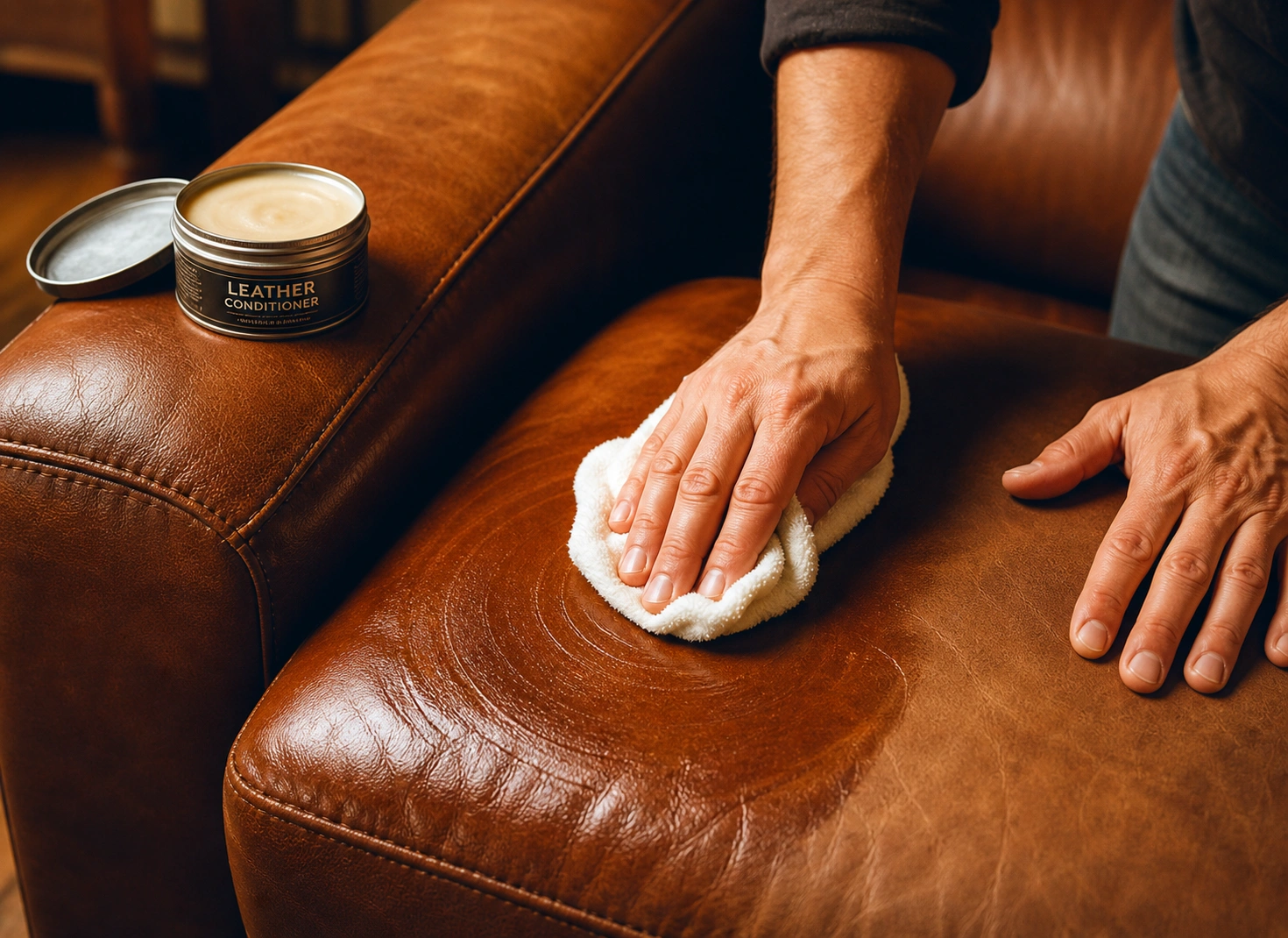
Leather Conditioning
Unlike fabric, leather is a natural material that loses its natural oils over time through evaporation and absorption of body oils. Without regular conditioning, leather becomes dry, stiff, and eventually cracks — damage that cannot be reversed. A good leather conditioner replenishes these oils, keeping the surface supple and resistant to cracking.
- Clean thoroughly before conditioning — dirt trapped under conditioner accelerates deterioration
- Apply with a soft cloth using circular motions, allowing 20 minutes for absorption
- Buff off excess with a clean cloth to prevent sticky residue
- Condition every 3-6 months for optimal results; more frequently in dry climates or heated rooms
The quality of conditioner matters — cheap products may contain petroleum distillates that actually damage leather over time. Invest in a product formulated for your specific leather grade.
UV Protection
Sunlight is one of the most destructive forces acting on your sofa. UV rays break down chemical bonds in both fabric dyes and leather finishes, causing fading, discoloration, and material degradation. A sofa placed near a window can show noticeable fading within just 6-12 months. This is especially critical for outdoor sofas and sofas in sun-drenched rooms.
- Apply UV-protective window film to reduce UV transmission by up to 99%
- Use curtains or blinds during peak sunlight hours (10 AM - 4 PM)
- Rotate your sofa 180 degrees every 3-6 months for even sun exposure
- Use throws or decorative pillows on sun-facing sides
- Choose UV-resistant fabric treatments for added protection

Common Repairs You Can Do Yourself
Not every problem requires a professional. Many common sofa issues can be resolved at home with basic tools and a bit of patience, saving you significant money on repair services. The key is addressing problems early — a small issue caught quickly is almost always fixable, while the same problem ignored for months may require professional intervention or full replacement. Before starting any repair, identify whether the issue relates to the cushion fill, frame, springs, or upholstery, as each requires a different approach.
🛠️ Fixing Sagging Cushions
Sagging is the most common complaint among sofa owners and typically results from foam compression over time. Start by rotating and flipping cushions weekly to distribute wear evenly. For moderate sagging, add a layer of high-density foam or polyester batting inside the cushion cover. For severe cases, replace the foam core entirely — it's inexpensive and can be cut to size at any upholstery shop. If you're dealing with persistent cushion issues, read our detailed guide to fixing sagging cushions or explore replacement cushion options.
Step-by-step repair guide →🪜 Repairing Sofa Frames
Frame issues usually manifest as creaking, wobbling, or uneven seating. The most common cause is loose joints — particularly at the arms and legs where stress is concentrated. Tighten all visible screws and bolts first. For loose dowel joints, apply wood glue, clamp the joint, and let it cure for 24 hours. For cracked wood, use wood epoxy filler. If the frame has extensive damage or the joints keep failing, it may indicate that the sofa wasn't built with quality frame materials to begin with. Learn more in our frame repair guide.
Step-by-step repair guide →🔔 Replacing Broken Springs
When you feel a hard spot or hear metallic noise when sitting, a sofa spring may have broken or detached. Turn the sofa upside down and remove the dust cover (the black fabric on the bottom). Locate the damaged spring — if it's simply detached, reconnect it with new hog rings using hog ring pliers. If the spring is broken, it must be replaced with an identical type. Match the gauge and coil count exactly, as mismatched springs create uneven support. See our full spring replacement tutorial for detailed instructions.
Step-by-step repair guide →🛡️ Repairing Leather Tears & Cracks
Small leather tears (under 2 inches) can be repaired with a leather repair kit that includes a sub-patch, adhesive, and color-matched compound. For cracks caused by dryness, intensive conditioning over several weeks can soften the leather enough to close minor cracks. For larger tears or deep gouges, a professional upholsterer is recommended. Prevent future damage by maintaining a regular conditioning schedule and keeping sharp objects away from the surface. Our leather tear repair guide covers every scenario with photo instructions.
Step-by-step repair guide →🔨 Fixing Loose Sofa Legs
Wobbly legs are usually caused by stripped screw holes or worn mounting plates. For stripped wood holes, fill them with wood glue and toothpicks, let it dry, then reinsert the screws. For metal mounting plates, replace the screws with slightly longer ones or add washers for better grip. If the leg itself is damaged, replacement sofa legs are widely available and typically use standard mounting hardware. For comprehensive troubleshooting, visit our guide to fixing loose sofa legs.
Step-by-step repair guide →🔌 Eliminating Squeaking Noises
Squeaking usually comes from three sources: metal springs rubbing against each other, loose frame joints, or legs scraping against flooring. First, isolate the sound by sitting in different positions. If it's springs, spray them with a silicone-based lubricant (not WD-40, which can attract dust). If it's joints, tighten all hardware and apply wax to rubbing surfaces. If it's floor contact, add felt pads under the legs. Persistent squeaking that doesn't respond to these fixes may indicate a more serious structural issue — see our troubleshooting guide for advanced solutions.
Troubleshooting guide →
Seasonal Maintenance Schedule
Consistency is what separates sofas that last 5 years from those that last 15. The following schedule provides a clear framework for maintaining any sofa type throughout the year. Adjust frequency based on your household — homes with pets, children, or heavy daily use should follow the more frequent end of each recommendation. This schedule works for all sofa types, from a compact 2-seater to a large sectional sofa.
| Task | Frequency | Details |
|---|---|---|
| Vacuum all surfaces & crevices | Weekly | Use upholstery attachment, focus on seams and under cushions where dust accumulates |
| Fluff, rotate & flip cushions | Weekly | Prevents uneven wear and extends cushion life by distributing pressure points |
| Spot clean spills immediately | As Needed | Blot (never rub) with appropriate cleaner for your material; speed is critical |
| Wipe down leather surfaces | Monthly | Use a damp soft cloth to remove dust and body oils; dry immediately after |
| Brush velvet & delicate fabrics | Monthly | Use a soft-bristle brush in the direction of the nap to maintain texture and remove debris |
| Check & tighten all hardware | Quarterly | Inspect legs, arm bolts, and frame joints; tighten any loose screws or bolts |
| Apply leather conditioner | Every 3-6 Months | Clean first, then condition; buff off excess to prevent sticky residue |
| Deep clean entire sofa | Every 12-18 Months | Steam clean for fabric; professional cleaning recommended for velvet and delicate materials |
| Apply fabric protection spray | Every 6-12 Months | Apply to clean, dry fabric after deep cleaning; reapply after professional cleaning |
| Full structural inspection | Yearly | Check frame integrity, spring condition, and overall structural stability |
Add recurring calendar events for quarterly and annual maintenance tasks. Most people intend to maintain their sofa but simply forget. A bi-weekly "flip cushions" reminder and a quarterly "check hardware" reminder take 5 minutes each but add years to your sofa's life. Include a link to our general cleaning guide in the reminder notes for quick reference.
Essential Maintenance Tools & Accessories
Having the right tools on hand means you can address issues immediately rather than waiting — and as we've emphasized, speed is the most important factor in sofa maintenance. Build a basic sofa care kit and store it in a nearby closet so it's always accessible when spills happen or maintenance is due.
Upholstery Vacuum Attachment
Removes dust, crumbs, and pet hair from fabric surfaces and crevices
Soft-Bristle Brush
Essential for velvet and microfiber; restores nap direction after cleaning
Microfiber Cloths
Lint-free cleaning and buffing for all materials; keep a stack of 5-10 on hand
Enzymatic Cleaner
Breaks down protein-based stains like pet accidents, blood, and food spills
Fabric Protection Spray
Creates invisible barrier against liquid stains; reapply after each deep clean
Leather Cleaner & Conditioner
pH-balanced two-step system for cleaning and moisturizing leather surfaces
Rubbing Alcohol (91%)
The secret weapon for microfiber stain removal; evaporates quickly without residue
White Vinegar Solution
Natural deodorizer and mild stain breaker; safe for most fabric care code "W" items
Baking Soda
Absorbs grease, neutralizes odors, and lifts stains from fabric when applied as a paste
Sofa Covers
Protect against daily wear, pet damage, and spills; explore options

When to Call a Professional
While DIY maintenance handles 80% of sofa care needs, certain situations require professional expertise. Attempting complex repairs beyond your skill level can cause more damage and increase the final repair cost. Here's a clear guide to help you decide when to tackle a project yourself and when to hire a professional upholsterer or cleaning service.
❌ Call a Professional When:
Large tears (over 3 inches) in leather or fabric that require re-upholstery of entire panels. Structural frame damage involving broken or split wood joints. Spring systems with multiple failures that indicate overall wear. Mold or mildew penetration that has reached the interior padding. Persistent odors that don't respond to surface cleaning. Any repair on a luxury sofa with high-value upholstery where mistakes are costly.
✅ DIY Is Fine When:
Small surface stains treated within 30 minutes of occurring. Minor cushion sagging addressed with foam inserts or rotation. Loose legs or hardware that simply need tightening. Single broken spring that can be replaced with a matching unit. Small leather scratches or surface cracks that respond to conditioning. Regular cleaning and protection tasks following material-specific guidelines. Adding protective covers or throws for prevention.
Before committing to a professional repair, get at least 2-3 quotes. Prices can vary dramatically between shops — we've seen quotes range from $150 to $600 for identical repairs. Ask about warranty on the repair work and whether they use original manufacturer materials. Sometimes the repair cost approaches the value of a new budget-friendly sofa, in which case replacement may be the smarter financial decision.
Ready to Explore More Sofa Care Topics?
Dive deeper into any maintenance category with our detailed, step-by-step guides — each written specifically for your sofa material and problem type.
EXPLORE ALL GUIDES