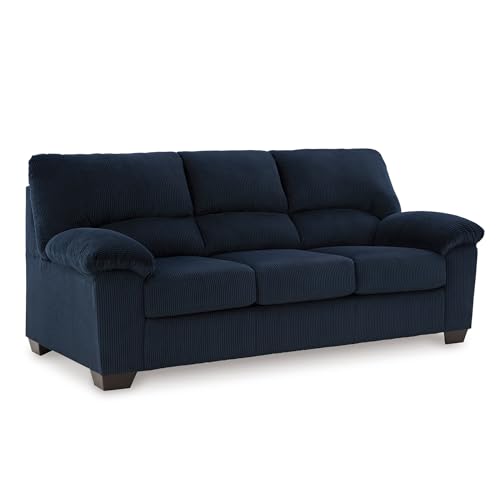
High Back vs Low Back Sofa: Which Is Right for You?
Back height is one of the most overlooked factors when buying a sofa. This guide breaks down comfort, ergonomics, style, and room fit so you can make a confident decision.
See the ComparisonWhy This Matters: Sofa back height directly affects how your spine is supported, how the sofa fits in your room visually, and whether you feel cozy or constrained. Choosing the wrong height can lead to discomfort, a cramped-looking space, or a sofa that feels out of place in your decor.
What Are High Back and Low Back Sofas?
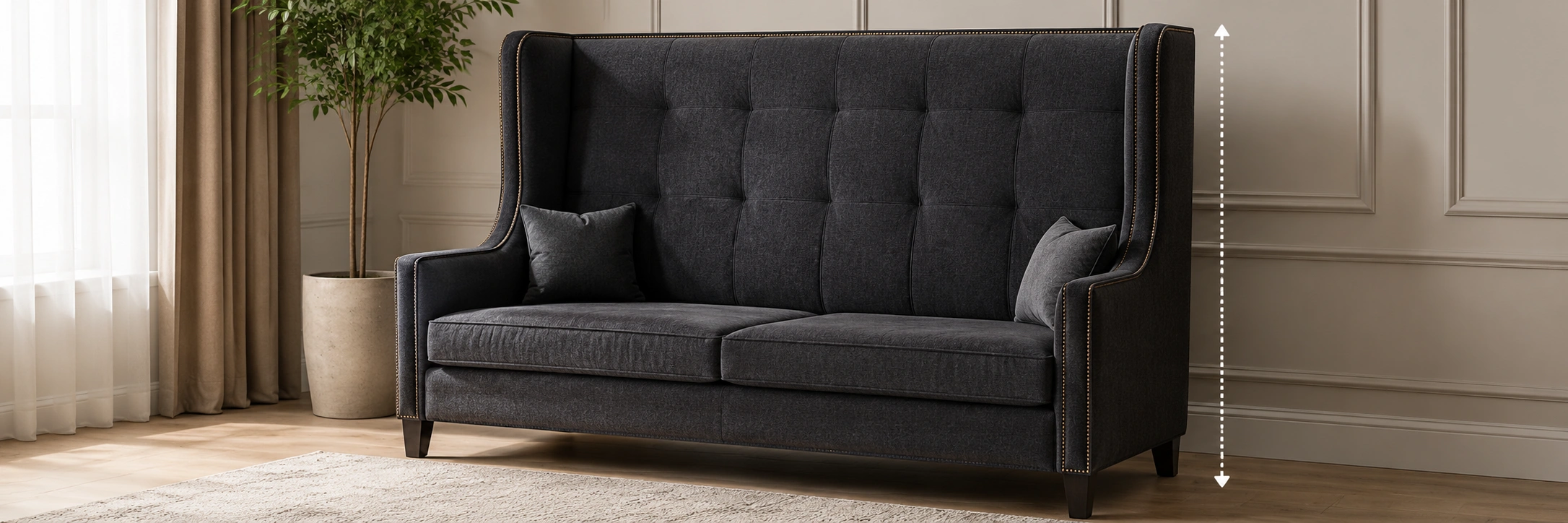
High Back Sofa
A high back sofa features a backrest that extends above the sitter's shoulders, typically measuring 36 to 44 inches from the floor to the top of the cushion. Some statement designs reach even higher. These sofas wrap around the upper body, providing support for the head, neck, and upper back.
Classic examples include the Chesterfield sofa with its deep button-tufted back, and many recliner sofas designed with built-in headrests.
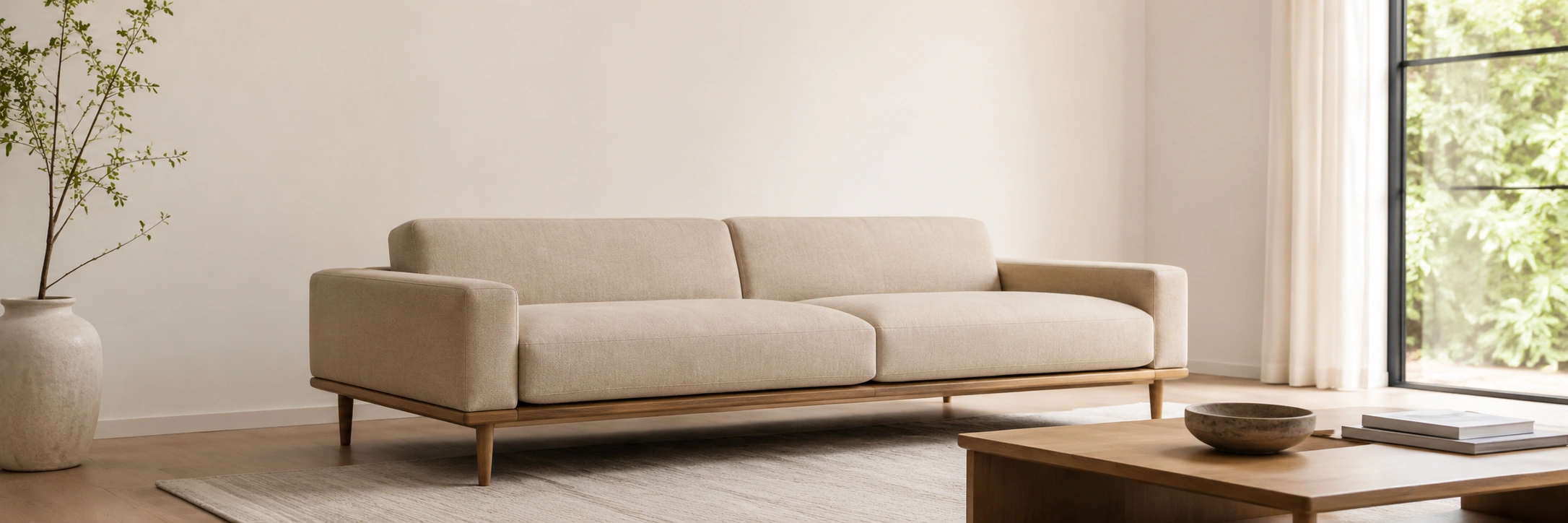
Low Back Sofa
A low back sofa has a backrest that sits at or below shoulder level when seated, usually measuring 26 to 33 inches from floor to back top. These designs prioritize an open, airy feel and are popular in modern sofa and minimalist interiors.
Low back sofas are common in contemporary designs, some floor sofas, and compact apartment-style pieces where visual lightness matters more than full-body enclosure.

Visual comparison: The tall backrest on the left cradles the entire upper body, while the low profile on the right keeps the room feeling open and spacious.
Head-to-Head Comparison
| Feature | High Back Sofa | Low Back Sofa |
|---|---|---|
| Back Height | 36–44+ inches | 26–33 inches |
| Neck & Head Support | Excellent – cradles the full upper body | Minimal – may need a separate pillow |
| Lumbar Support | Good, but depends on cushion design | Variable – often requires throw pillows |
| Best For Posture | Taller individuals, upright sitters | Shorter individuals, relaxed sitters |
| Visual Impact | Commanding, anchors the room | Light, airy, unobtrusive |
| Room Suitability | Large rooms, high ceilings | Small rooms, low ceilings |
| Style Vibe | Traditional, formal, luxurious | Modern, casual, minimalist |
| Cozy Factor | Very high – feels enclosed | Moderate – open and breezy |
| Price Range | Generally higher (more material) | Generally lower (less material) |
| Weight | Heavier, harder to move | Lighter, easier to rearrange |
| Versatility | Works as a room divider | Blends into any layout |
Pros and Cons
High Back Sofa
Advantages
- Superior head and neck support, reducing strain during long sitting sessions
- Creates a sense of enclosure and privacy, ideal for home theater rooms
- Makes a bold visual statement that anchors the seating area
- Better for tall individuals whose shoulders exceed low backrest height
- Can function as a subtle room divider in open-plan layouts
- Often associated with luxury sofa designs and premium materials
Disadvantages
- Can overwhelm small rooms and make ceilings feel lower
- Heavier and more difficult to move or rearrange
- May block views of windows, artwork, or architectural features behind it
- Typically more expensive due to additional frame and upholstery material
- Limited styling options if you prefer a clean, minimalist aesthetic
- Not ideal for spaces where you want visual flow between areas
Low Back Sofa
Advantages
- Makes rooms appear larger by keeping wall space and ceiling visible
- Lighter weight, easier to move and rearrange frequently
- Perfect for small living rooms and apartments with low ceilings
- Versatile styling that fits modern, Scandinavian, and minimalist interiors
- Does not obstruct views or conversation flow across the room
- Generally more affordable due to less material used
Disadvantages
- Limited upper back and neck support without additional cushions
- May feel less cozy or less "wrapped" for those who like a cocooned feeling
- Taller users may find the backrest too low for comfortable reclining
- Less impactful as a standalone statement piece in large rooms
- Can look undersized if placed against a tall, empty wall without accessories
- Not ideal for dedicated TV rooms where prolonged sitting is expected
Ergonomics & Back Support

How Back Height Affects Your Spine
The primary purpose of a sofa backrest is to support the natural curve of your spine. When the backrest is too low, your upper back and neck have no support, leading to muscle fatigue and slouching. When it's too high relative to your body, you may be forced into an unnatural forward position.
For people dealing with back pain, a high back sofa with proper lumbar support can make a significant difference. The key is that the backrest should reach at least to your shoulder blades, and ideally to the base of your skull, when sitting in your natural position.
However, back height alone isn't everything. The seat depth, cushion firmness, and spring system all work together with back height to determine overall ergonomic quality. A low back sofa with excellent lumbar cushioning can sometimes outperform a poorly designed high back.
Pro Tip: When test-sitting any sofa, sit in your most common posture for at least 5–10 minutes. Pay attention to whether your lower back feels supported and whether your neck muscles are relaxed or straining. Learn more about how to properly test sofa comfort before making a purchase.
Room Size & Ceiling Height Considerations
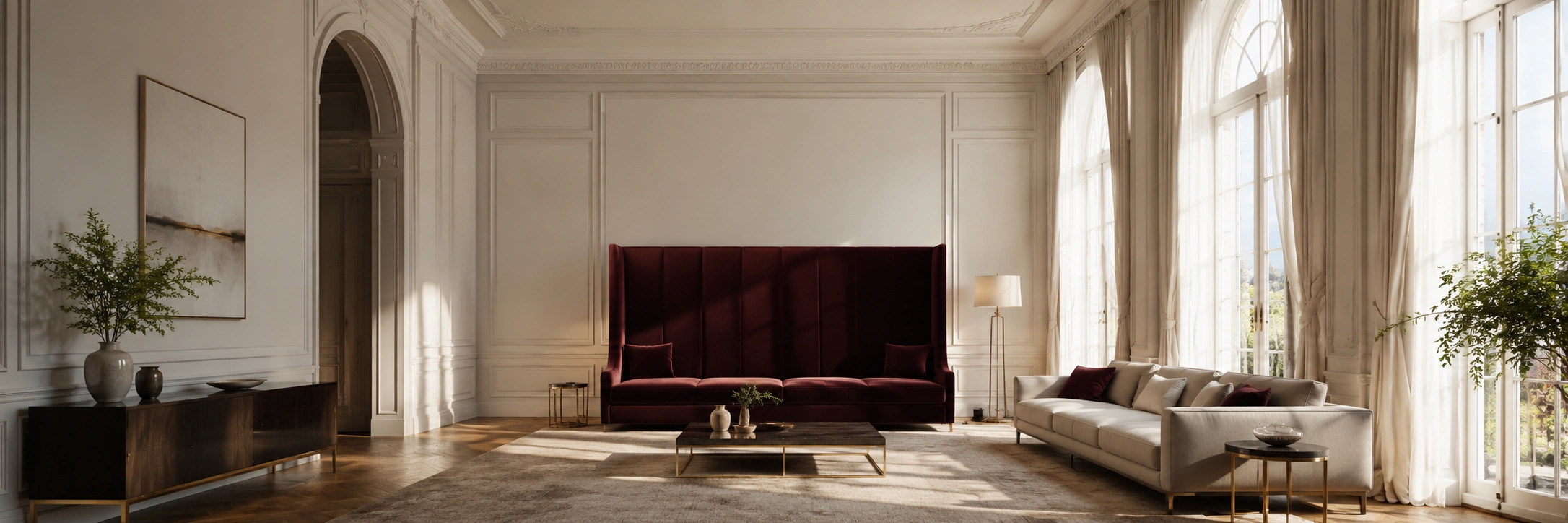
High Back in Large Rooms
In a large living room with ceilings above 9 feet, a high back sofa fills vertical space that would otherwise feel empty. It creates a proportional balance between the furniture and the architecture, preventing the room from feeling cavernous or under-furnished.
High back designs also work well in office settings and lobbies where you want to create defined seating zones that feel private and substantial.

Low Back in Small Rooms
For small rooms or apartments with standard 8-foot ceilings, a low back sofa preserves the sense of openness. By keeping the backrest below eye level when standing, more wall and ceiling area remains visible, which tricks the brain into perceiving a larger space.
This principle also applies to apartment sofas where every visual inch counts. A low profile ensures the sofa doesn't dominate the only seating area in a compact floor plan.
A useful rule of thumb: measure your ceiling height and aim for a sofa back that reaches roughly one-third of the way up the wall. For an 8-foot ceiling, that's about 32 inches — right in the standard range. For 10-foot ceilings, a 40-inch back feels proportional. You can learn more about sofa sizing and room proportions in our dedicated guide.
Style & Aesthetic Impact
Back height is one of the strongest visual signals of a sofa's design personality. It communicates formality, era, and mood before anyone even sits down.

From the imposing presence of a tufted high back to the clean lines of a low-profile modern design — back height defines the sofa's character.
High back sofas lean toward traditional, formal, and luxurious aesthetics. The Chesterfield, with its rolled arms and towering tufted back, is the quintessential example. Tufted sofa designs almost always feature higher backs because the tufting pattern demands vertical space to look balanced. These pieces work beautifully in vintage-inspired rooms, libraries, and formal living areas.
Low back sofas are the hallmark of modern and contemporary design. Brands like mid-century modern icons favor low, clean profiles that emphasize horizontal lines. They pair naturally with neutral color palettes, industrial accents, and open floor plans. A low back curved sofa can create a stunning sculptural effect without overwhelming the room.
If you're drawn to bold-colored sofas, a low back design lets the color speak for itself without competing with a massive backrest for visual attention. Conversely, if you want a rich fabric sofa with intricate patterns, a high back provides more canvas to showcase the material.
Who Should Choose Which?
Choose High Back If You…
- Are taller than 5'10" and find low backs leave your shoulders exposed
- Suffer from neck tension or upper back pain and need structured support
- Have a large living room with ceilings above 9 feet
- Want a formal, luxurious, or traditional look in your space
- Use the sofa primarily for watching TV, reading, or extended sitting sessions
- Are furnishing a home theater or dedicated media room
- Prefer a feeling of being "cocooned" and snug while seated
- Want the sofa to serve as a room divider in an open-concept layout
Choose Low Back If You…
- Live in an apartment or have a compact living room under 150 sq ft
- Have standard or low ceilings (8 feet or less)
- Prefer modern, minimalist, or Scandinavian interior design
- Want to maintain sightlines across the room for conversation or views
- Frequently rearrange your furniture and need something lighter
- Use the sofa casually for short sits rather than marathon lounging
- Are on a tighter budget and want to maximize value
- Like the option to add or remove throw pillows for adjustable support
Key Factors to Consider Before Deciding
-
Your Height and Body Proportions
The most critical factor. Sit on both types and notice where the backrest lands relative to your shoulders. If a low back sits below your shoulder blades, you'll lack support. If a high back pushes your head forward, it's too tall for your frame. Your seat depth preference also interacts with back height — a deep seat with a low back leaves even more of your upper body unsupported.
-
Primary Sitting Position
Do you sit upright to read, or do you slouch and curl up? Upright sitters benefit more from high backs. Slouchers and curlers may find low backs less restrictive, especially when paired with a chaise lounge extension or oversized cushions.
-
Cushion Firmness and Fill
A firm, high-density foam cushion provides different support than a soft, down-filled one. A softer cushion on a low back sofa may let you sink in enough to feel supported, while a firm cushion on a high back may feel too rigid. The interaction between cushion type and back height matters as much as either factor alone.
-
Existing Room Architecture
Take note of windows, art, shelving, and architectural details behind where the sofa will go. A high back sofa placed in front of a window blocks natural light and views. A low back preserves these elements. Also consider whether your room has layout constraints like radiators or built-ins that limit placement options.
-
Other Furniture in the Room
Your sofa should relate to the height of nearby pieces — dining chairs, side tables, bookshelves. A towering high back next to low-slung armchairs creates visual discord. Aim for complementary proportions across your seating group.
-
Budget Considerations
High back sofas use more frame material, more upholstery fabric, and often more complex construction. This typically adds 10–25% to the cost compared to an equivalent low back model. If budget is a concern, explore our sofa budget guide to understand where your money goes and where you can save.
Can You Have the Best of Both Worlds?
If you're torn between the two, several design solutions bridge the gap:
- Adjustable headrests: Some recliner sofas and modern designs feature headrests that click into multiple positions. You get a low profile for aesthetics with the option to raise support when needed.
- Removable back cushions: Sofas with loose back cushions let you add or remove layers to customize the effective back height. Pair a low back frame with a bolster pillow for on-demand neck support.
- Medium back height: The sweet spot between high and low is around 33–36 inches. This "mid-back" category provides adequate shoulder support without the visual weight of a full high back design. Many 3-seater sofas fall into this range.
- Throw pillows and bolsters: A strategically placed lumbar pillow or bolster on a low back sofa can provide targeted support where you need it most, without committing to a tall backrest.
- Modular sofas: Modular systems sometimes offer interchangeable back panels in different heights, letting you customize the back height for each seat position.
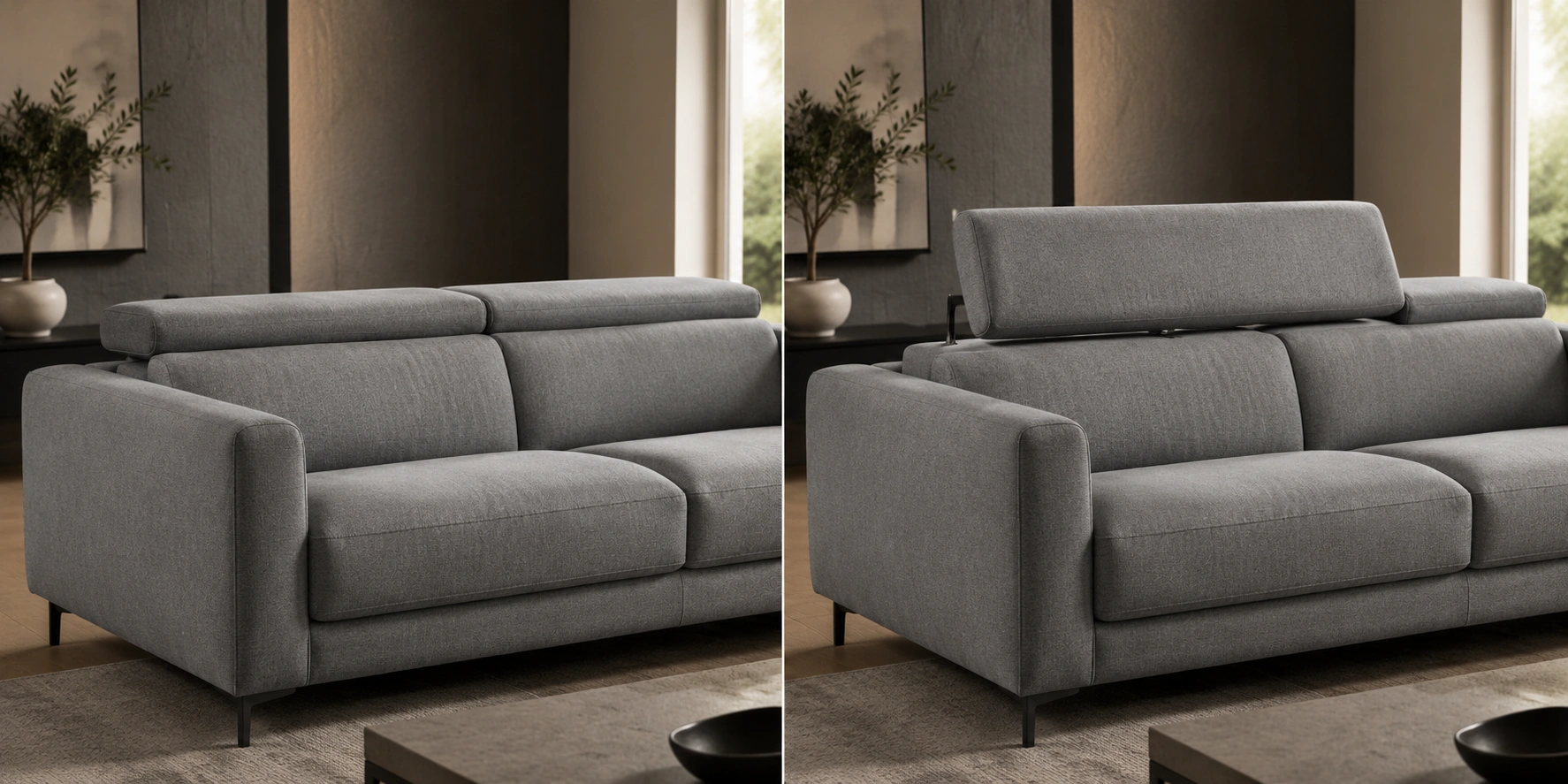
Adjustable headrests offer a practical compromise — keep the profile low for clean aesthetics, raise it for movie nights or reading sessions.
Frequently Asked Questions
The Bottom Line
There is no universally "better" option — the right choice depends entirely on your body, your room, and your lifestyle. If you value full-body support, have the space, and prefer a formal aesthetic, a high back sofa is the clear winner. If you prioritize an open feel, have a compact space, and lean toward modern design, a low back sofa will serve you better.
The smartest approach? Start by measuring your room and ceiling height, then identify your primary sitting posture. Use the comparison table above as your decision framework, and always test-sit before buying. Your spine will thank you.
Continue Your Research: Now that you understand back height, explore these related topics to refine your decision further — firm vs plush sofas, standard vs deep seat depth, and comfort vs durability trade-offs. Each factor interacts with back height to shape your overall seating experience.