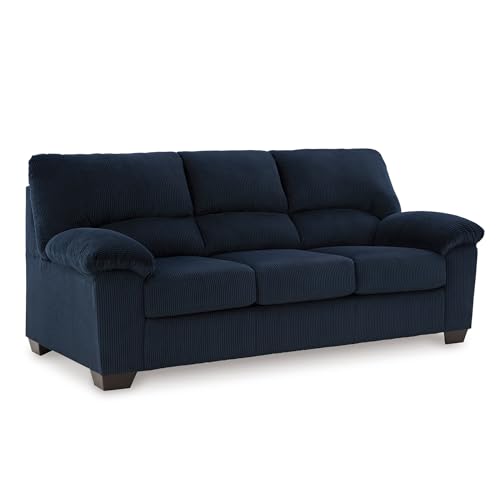
High Back vs Low Back Sofa: Which Is Right for You?
Back height is one of the most overlooked factors when buying a sofa — yet it affects your comfort, posture, room aesthetics, and even how large your space feels. This guide breaks down everything you need to decide.
Why Back Height Matters More Than You Think: Most shoppers focus on seat depth, cushion firmness, and fabric — but back height determines whether your spine is supported, whether your room feels open or cramped, and whether the sofa looks proportional in your space. Getting this one detail wrong can mean years of discomfort or a living room that never quite looks right. This comparison will help you get it right the first time.
What Defines High Back vs Low Back?
The distinction between high back and low back sofas comes down to one measurement: the distance from the seat surface to the top of the backrest. This isn't about the overall height of the sofa (which includes legs) but specifically the backrest height, which is what your body interacts with.
| Category | Back Height (Seat to Top) | Relative to Shoulders | Overall Sofa Height (approx.) |
|---|---|---|---|
| High Back | 32 in / 81 cm and above | Above the shoulders | 38 – 45 in / 97 – 114 cm |
| Medium Back | 26 – 31 in / 66 – 79 cm | At shoulder level | 33 – 38 in / 84 – 97 cm |
| Low Back | Below 26 in / 66 cm | Below the shoulders | 28 – 33 in / 71 – 84 cm |
A high back sofa typically extends well above the shoulders when you're seated, supporting your upper back, neck, and sometimes even your head. A low back sofa stops at or below shoulder level, leaving your upper back and neck unsupported by the furniture itself. Medium-back sofas — which sit right at shoulder height — are a compromise that exists in many top-rated sofas, but this guide focuses on the two extremes since that's where the practical differences are most pronounced.

Side-by-Side Comparison
Here's a direct comparison of what each style delivers across the factors that matter most when making a purchase decision:
High Back Sofa
32+ in back height- Full spine support from lumbar to upper back and neck
- Creates a sense of enclosure and privacy in the seating area
- Works as a visual anchor in large, open rooms
- Often associated with formal, traditional, or executive aesthetics
- Ideal for upright sitting — reading, working, conversation
- Can make a room feel more intimate and defined
- Common in chesterfield, tufted, and wingback designs
Low Back Sofa
Below 26 in back height- Supports only the lower and mid-back region
- Keeps the room feeling open, airy, and spacious
- Allows artwork, windows, and architectural features to remain visible
- Associated with modern, minimalist, and casual aesthetics
- Ideal for lounging, reclining, and relaxed postures
- Makes ceilings appear higher and rooms feel larger
- Common in mid-century modern and contemporary designs
Ergonomics: How Back Height Affects Your Body
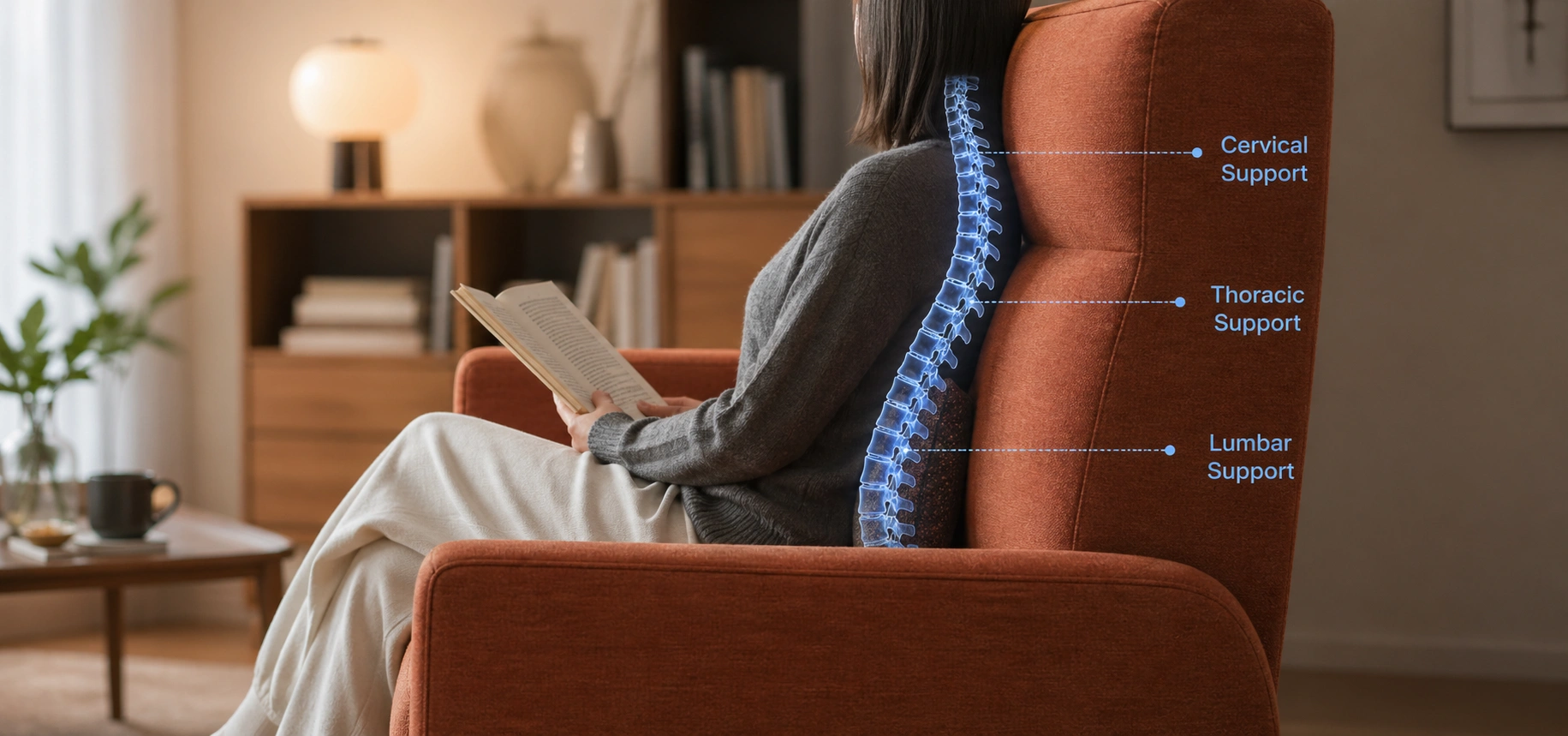
The ergonomic impact of back height is the most consequential difference between these two styles — and the one most buyers underestimate. Your spine has three natural curves (cervical, thoracic, and lumbar), and the degree to which a sofa supports these curves directly affects whether you'll feel comfortable after 30 minutes or after 3 hours. For people who experience back discomfort, the right back height can make a meaningful difference — our sofa for back pain guide explores this connection in depth.
High Back: Full Spine Support
The backrest cradles your entire back, maintaining the natural S-curve of your spine when seated upright. This reduces muscle fatigue in the upper back and shoulders, making it easier to sit for extended periods without slouching.
Low Back: Freedom to Recline
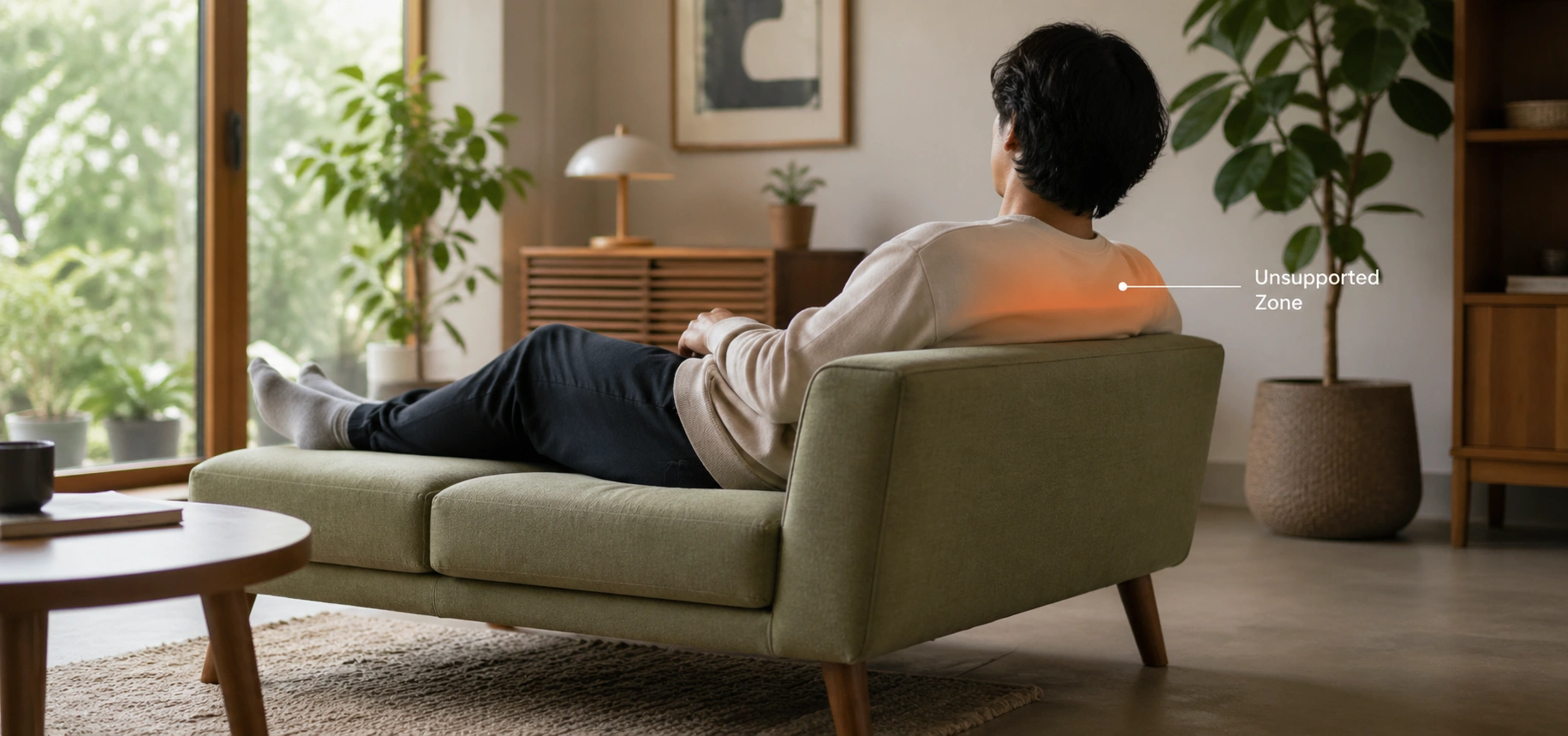
The shorter backrest doesn't push against your upper back when you lean back or shift positions. This makes low back sofas more comfortable for lounging, napping, and casual sitting — but less supportive for upright posture.
The key ergonomic insight is that back height should match your primary sitting posture. If you tend to sit upright — reading, working on a laptop, having conversations — a high back provides the support your spine needs. If you tend to recline, curl up, or shift positions frequently, a low back won't fight your natural movement. The firm vs plush cushion choice also interacts with back height: a firm cushion on a high back sofa creates a structured, supportive seat, while a plush cushion on a low back sofa creates a sink-in lounging experience.
If you currently have a low back sofa and find yourself constantly adding throw pillows behind your back for upper support, you probably need a high back sofa. Conversely, if you have a high back sofa and always lean forward or to the side to avoid the backrest, the height may be wrong for your body. For more on evaluating comfort, see our how to test sofa comfort guide.
How Back Height Affects Room Proportions
Back height has a disproportionate visual impact on how a room feels — far more than seat depth or arm style. A tall sofa back creates a visual barrier that can make a room feel smaller, more enclosed, and more intimate. A low back does the opposite: it opens up the wall space above, lets the eye travel upward, and preserves the feeling of roominess. This is especially important when considering sofa size relative to your room.
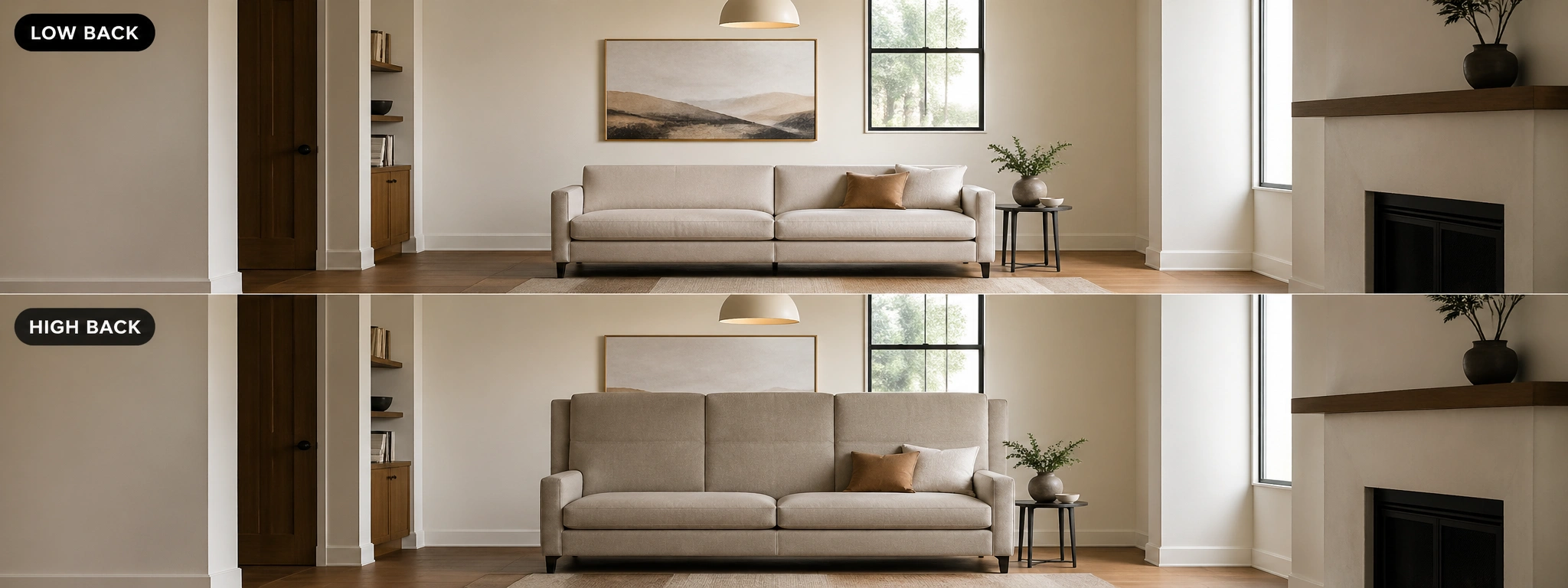
Ceiling height is the critical variable. In rooms with standard 8-foot (2.4m) ceilings, a high back sofa can consume a significant portion of the wall height, creating a cramped feeling — particularly if the sofa is placed against a wall. In rooms with 9-foot or 10-foot ceilings, high back sofas are far more proportional and can fill the vertical space elegantly. Low back sofas work well in virtually any ceiling height but are especially advantageous in small spaces and apartments with standard ceilings.
Window placement matters too. If your sofa sits below a window, a high back may block lower portions of the glass, reducing natural light and views. A low back preserves the window entirely. For large rooms with picture windows or architectural features, the right back height can either complement or compete with those elements.
High Back Sofa: Pros and Cons
Advantages
- Superior spine support for upright sitting posture
- Reduces upper back and neck fatigue during long sitting sessions
- Creates a cozy, enclosed feeling that defines a seating zone
- Makes a strong visual statement — works as a room's focal point
- Ideal for formal living rooms, offices, and reading nooks
- Classic styles like chesterfield and tufted designs naturally suit high backs
Disadvantages
- Can make rooms with standard ceilings feel visually heavy and small
- May block windows, artwork, or architectural features behind it
- Less comfortable for reclining or lounging positions
- Typically heavier and more difficult to move or reposition
- Uses more upholstery fabric, which increases cost
- Can dominate a room's aesthetic in a way that limits decor flexibility
Low Back Sofa: Pros and Cons
Advantages
- Makes rooms feel more open, spacious, and airy
- Preserves views of windows, artwork, and wall features
- More comfortable for lounging, reclining, and casual sitting
- Typically lighter and easier to move
- Suits modern and contemporary aesthetics perfectly
- Often more affordable due to less material used
Disadvantages
- Minimal upper back and neck support for upright sitting
- May require supplemental pillows for extended sitting comfort
- Can look undersized or lost in very large rooms with high ceilings
- Less effective at defining a distinct seating zone in open-plan spaces
- Fewer style options in traditional or formal design categories
- May not provide enough enclosure for home theater or TV-focused layouts
How Back Height Varies by Sofa Type
Certain sofa styles have a natural affinity for either high or low back designs. While customization is always possible, understanding these typical pairings helps set expectations when shopping:
| Sofa Type | Typical Back Height | Why It Works |
|---|---|---|
| Chesterfield | High (34–40 in) | The deep button tufting and rolled arms demand proportional height |
| Tufted Sofa | High to Medium | Tufting patterns need vertical space to look balanced |
| Recliner Sofa | High (34–42 in) | Headrest and mechanism require tall back structure |
| Sectional Sofa | Either | Varies by brand — available in both heights equally |
| Modern / Mid-Century | Low (22–28 in) | Clean lines and low profiles are core to the aesthetic |
| Sleeper Sofa | Medium to High | Mattress mechanism needs sufficient back structure |
| Sofa Chair / Accent Chair | High (36–44 in) | Single-seat chairs typically feature prominent backs |
| Curved Sofa | Low to Medium | Low backs preserve the flowing, open silhouette |
| Office Sofa | High | Professional settings favor formal, upright aesthetics |
Which Back Height for Your Situation?
Rather than declaring one style universally better, the right choice depends on your specific room, body, and lifestyle. Here are the most common scenarios and our recommendation for each:
Small Apartment with 8-Foot Ceilings
A low back sofa keeps the room feeling open and prevents the wall space from being consumed. Every inch of perceived height matters in compact spaces.
Recommended: Low BackLarge Open-Plan Living Room
A high back sofa helps define the seating area within a larger space, creating a sense of enclosure without walls. It acts as a visual room divider.
Recommended: High BackPrimary Family Sofa for TV Watching
For lounging and reclining while watching TV, a low or medium back is more comfortable since you'll lean back rather than sit upright.
Recommended: Low BackReading Nook or Study Area
Upright reading posture benefits from full back support. A high back reduces neck strain during extended reading sessions.
Recommended: High BackFormal Living Room
High back sofas convey elegance and structure. Styles like chesterfield, tufted, and wingback naturally suit formal settings.
Recommended: High BackCasual Family Room with Kids
Low back sofas are easier for kids to climb on, harder to knock over, and their casual aesthetic matches a family room's energy.
Recommended: Low BackHome Theater or Media Room
High back sofas with integrated headrests provide the immersive, enclosed feeling that enhances the theater experience.
Recommended: High BackSeniors or People with Mobility Concerns
A sofa for seniors often benefits from a higher back because it provides something to push against when standing up from a seated position.
Recommended: High BackRoom with Statement Artwork or Windows
If you have artwork, a mirror, or a window at sofa height, a low back preserves these features instead of hiding them behind upholstery.
Recommended: Low BackMinimalist or Modern Decor
Clean lines and low profiles are fundamental to modern and minimalist aesthetics. A high back would visually conflict with this design language.
Recommended: Low BackHow to Make Your Final Decision
If you're still undecided after reviewing the comparisons above, this practical checklist will guide you to the right answer. Work through each point honestly — your ideal back height will become clear. For the complete decision framework, see our how to choose a sofa guide.
- Measure your ceiling height. If it's 8 feet or less, lean toward low back. If it's 9 feet or more, high back becomes viable without cramping the room.
- Identify your primary sitting posture. Sit upright = high back. Lounge, recline, or shift frequently = low back. If you do both equally, consider a medium back as a compromise.
- Evaluate what's behind the sofa. Windows, artwork, shelves, or architectural features favor low back. A blank wall can accommodate either height.
- Consider your room's purpose. Formal, conversation-focused spaces suit high back. Casual, media-focused, or family spaces suit low back.
- Test both in person. Sit on a high back and a low back for at least 5 minutes each. Pay attention to whether your shoulders feel supported or confined, and whether your neck feels strained or relaxed.
- Think about throw pillows. If you already own large throw pillows, a low back gives you a place to use them as back support. If you prefer a clean look without pillows, a high back eliminates the need.
- Factor in your body height. Taller individuals (over 6 feet) may find low backs too short for any meaningful support. Shorter individuals (under 5'4") may find very high backs overwhelming.
- Consider longevity of the room. If you plan to redecorate soon, a low back sofa is more versatile across different design styles. A high back sofa makes a stronger commitment to a particular aesthetic.
The Middle Ground: Medium Back and Adjustable Options
If neither extreme feels right, there are two alternatives worth considering. First, medium-back sofas (26–31 inch back height) sit right at shoulder level and provide a reasonable compromise — enough support for upright sitting without the visual weight of a full high back. Many 3 seater sofas and 4 seater sofas come in medium-back configurations.
Second, sofas with adjustable headrests offer the best of both worlds. These feature a backrest that's medium height by default, with an upper section that can be folded up or angled forward to provide neck and head support when needed. When the headrest is lowered, the sofa has the clean, low-profile look of a modern design. When raised, it approaches the support level of a high back. This style is increasingly common in recliner sofas and home theater seating.

Frequently Asked Questions
Bottom Line: There is no universally "better" option — high back and low back serve different purposes. Choose high back if you sit upright regularly, have higher ceilings, want a formal or defined look, or prioritize spine support. Choose low back if you prefer lounging, have standard or low ceilings, want an open and airy room, or favor modern aesthetics. When in doubt, visit a showroom and spend 10 minutes sitting in each style — your body will tell you what your mind can't decide. The right back height is the one you forget about entirely because it simply feels natural.