Flattened Sofa Cushions: Complete Fix & Prevention Guide
Your sofa looked perfect when you bought it, but now the cushions sit flat and lifeless. This guide walks you through exactly why it happens and how to restore that comfortable, inviting feel.
Why Do Sofa Cushions Flatten?
Every sofa cushion will eventually lose some of its original fullness — this is a normal part of the material's lifecycle. However, cushions that flatten prematurely or severely usually point to specific issues with the fill material, construction quality, or how the sofa is being used. Understanding these causes helps you choose the right fix and avoid the problem in the future.
Low-Density Foam
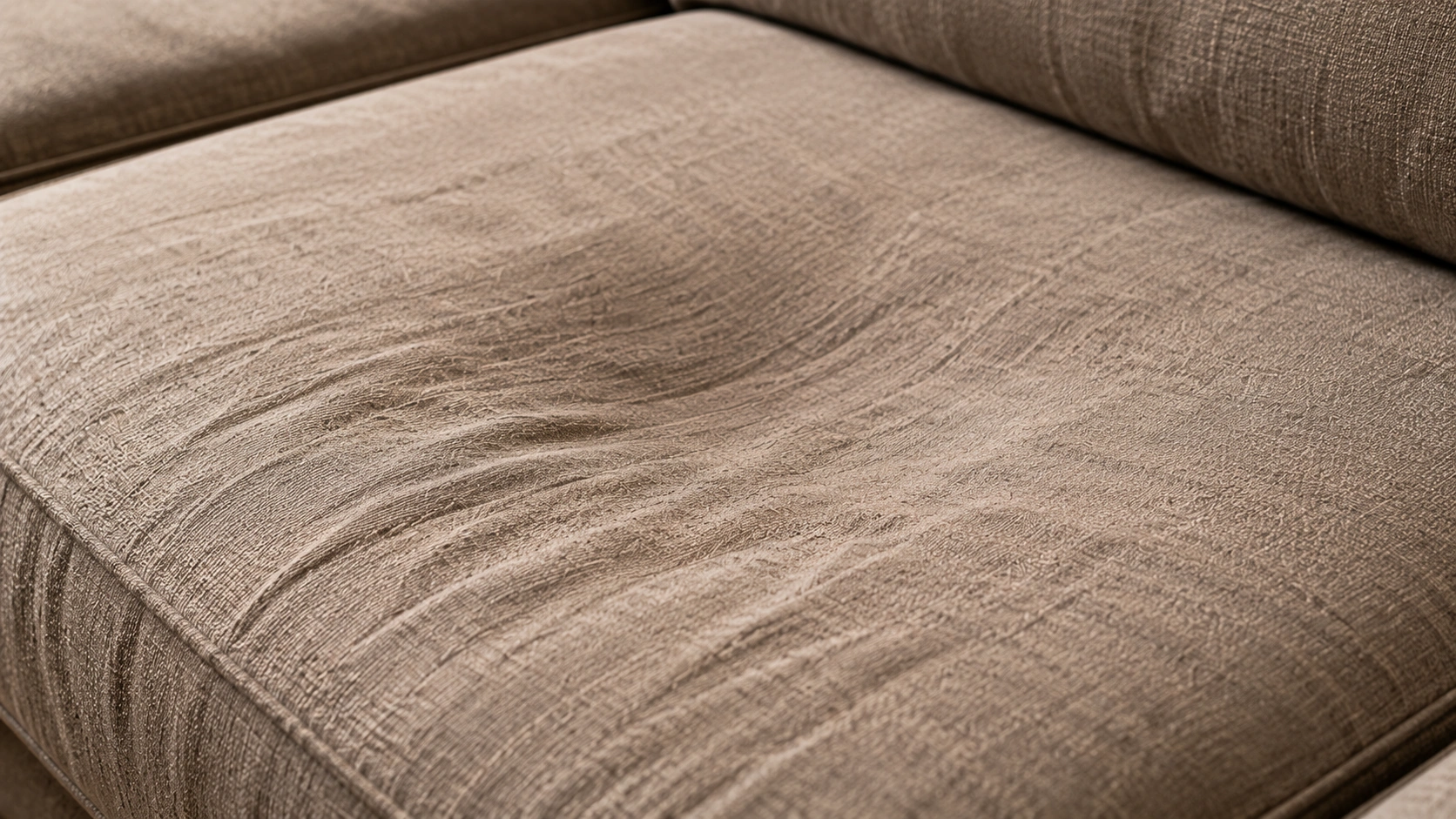
Budget sofas often use foam with density below 1.5 lb/ft³. This foam compresses quickly under body weight and loses its ability to bounce back within 1–2 years of regular use.
No Rotation Routine
Sitting in the same spot every day concentrates wear on specific cushions. Without regular flipping and rotating, some cushions compress while others retain their shape, creating an uneven appearance.
Moisture Exposure
Spills, humidity, and sweat can break down foam structure over time. Moisture causes foam cells to collapse and can also lead to mold growth inside the cushion, accelerating deterioration.
Uneven Weight Distribution
Heavy use by the same person in the same seat creates deep compression zones. A 200 lb person sitting in one spot daily will flatten that cushion much faster than distributed use across all seats.
Poor Fill Construction
Cushions made with a single layer of foam without wrapping or batting tend to flatten faster. Quality cushions use a foam core wrapped in Dacron or polyester fiber for added resilience and longevity.
Natural Material Aging
All foam and fiber fill materials have a lifespan. Even high-quality foam gradually loses some resilience after 5–10 years. This is normal aging, not a defect — but cheaper materials age much faster.

The single most important factor in cushion longevity is foam density. When shopping for a sofa or replacement cushion inserts, density is measured in pounds per cubic foot (lb/ft³). A foam rated at 1.8 lb/ft³ will significantly outlast one rated at 1.2 lb/ft³, even though they may feel similar when new. For a deeper understanding of how foam density relates to comfort and durability, our guide on foam density and ILD ratings covers the technical details in plain language.
Another factor that's often overlooked is the cushion fill type. Pure foam is just one option. Many high-end sofas combine a foam core with a wrap of polyester fiber, down feathers, or a memory foam layer. Each combination behaves differently over time. For example, a sofa cushion fill types comparison shows that down-wrapped cushions feel luxurious but require more frequent fluffing, while foam-fiber combos offer a good balance of comfort and low maintenance.
How to Fix Flattened Sofa Cushions
The right fix depends on how badly the cushions have flattened, what fill material is inside, and your budget. Below are five proven methods ranked from easiest to most involved. Start with the simplest approach and move to the next if needed.
Fluffing, Kneading & Rotating
This is the first thing to try and costs nothing. Fluffing redistributes the fill material inside the cushion and can restore surprising volume, especially for fiber-filled or wrapped cushions.
- Remove the cushion from the sofa and hold it by the edges
- Knead and punch the cushion firmly with your fists from all sides
- For fiber-filled cushions, grab opposite corners and pull gently while rotating
- Let the cushion rest for 15–30 minutes before placing it back
- Rotate all cushions to different positions — move left cushions to the right, flip reversible cushions over
Do this weekly for best results. Fiber-filled and down-wrapped cushions respond especially well to regular fluffing. Foam-only cushions will show less improvement from this method alone.

Add Polyester Fiberfill or Batting
If fluffing alone doesn't restore enough volume, adding new fill material can plump up cushions significantly. This works best for cushions that have a removable zippered cover.
- Unzip the cushion cover and remove the existing foam core
- Inspect the foam — if it's intact but just thin, wrap it with a layer of polyester batting (Dacron wrap)
- For more volume, stuff polyester fiberfill around the foam core before reinserting
- For fiber-only cushions (no foam core), add fiberfill directly and distribute evenly by hand
- Zip the cover closed and smooth out any lumps by pressing and shaping from the outside
Don't overfill — this creates uncomfortable firmness and can stress the zipper and seams. Add gradually, test the feel, and stop when the cushion feels supportive but not hard. A bag of polyester fiberfill costs around $10–20 and is enough for 2–4 cushions.
Use a Furniture Cushion Support
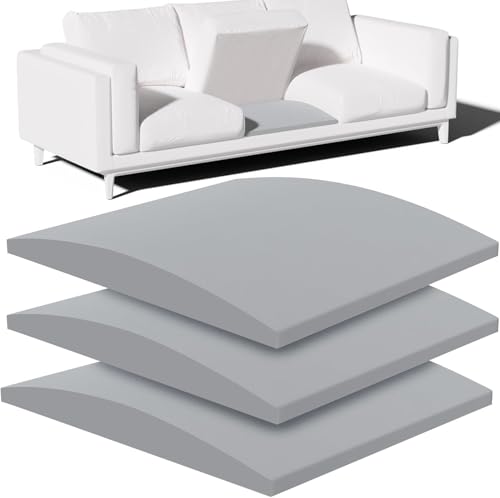
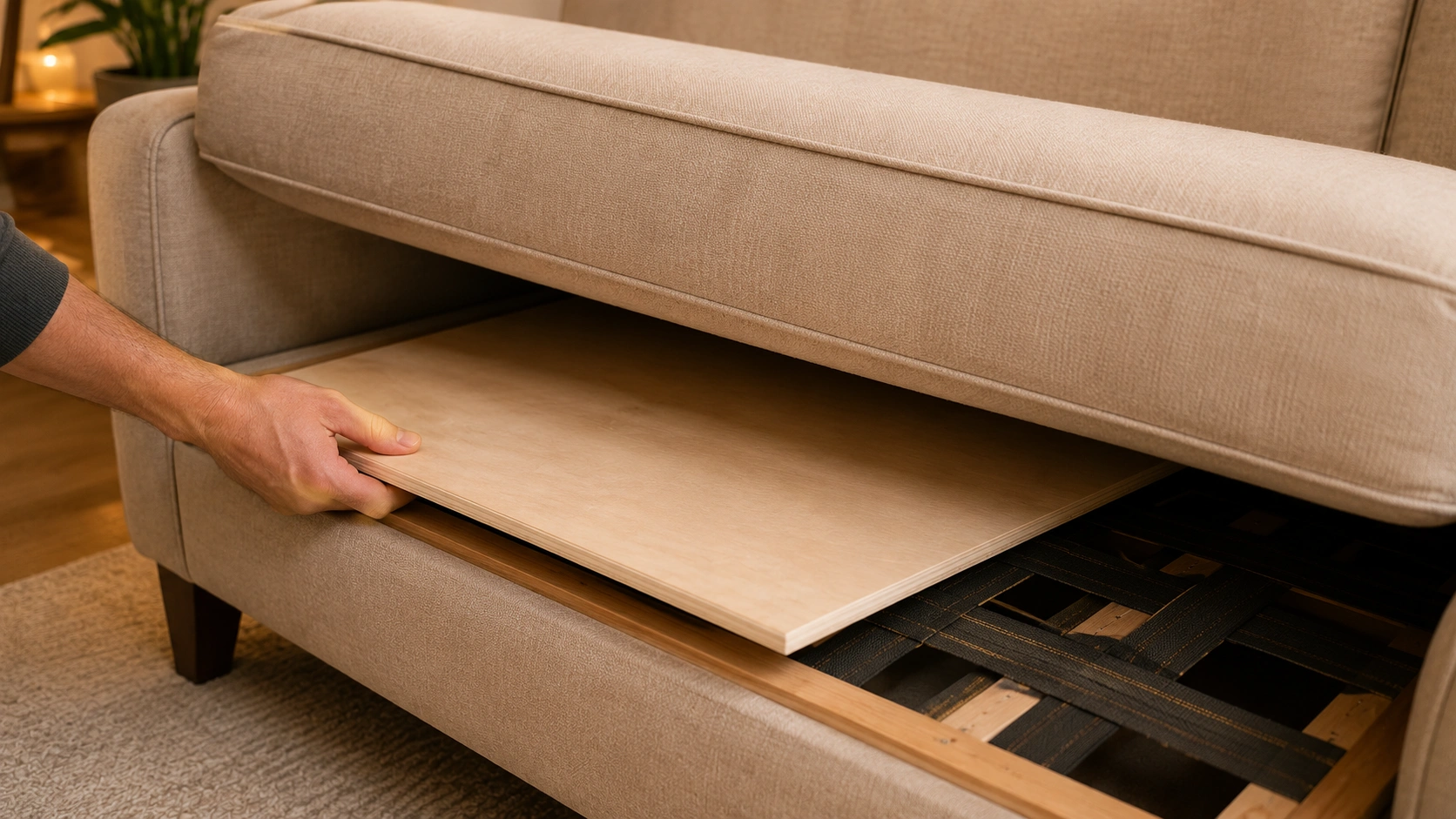
Cushion supports are rigid or semi-rigid panels that sit between the sofa base and the cushion, preventing the cushion from sinking into the frame. This is an excellent temporary or budget-friendly solution.
- Measure the width and depth of your seat area
- Choose a support panel made of plywood, MDF, or heavy-duty corrugated plastic
- Some products come pre-cut to standard sofa sizes; others can be trimmed to fit
- Place the support on the sofa base, then set the cushion on top
- This doesn't fix the cushion itself but eliminates the "sinking" feeling immediately
This method is ideal if your sofa frame has sagging webbing or springs in addition to flat cushions. It addresses the support structure rather than just the cushion fill. If your cushions still feel flat on top even with support underneath, combine this with Method 2 (adding fiberfill) for the best result.
Replace the Foam Insert
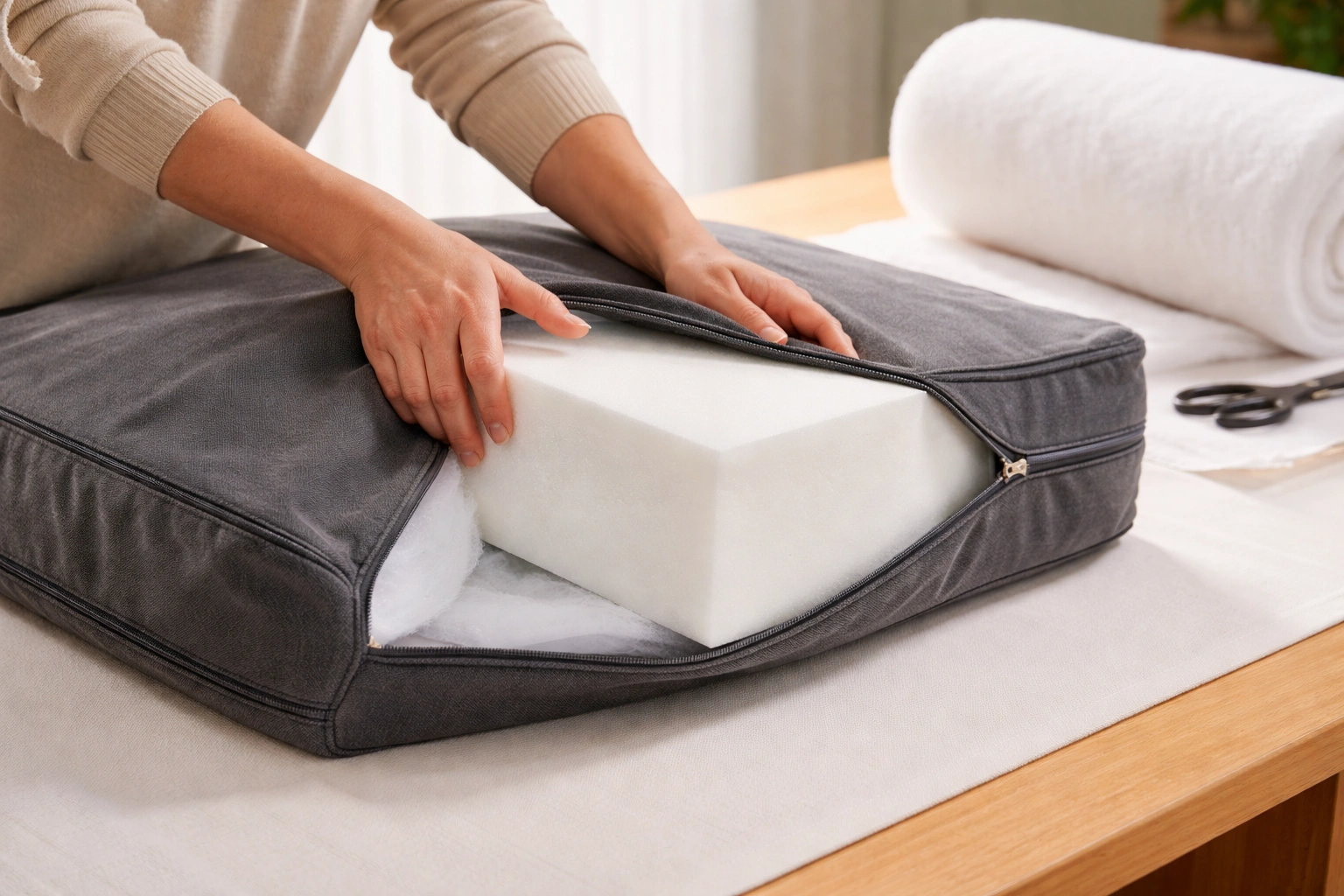
This is the most effective long-term fix. If the existing foam has degraded — crumbling, permanently compressed, or losing its spring — replacing it with higher-quality foam will restore the cushion to like-new condition.
- Remove the cushion cover and take out the existing foam insert
- Measure the foam precisely: length, width, and thickness (use the thickest point if it's uneven)
- Order replacement foam cut to your exact dimensions — many online suppliers offer custom cutting
- Choose high-resilience (HR) foam with a density of at least 2.0 lb/ft³ for best longevity
- Wrap the new foam in Dacron batting before inserting for a smoother, more professional feel
- Insert into the cover, zip closed, and allow 24–48 hours for the foam to fully expand
For detailed guidance on selecting the right foam specification, see our foam density and ILD guide. If you're also dealing with cushions that have lost their shape rather than just their firmness, our article on how to fix sagging sofa cushions covers the related issue of structural cushion collapse.
Hire a Professional Upholsterer
If your cushions have non-removable covers, unusual shapes, or you want a premium result, a professional upholsterer can rebuild the cushions entirely. They'll measure, cut foam, add wrapping layers, and re-cover with new fabric if needed.
- Best for cushions sewn directly into the sofa frame (non-removable)
- Upholsterers can match the original cushion shape and firmness precisely
- They can also upgrade the fill material to something more durable than the original
- Typical cost is $50–$150 per cushion, depending on size and material choices
- Turnaround is usually 1–2 weeks
If your entire sofa needs attention beyond just the cushions — such as worn fabric, broken springs, or a weak frame — it may be worth exploring whether a full sofa frame repair or reupholstery makes more financial sense than targeted cushion fixes.
When to Repair vs. When to Replace Your Sofa
Flattened cushions don't automatically mean you need a new sofa. In fact, in most cases the frame, springs, and fabric are still in good condition — it's only the cushion fill that has degraded. However, there are situations where replacement is the smarter choice. Use this decision guide to evaluate your specific situation.
Repair or Replace? Decision Guide
✅ Repair the Cushions
- Frame is solid with no wobble or cracks
- Fabric is in good condition with no tears or excessive wear
- Springs or webbing still provide adequate support
- You like the sofa's style and size
- Cushions have removable, zippered covers
- The sofa cost over $500 originally
- Flattening is the only problem
🔴 Replace the Sofa
- Frame creaks, wobbles, or has visible damage
- Fabric is worn thin, torn, or permanently stained
- Springs are broken or poking through
- You've already replaced the foam once before
- Cushions are sewn shut with no access to fill
- The sofa was inexpensive (under $300)
- Multiple issues beyond just flat cushions
Replacing foam inserts for a 3-seater sofa typically costs $60–$240 total. A comparable quality new sofa costs $800–$2,000+. If only the cushions are the problem, repairing them saves you 70–90% compared to replacement. For budget-friendly options, check our guide to best budget sofas if you do decide replacement is the better path.
How to Prevent Cushions from Flattening
Prevention is always cheaper and easier than repair. Whether you've just fixed your cushions or you're buying a new sofa, these habits will significantly extend the life of your cushion fill and maintain that plush, welcoming look for years.

Rotate Weekly
Swap cushion positions every week. If reversible, flip them over at the same time. This distributes body weight evenly across all cushions and prevents uneven compression patterns.
Fluff Daily
Spend 30 seconds fluffing each cushion when you straighten up the living room. A quick punch and reshape keeps fiber fill evenly distributed and prevents permanent compression set in foam.
Use Sofa Covers
Protective covers shield cushions from spills, body oils, and dirt that accelerate foam breakdown. Quality sofa covers are especially valuable in households with children or pets.
Avoid Sitting on Edges
Sitting on the front edge of cushions concentrates all your weight on a narrow area, deforming the foam quickly. Sit back fully so weight distributes across the entire cushion surface.
Control Humidity
Excess moisture weakens foam structure. Use a dehumidifier in humid climates, address spills immediately, and ensure the sofa isn't placed directly against an exterior wall where condensation can form.
Vary Your Seating Spot
If you always sit in the same position, that cushion will wear out years before the others. Consciously use different seats, even if you have a "favorite" spot.
Pets can significantly accelerate cushion wear through clawing, shedding, and accidents. Consider pet-proof sofa covers and explore sofas specifically designed for durability. Our guide to the best sofas for pet owners highlights materials and constructions that resist pet damage.
Choosing the Right Foam for Replacement Cushions
If you're replacing foam inserts, the quality of foam you choose will determine how long the fix lasts. Here's a straightforward comparison to help you select the right specification for your needs and budget.
Low Density
Below 1.5 lb/ft³
Lasts 1–2 years. Found in budget furniture. Not recommended for replacement.
Medium Density
1.5–2.0 lb/ft³
Lasts 3–5 years. Decent for occasional use or guest rooms. Adequate for tighter budgets.
High Density (HR)
2.0+ lb/ft³
Lasts 7–10+ years. Best investment for daily-use sofas. High-resilience foam bounces back reliably.
Foam Type Comparison for Replacement
| Foam Type | Density Range | Firmness Feel | Lifespan | Best For | Price (per cushion) |
|---|---|---|---|---|---|
| Polyurethane (Standard) | 1.2–1.8 lb/ft³ | Soft to medium | 1–4 years | Low-budget, light use | $15–$30 |
| High-Resilience (HR) | 2.0–2.8 lb/ft³ | Medium to firm | 7–10 years | Daily use, best value | $30–$60 |
| Memory Foam | 2.5–5.0 lb/ft³ | Soft, contouring | 8–12 years | Pressure relief, luxury feel | $40–$80 |
| Latex Foam | 4.0–6.0 lb/ft³ | Responsive, springy | 12–20 years | Premium, eco-conscious buyers | $60–$120 |
| HR Foam + Dacron Wrap | 2.0+ lb/ft³ core | Medium, plush surface | 7–10 years | Most balanced option | $35–$70 |
For most households, a high-resilience foam core (2.0–2.5 lb/ft³) wrapped in Dacron batting delivers the best balance of comfort, durability, and cost. This combination gives you a supportive core that holds its shape, with a soft outer layer that feels plush and inviting. If you're choosing between firm vs. plush sofa feels, a lower ILD rating (25–30) gives a softer sit while a higher rating (35–40) feels firmer — both at the same density.

When ordering custom-cut foam, measure carefully and round up to the nearest half-inch. It's better for the foam to be slightly oversized than too small — a snug fit prevents the cushion from shifting and looking sloppy. If you're also considering buying a new sofa rather than repairing, understanding how to check sofa quality before buying will help you identify sofas with cushions built to last, potentially saving you from facing this problem again.
Common Mistakes to Avoid
When dealing with flattened cushions, well-meaning fixes can sometimes make the problem worse. Here are the most frequent mistakes people make and why you should avoid them.
Stuffing with Old Pillows or Clothing
Filling cushions with old pillows, blankets, or clothing may seem like a clever free fix, but it creates lumpy, uneven support that feels uncomfortable and looks terrible. These materials compress differently than proper cushion fill, creating hard spots and voids that can actually accelerate wear on the cushion cover fabric.
Buying Foam That's Too Firm
It's tempting to overcorrect by buying the firmest foam available, but rock-hard cushions are just as uncomfortable as flat ones. Firmness (ILD) and density are different properties — you can have soft high-density foam or firm low-density foam. Choose based on your comfort preference, not just durability specs. Our firm vs. plush sofa guide helps you find the right balance.
Ignoring the Sofa's Support Structure
If the sofa's springs or webbing are also sagging, replacing the cushion foam alone won't fully solve the problem. The cushion will still sink into a weak base. Check for broken or worn springs and evaluate whether the base needs repair alongside the cushions for a complete fix.
Continue Reading
Flattened cushions are one of several common sofa problems that can be addressed without replacing the entire piece. If you found this guide helpful, these related resources may also be useful for maintaining or improving your sofa.