
Standard vs Deep Seat Sofa: Which Is Right for You?
Seat depth is one of the most overlooked factors when buying a sofa — yet it determines everything from your posture to how the piece fits your room. This guide breaks down exactly what you need to know.
See the ComparisonPhanMarket Philosophy: We believe that understanding the details — like seat depth — is what separates a sofa you love from one you regret. This comparison is designed to help you make a confident, informed decision before you buy.
📋 In This Guide
What Exactly Is Seat Depth?
Seat depth refers to the horizontal measurement from the front edge of the seat cushion to where it meets the backrest or back cushion. It is the distance your body occupies when seated — and it is arguably the single most important dimension for your comfort, even more than width or height.
While most shoppers focus on overall sofa length (how many people can sit), seat depth determines how you sit. A difference of just 3 to 4 inches can shift your entire posture from upright and supported to relaxed and lounging. Understanding this measurement is essential when you learn how to choose a sofa that truly fits your body and lifestyle.
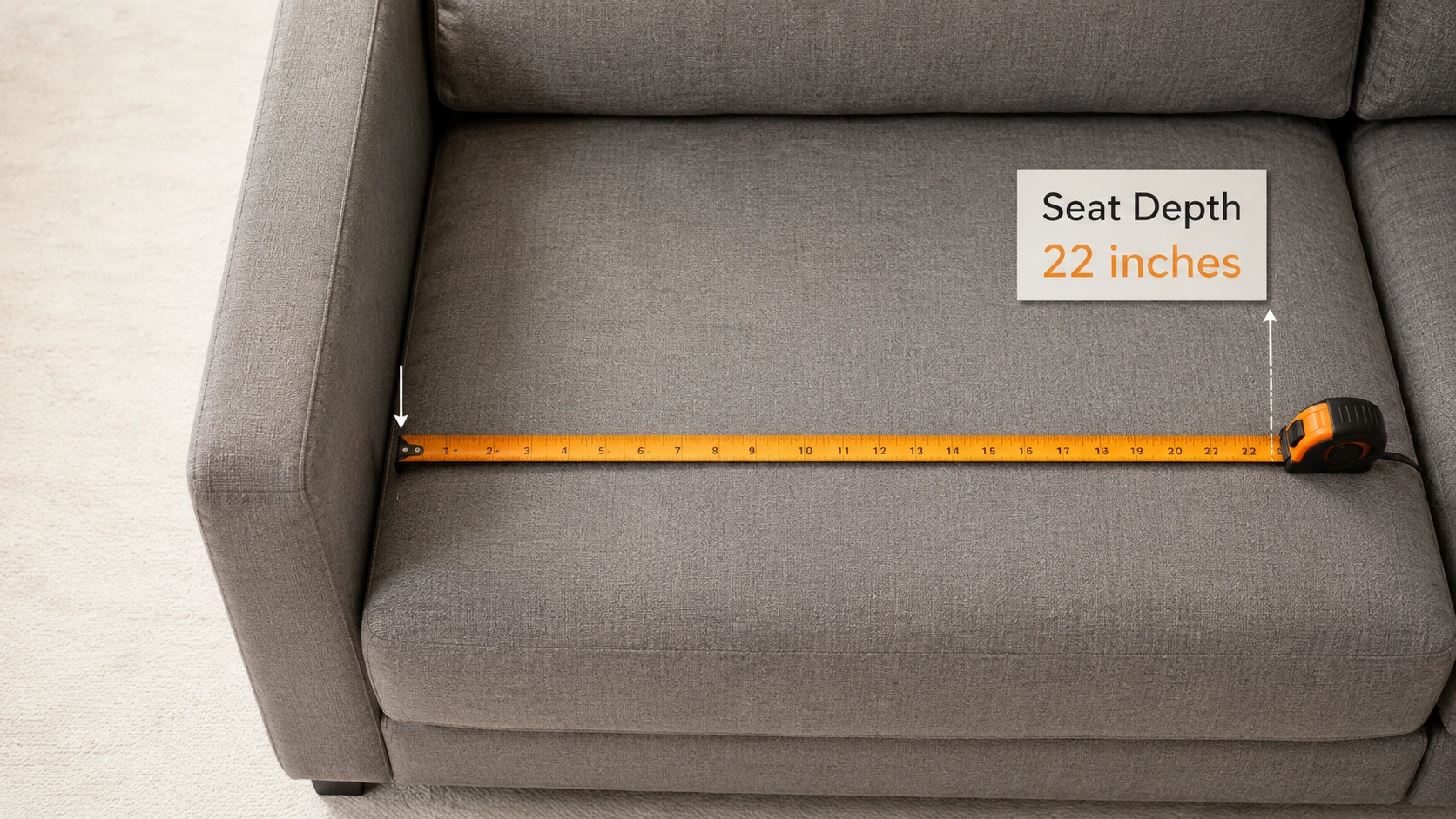
There are two main categories: standard seat depth (18–22 inches) and deep seat depth (23+ inches). Within these ranges, sub-categories exist — compact seats for small spaces, and extra-deep seats for luxury lounging. Our complete seat depth guide covers every measurement in detail.
Standard Seat Depth: The Everyday Workhorse
A standard seat depth falls between 18 and 22 inches. This is the most common range found in sofas worldwide and is designed around the average adult's seated posture — feet flat on the floor, back against the backrest, thighs fully supported by the cushion.
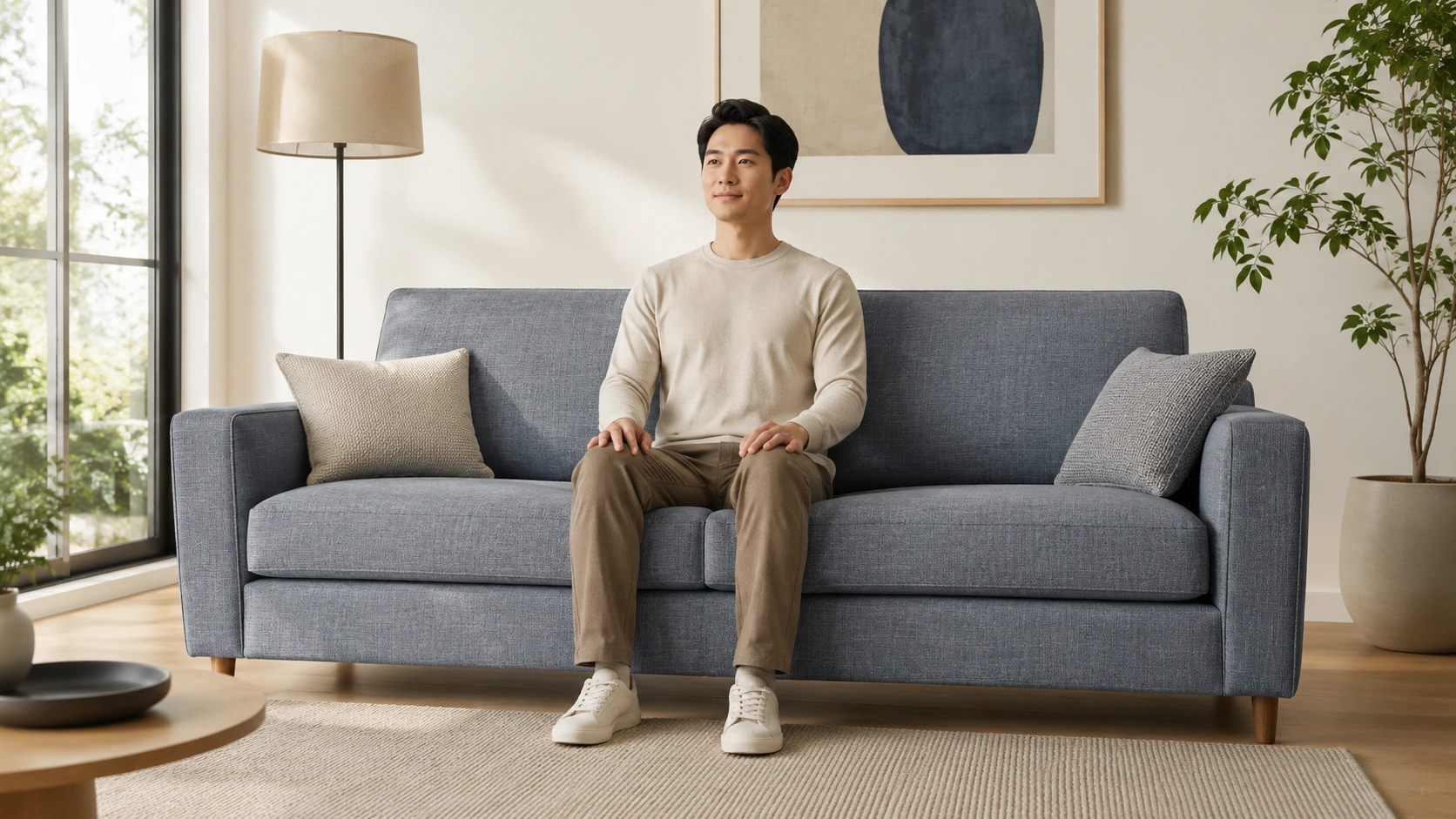
The 20-inch mark is considered the sweet spot for most adults between 5'4" and 6'0". At this depth, your lower back naturally contacts the backrest without needing to lean forward, and there is about 2 to 3 inches of space behind your knees — enough to prevent pressure on the back of your legs while keeping you securely in the seat.
Where Standard Seats Excel
Standard depth sofas are the default choice for primary living rooms where the sofa serves multiple purposes: conversation, TV watching, occasional dining, and hosting guests. They work particularly well in smaller apartments where a compact apartment sofa needs to balance comfort with spatial efficiency. If you are choosing between a sectional vs traditional sofa, standard depth keeps the footprint manageable.
They are also the preferred option for office sofas and lobby seating, where a more formal, upright posture is expected. The slightly firmer sitting position conveys professionalism and encourages shorter sitting durations — which is exactly what you want in a waiting area.
Deep Seat Depth: The Lounging Experience
A deep seat measures 23 inches or more, with many models ranging from 24 to 30 inches. This category is designed for a completely different sitting experience — one where you lean back, tuck your legs underneath, or curl up sideways. Think of it as the difference between sitting in a dining chair and sinking into an armchair.

The cloud couch trend has made deep seats enormously popular. These oversized, ultra-plush sofas with 25+ inch seat depths have become the defining furniture piece of modern casual living. They prioritize the feeling of being enveloped by the sofa over structured support.
Where Deep Seats Shine
Deep seats are the natural choice for spaces dedicated to relaxation: home theaters, movie marathon rooms, and basement rec rooms. They are also ideal for daily napping — a deep seat with the right cushion fill essentially doubles as a daybed. Families with children often prefer them because kids can comfortably sit without their legs dangling off the edge.
The deep seat sofa category includes sectionals with extended chaise lounges and modular sofas where you can configure both standard and deep seat modules in the same layout — giving you the best of both worlds.
Side-by-Side Visual Comparison

Upright & Supported
Keeps you in an active sitting position. Feet stay on the floor, back stays against the backrest. Ideal for socializing, working, and multi-purpose rooms.
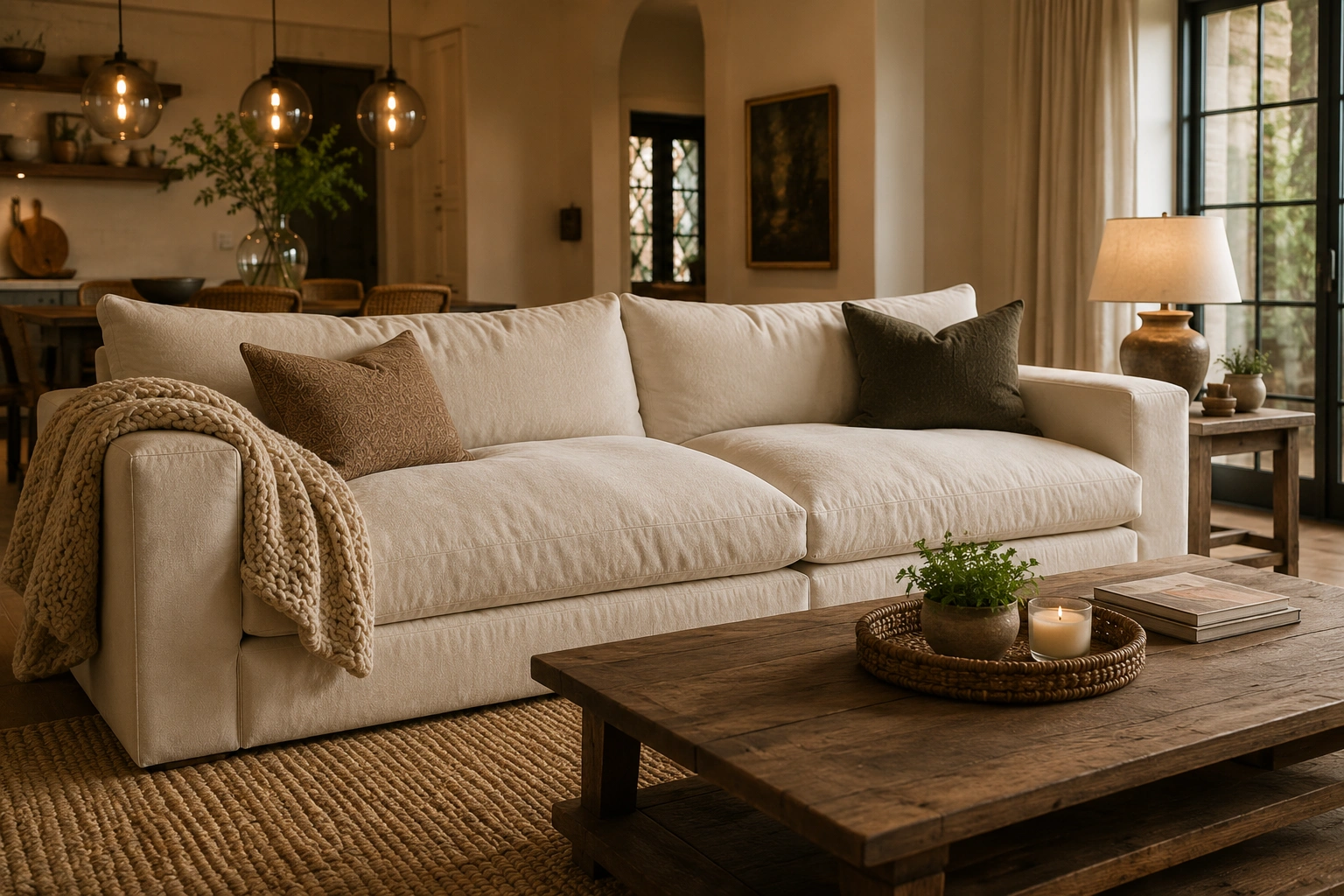
Relaxed & Lounge-Ready
Invites you to sink in and stretch out. Legs tuck under naturally. Perfect for movie nights, reading, and casual family hangouts.
Detailed Feature Comparison
| Feature | Standard Seat (18–22") | Deep Seat (23"+) |
|---|---|---|
| Primary Posture | Upright, feet on floor | Reclined, legs tucked or curled |
| Back Support | Excellent — full lumbar contact | Moderate — may need pillows |
| Thigh Support | Full support for average heights | Extended — can be excessive for shorter people |
| Best Room Size | Small to medium rooms | Medium to large rooms |
| Overall Sofa Depth | 32–38 inches | 38–48+ inches |
| Footprint Impact | Minimal — leaves more walk space | Significant — extends into room |
| Social Suitability | High — encourages conversation | Moderate — more inward-focused |
| Elderly-Friendly | Yes — easy to sit and stand | Challenging — deeper to exit |
| Kid-Friendly | Moderate — legs may dangle | High — kids sit comfortably |
| Pet-Friendly | Moderate — less surface for pets | High — more lounging space for pets |
| Cushion Fill Usage | Less fill needed per seat | More fill — higher material cost |
| Average Price Range | $$ – $$$ | $$$ – $$$$ |
| Style Availability | Very wide — every style | Moderate — mostly casual/contemporary |
| Back Pain Consideration | Generally better for posture | Can encourage slouching |
Pros & Cons Breakdown
✅ Standard Seat — Pros
- Promotes healthy upright posture naturally
- Easier to sit down and stand up — great for seniors
- Works in smaller rooms without overwhelming the space
- Better lumbar support without extra accessories
- More formal appearance suits traditional and contemporary designs
- Wider selection across all sofa types and price points
- Less cushion fill means lower cost and lighter weight
❌ Standard Seat — Cons
- Not ideal for lounging or curling up
- Can feel restrictive for taller individuals (over 6'1")
- Less "cozy" factor for casual family spaces
- Children may find the seat too short for comfort
✅ Deep Seat — Pros
- Exceptional comfort for lounging, reading, and napping
- Accommodates taller individuals more comfortably
- Kids and pets have plenty of space to sit together
- Creates a luxurious, inviting aesthetic in the room
- Versatile — sit upright with pillows or lean back without
- Perfect for family rooms and entertainment spaces
❌ Deep Seat — Cons
- Poor back support without additional pillows
- Difficult for elderly or mobility-limited users to exit
- Takes up significantly more floor space
- Can encourage slouching, which may affect posture over time
- Typically more expensive due to extra materials
- Shorter adults (under 5'3") may feel "swallowed" by the seat
Who Should Choose Which?
Choose Standard Seat If You…
- Use your living room for entertaining and conversation
- Work from your sofa (laptop, reading, writing)
- Have a smaller room — check our size and room guide
- Have elderly family members who need easy seating access
- Prefer a neat, tailored look over a bulky casual aesthetic
- Suffer from back pain and need consistent lumbar support
- Want a Chesterfield, tufted, or other structured design
- Are under 5'3" tall and want your feet to reach the floor
Choose Deep Seat If You…
- Love curling up on the couch with a book or blanket
- Have a large living room with space to spare
- Watch movies or binge shows regularly on your sofa
- Have kids or large pets who share the sofa with you
- Are taller than 6'0" and find standard seats too short
- Want a casual, relaxed atmosphere in your family space
- Occasionally nap on the sofa and want it to feel like a bed
- Don't mind adding throw pillows for back support when needed
Ergonomics & Posture: The Hidden Factor
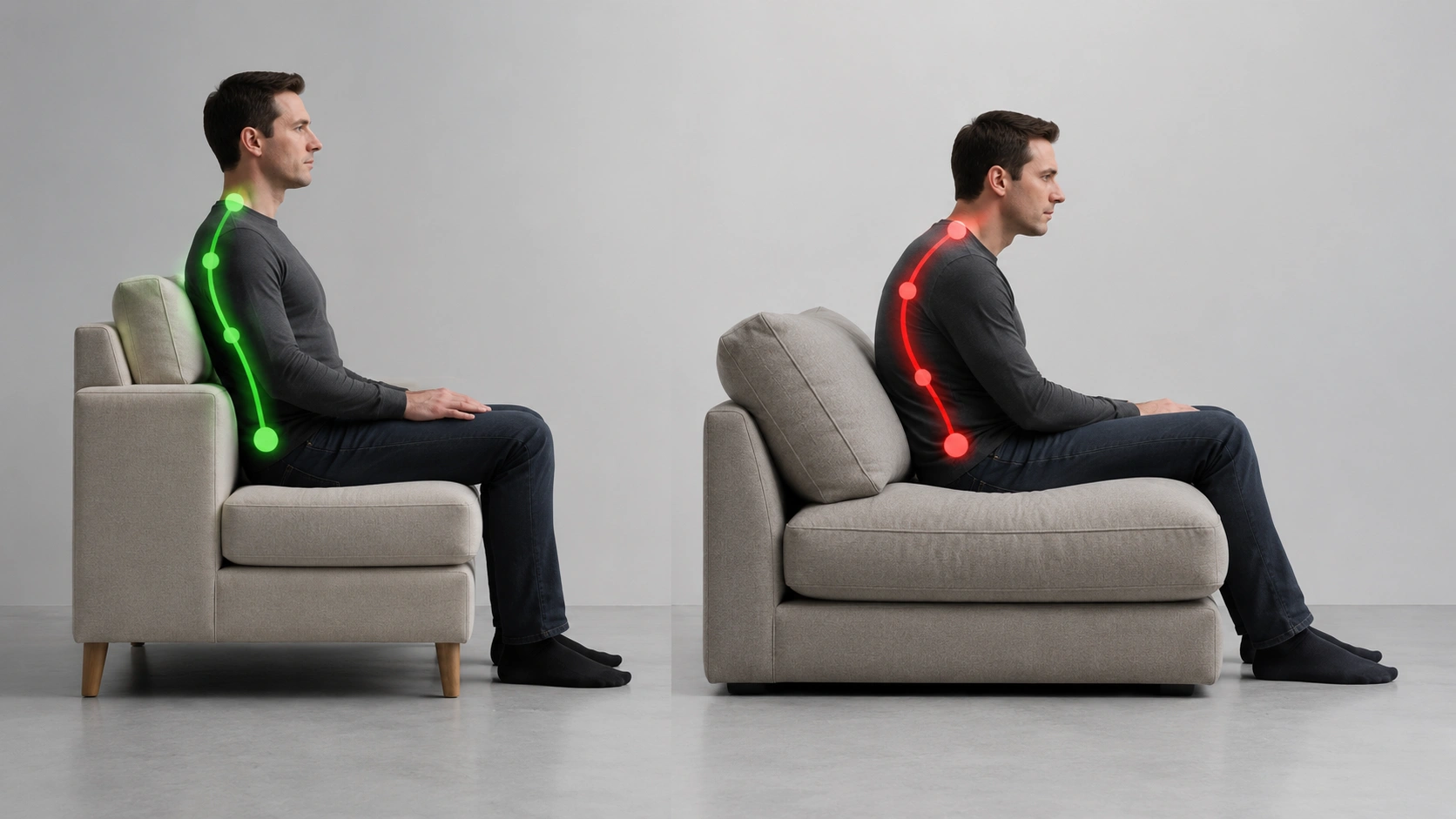
This is where the seat depth conversation gets serious. Your sitting posture on a sofa directly affects your spine health, especially if you spend extended periods on it. The relationship between seat depth and sofa choice for back pain is significant.
Why Standard Seats Are Ergonomically Superior
When you sit on a standard depth sofa with your feet flat on the floor and your back against the backrest, your spine maintains its natural S-curve. The seat cushion supports your thighs fully, the backrest supports your lumbar region, and your knees are at approximately 90 degrees — this is the gold standard for seated ergonomics. This is closely related to the firm vs plush sofa debate, as firmer cushions in a standard depth provide the best structural support.
The Deep Seat Posture Problem
On a deep seat, the distance between the front edge and the backrest is too great for your back to naturally reach the backrest while keeping your feet on the floor. This creates two common problems: either you slide forward (losing back support entirely) or you tuck your legs under (rounding your lower back). Both positions place increased stress on the lumbar discs over extended periods.
The solution is simple but often overlooked: use a firm, structured back pillow (not a soft throw pillow) that reduces the effective seat depth by 4 to 6 inches. This transforms a deep seat into a standard seat when you need support, while still allowing you to remove the pillow for lounging. Quality throws and pillows designed for back support are a worthwhile investment.
The backrest height also matters. A high back vs low back sofa interacts with seat depth — deep seats paired with low backs provide almost no upper back or head support, while deep seats with high backs can feel enveloping but may still lack lumbar contact.
How Seat Depth Affects Your Room Layout
Seat depth directly determines the overall depth of your sofa, which in turn dictates how much floor space the piece consumes and how far it protrudes into the room. This has a cascading effect on traffic flow, walking paths, and the visual balance of your space.

The general rule is to leave at least 36 inches of clear walking space between the front of your sofa and any opposite furniture or wall. A standard sofa with 35-inch overall depth needs roughly 71 inches total (35 + 36). A deep seat sofa with 44-inch overall depth needs 80 inches. In a 12-foot wide room, that 9-inch difference can be the deciding factor between a comfortable layout and a cramped one.
For small spaces, standard depth is almost always the better choice. It keeps the sofa visually lighter and physically less imposing. Our living room layout guide includes specific spacing formulas based on sofa depth.
If you have your heart set on a deep seat but are concerned about space, consider a modular sofa where only one section has a deep seat (like a chaise) while the rest uses standard depth. This hybrid approach gives you the lounging spot without sacrificing the entire room's proportions.
📏 How to Measure Your Ideal Seat Depth at Home
Before shopping, sit on a hard chair and measure from the back of your knee to the back of your buttocks. Add 1 to 2 inches for clearance — that is your minimum ideal seat depth. For a standard sitting posture, most people land between 18 and 21 inches. For lounging preference, add 4 to 6 inches to that number.
Then measure the available depth in your room where the sofa will go. Subtract 36 inches (minimum walking space) from the total available depth — the remaining number is your maximum sofa overall depth. For complete measurement instructions, read our guide on how to measure a sofa.
Cushion Fill: How It Interacts with Seat Depth
Seat depth does not exist in isolation — the cushion fill type dramatically changes how a given seat depth actually feels. The same 22-inch seat depth can feel completely different depending on whether the cushion uses high-density foam, down wrapping, or a spring-down blend.

High-density foam cushions compress minimally (about 0.5 to 1 inch under body weight), so the measured seat depth closely matches the felt depth. This means a 20-inch foam-cushioned seat stays close to 20 inches when you sit.
Down-wrapped foam or all-down cushions can compress 2 to 4 inches, effectively adding that compression to your perceived seat depth. A 21-inch seat with soft down fill can feel like 23 to 25 inches once you sink in — pushing it into deep seat territory without the structural support.
Spring-down cushions (a pocket spring core wrapped in foam and down) offer the best of both worlds: they compress moderately but provide internal support that prevents the "bottoming out" feeling. This fill type is particularly recommended for deep seats because it maintains some structure even at 25+ inch depths.
The foam density (ILD rating) is also relevant — higher ILD foam (firm) keeps its shape in deep seats, while lower ILD foam (soft) can cause you to sink too far and lose the ability to easily stand up. Understanding the comfort vs durability tradeoff in cushion fill helps you make the right pairing.
Does Seat Depth Affect Price?
Yes, and more than most buyers realize. Deep seat sofas typically cost 10 to 25% more than standard depth models from the same manufacturer and material line. The reasons are straightforward but often hidden in the product specs:
More cushion material. Every additional inch of seat depth requires more foam, wrapping, and fabric across every seat cushion. On a 3-seater sofa, going from 20 to 26 inches of seat depth adds roughly 18 inches of total cushion area (6 inches × 3 seats) — that is significant material.
Larger frame. A deeper seat requires a wider frame base and deeper side panels, which means more wood, more hardware, and more complex joinery. The frame material costs scale with size.
More upholstery fabric. A deep seat sofa's total fabric area can be 15 to 20% greater than a standard model of the same width. If you are choosing premium leather grades or high-performance fabrics (which can cost $50–150 per yard), this adds up quickly.
For budget-conscious buyers exploring budget sofa options, standard depth will almost always give you better quality for the same price. If you want a deep seat without overspending, look at our sofa budget guide for strategies to get the lounging feel without the premium price tag. Understanding the full sofa price breakdown helps you see exactly where your money goes.
Frequently Asked Questions
Final Verdict: There Is No Universal Winner
Standard and deep seat sofas serve fundamentally different purposes, and the "better" option depends entirely on your body, your room, and your lifestyle. Neither is objectively superior — they are tools for different jobs.
If your sofa is a multi-purpose piece in a shared space where you entertain, work, and relax, standard depth gives you the versatility and posture support you need. If your sofa exists purely for unwinding — movie nights, weekend reading, family cuddles — deep seat delivers an experience that standard depth simply cannot match.
The smartest buyers measure their space, understand their primary sitting habits, and choose accordingly. For more guidance on making the right overall choice, explore our complete how to choose a sofa guide, or learn how to test sofa comfort before committing to a purchase.


