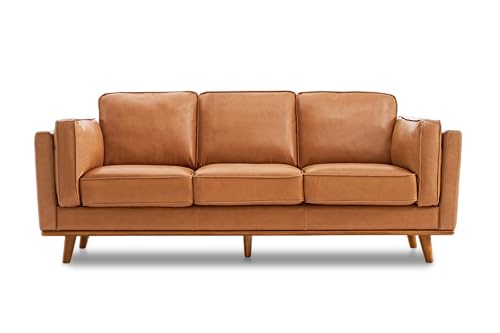
Leather vs Fabric Sofa: Which Material Is Right for You?
A complete, no-nonsense comparison — durability, comfort, maintenance, cost, and lifestyle fit — so you can invest confidently in the sofa you'll live with for years.
Why this guide matters: The material you choose defines how your sofa looks, feels, ages, and survives daily life. Leather and fabric each have genuine strengths and real trade-offs. By the end of this guide, you'll know exactly which one suits your home, your habits, and your budget — no guesswork, no regrets.
Understanding Leather Sofas
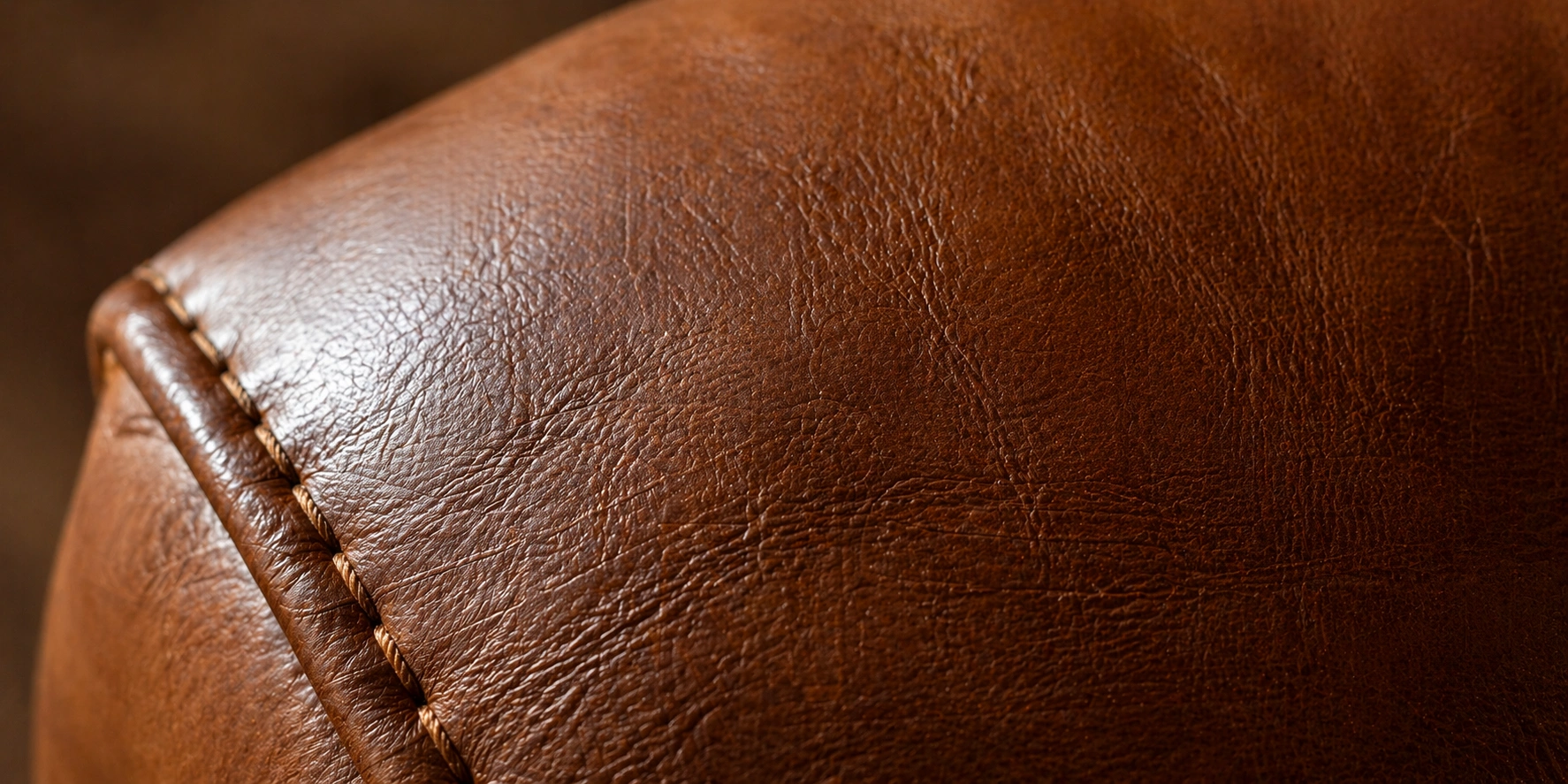
Leather sofas have been a symbol of sophistication for decades. Made from animal hides — most commonly cowhide — leather offers a distinct look and feel that synthetic materials struggle to replicate. But not all leather is created equal. Understanding the different leather grades is the first step to making a smart purchase.
Types of Leather Used in Sofas
Full-grain leather is the highest quality. It uses the entire hide with natural markings intact, developing a beautiful patina over time. It's the most durable — and the most expensive — option, often lasting 20+ years with basic care.
Top-grain leather is the second-highest grade. The surface is sanded and treated to remove imperfections, resulting in a more uniform look. It's slightly thinner than full-grain but still highly durable and more affordable.
Bonded leather is made from shredded leather scraps bonded with adhesive and a polyurethane coating. It contains only 10–20% actual leather and is significantly less durable. Peeling and cracking within 2–5 years is common.
Faux leather (PU / PVC) contains no animal hide at all. It mimics the look at a fraction of the cost but lacks the breathability, aging character, and longevity of genuine leather. It's a practical choice for budget-conscious buyers or those who prefer vegan materials — and you can learn more about the full spectrum of sofa materials explained in our dedicated guide.
💡 Quick Tip: If a sofa is advertised simply as "leather" without specifying the grade, it's often bonded or split leather. Always ask the retailer or check the specifications for the exact leather type.
Understanding Fabric Sofas
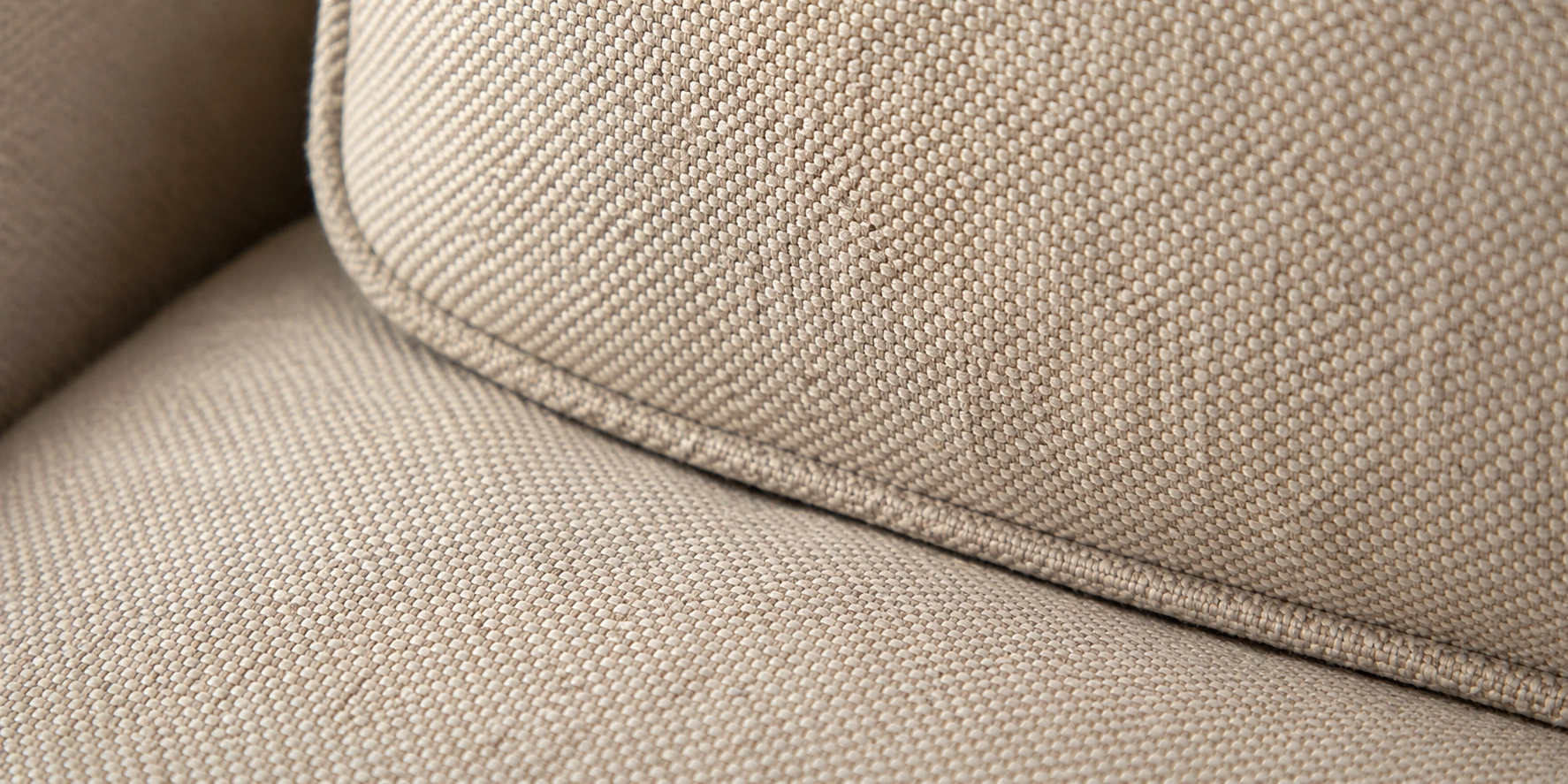
Fabric sofas offer unmatched variety in color, pattern, and texture. From crisp linen to plush velvet, the options are nearly limitless — making it easier to match your sofa to your existing décor or create a bold focal point. Fabric is also generally softer to the touch and more breathable, which many people find more comfortable for extended lounging.
Common Fabric Types
Cotton & cotton blends: Soft, breathable, and natural. Cotton is comfortable but prone to wrinkling and staining unless treated. Blends with polyester improve wrinkle resistance.
Linen: Elegant and highly breathable with a distinct texture. Linen wrinkles easily and isn't the most stain-resistant, but it's a favorite for warm climates and relaxed interiors. Explore our linen sofas guide for styling tips.
Microfiber: A synthetic fabric made from ultra-fine polyester fibers. It's incredibly durable, stain-resistant, and affordable — one of the most practical options for busy households. See why a microfiber couch is a top pick for families.
Velvet: Luxurious and visually striking. Velvet adds instant elegance but requires careful cleaning. Discover the best options in our velvet sofa roundup.
Performance fabrics (e.g., Crypton, Sunbrella): Engineered to resist stains, moisture, fading, and bacteria. They cost more than standard fabrics but are ideal for homes with kids, pets, or high traffic. Durability is measured by the Martindale test — look for ratings above 20,000 rubs for heavy residential use.
Leather vs Fabric: Pros & Cons
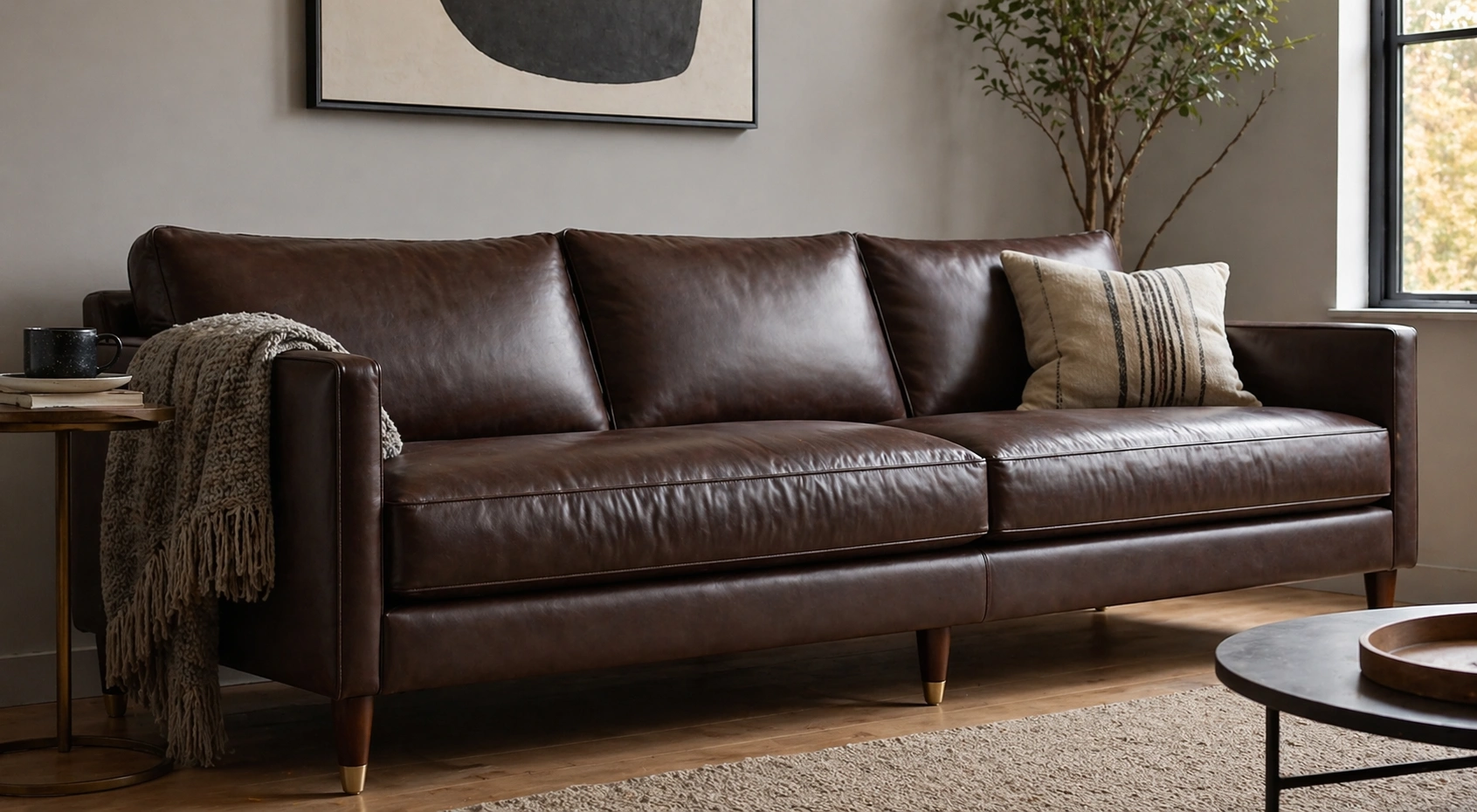
Leather Sofa
- Exceptionally durable — lasts 15–25+ years
- Easy to clean — wipe with a damp cloth
- Hypoallergenic — doesn't trap dust mites or pet dander
- Develops a rich patina over time
- Spills sit on the surface, buying you time
- Timeless, sophisticated aesthetic
- Higher upfront cost
- Can feel cold in winter, sticky in summer
- Vulnerable to cat scratches
- Limited color options (mostly browns, blacks, whites)
- Bonded/faux leather peels and cracks
- Requires periodic conditioning
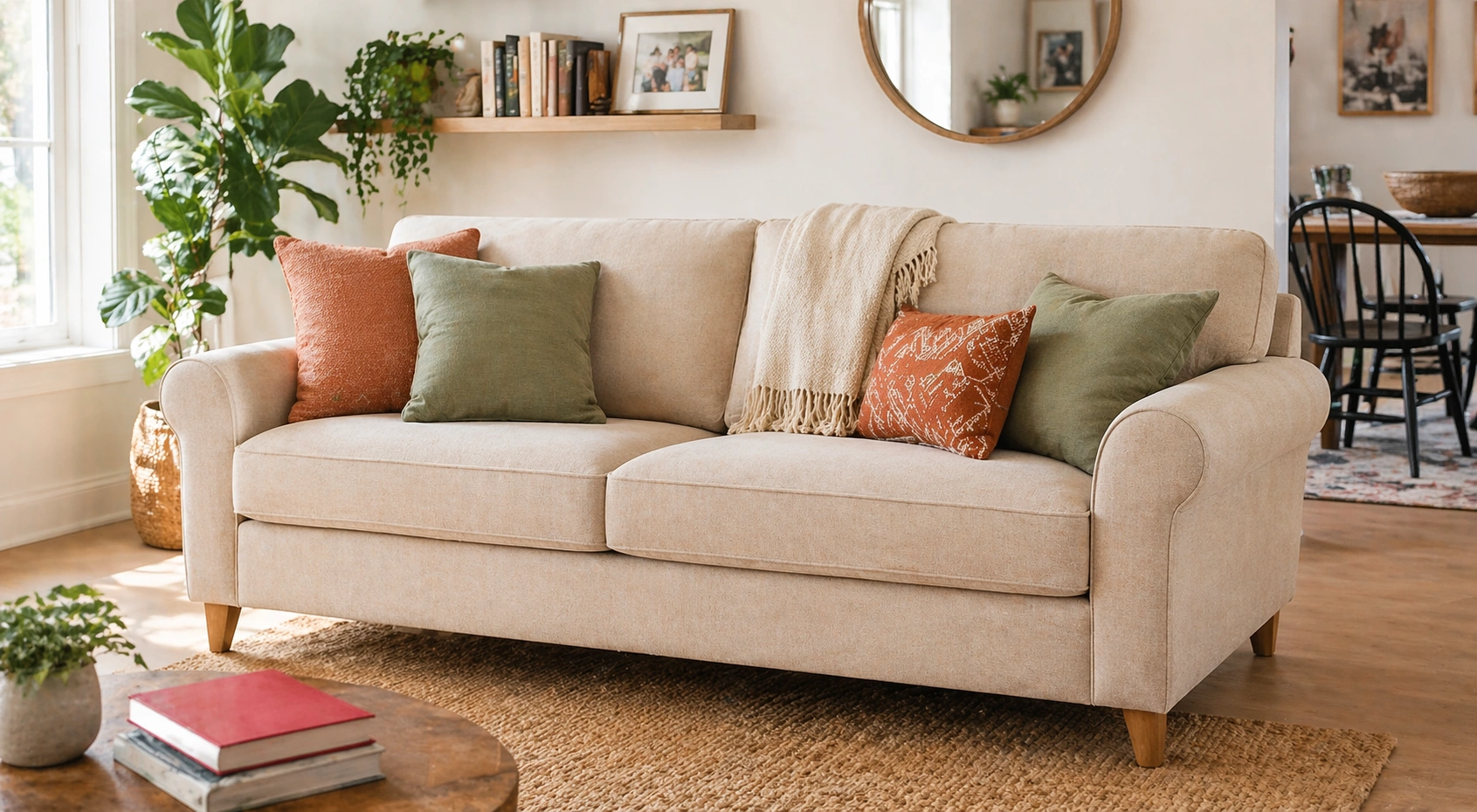
Fabric Sofa
- Wide range of colors, patterns, and textures
- Softer, cozier feel — great for lounging
- More breathable — comfortable year-round
- More affordable upfront
- Easier to personalize with sofa covers
- Less prone to scratching from pets
- Absorbs spills quickly — stains can set fast
- Traps dust, pet hair, and allergens
- Shorter lifespan — typically 5–15 years
- Requires regular vacuuming and deep cleaning
- Pilling and fading over time
- Odors can linger in the fibers
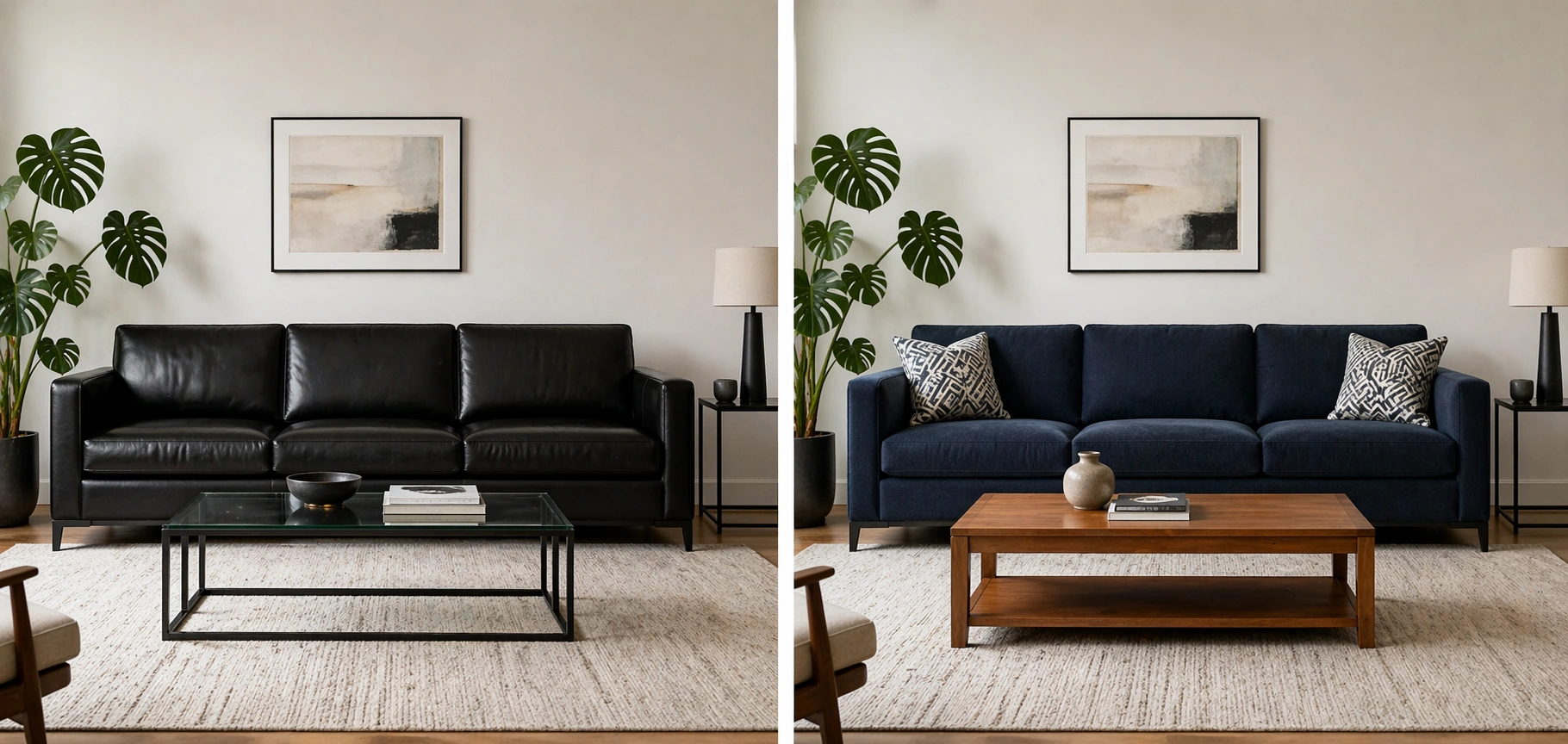
Head-to-Head Comparison
| Factor | Leather | Fabric |
|---|---|---|
| Durability | 15–25+ years (full/top-grain) Winner | 5–15 years depending on material |
| Comfort | Firm; adjusts to body temp | Soft, cozy, breathable Winner |
| Maintenance | Low — wipe clean, condition 2×/year Winner | Moderate — vacuum weekly, deep clean periodically |
| Stain Resistance | High — spills sit on surface Winner | Low to moderate — absorbs quickly |
| Color Variety | Limited (earth tones, black, white) | Nearly unlimited Winner |
| Price (Starting) | $800–$1,500+ (genuine leather) | $300–$800 (quality fabric) Winner |
| Pet-Friendly | Dogs: yes; Cats: no (scratches) | Dogs: hair clings; Cats: less scratch damage Winner |
| Allergy-Friendly | Yes — no dust mite habitat Winner | No — traps allergens |
| Climate Suitability | Cool/dry climates, air-conditioned rooms | All climates, especially warm/humid Winner |
| Aging | Develops patina, looks better with age Winner | May fade, pill, or show wear |
| Repair | Minor scratches treatable; tears need pro repair | Patching possible; reupholstery an option |
| Eco-Friendliness | Tanning uses chemicals; long lifespan offsets | Natural fibers are greener; synthetics are not |
As the table shows, neither material wins across every category. The right choice depends entirely on your household, climate, and priorities. For a deeper dive into how comfort compares to durability in real-world use, we've broken it down in a separate guide.
Which Material Fits Your Lifestyle?
Abstract comparisons only go so far. What really matters is how a sofa fits into your daily life. Below, we match each lifestyle to the material that performs best — so you can stop guessing and start choosing.

Families with Kids
Spills, sticky hands, and constant use. You need stain resistance and easy cleaning.
Choose Leather
Cat Owners
Cats love to scratch leather. A tightly woven fabric or microfiber is far more forgiving.
Choose Fabric
Dog Owners
Pet hair wipes right off leather. Just avoid bonded leather, which claws can puncture.
Choose Leather
Hot / Humid Climate
Leather gets sticky and uncomfortable. Breathable cotton or linen keeps you cool.
Choose Fabric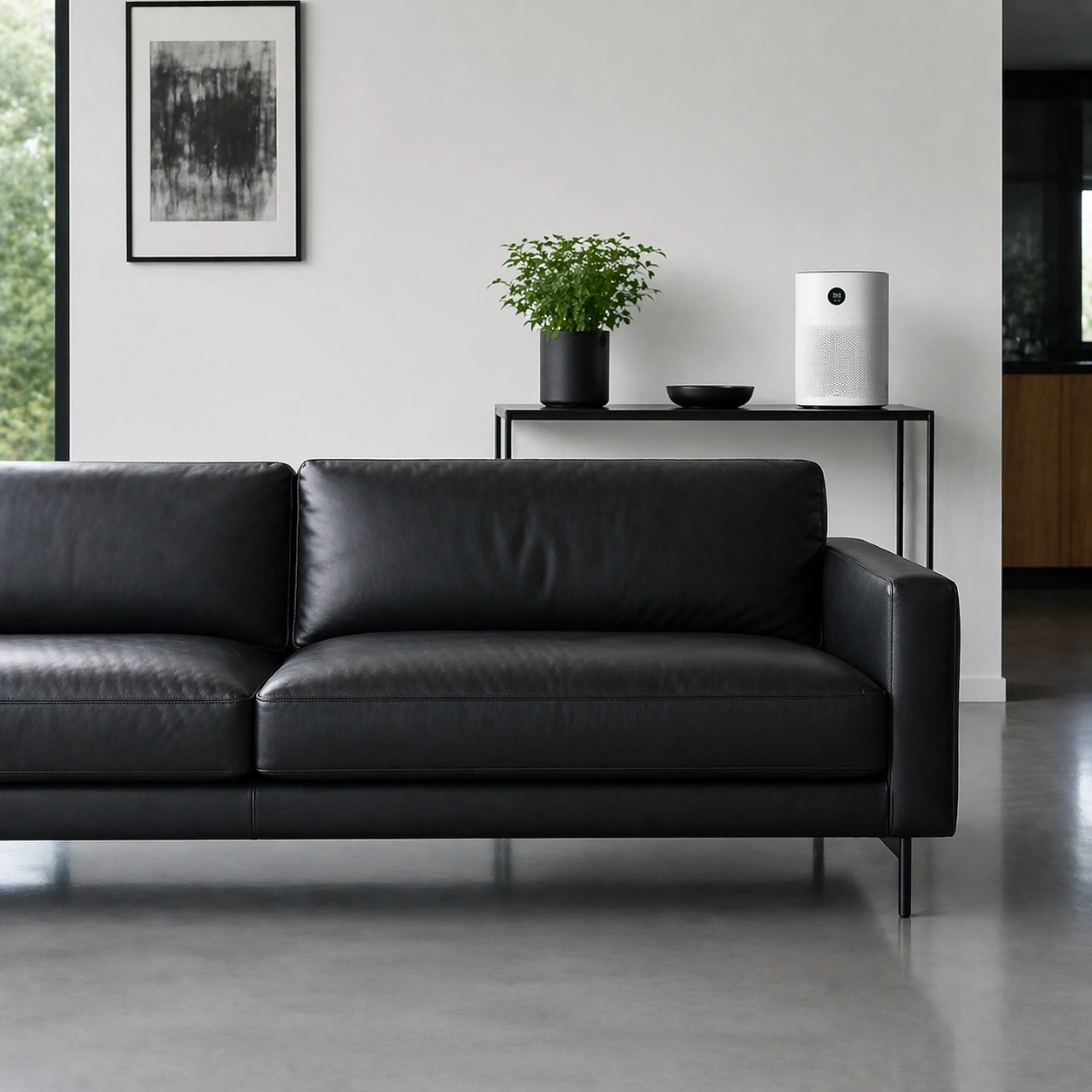
Allergy Sufferers
Leather doesn't harbor dust mites or dander. A quick wipe removes allergens completely.
Choose Leather
Budget-Conscious
Quality fabric sofas start at $300–$500. Genuine leather starts around $800+ and goes up fast.
Choose Fabric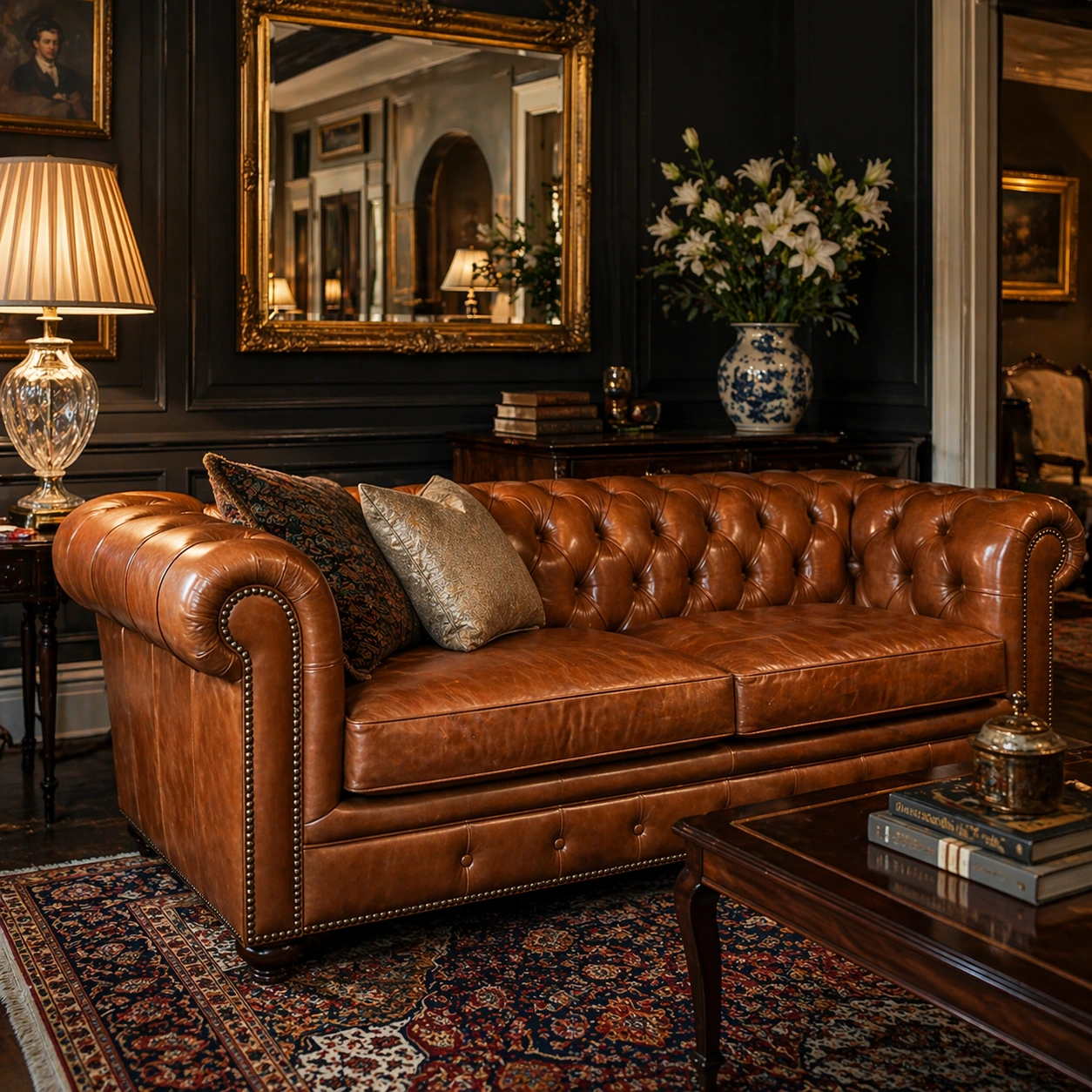
Luxury & Prestige
Full-grain leather develops character over decades. It's an investment that appreciates aesthetically.
Choose Leather
Design Enthusiast
Fabric offers infinite colors, patterns, and textures. Perfect for bold design statements.
Choose Fabric
Frequent Hosts
Guests = more wear. Leather handles heavy use and cleans up instantly between visits.
Choose Leather💡 Still unsure? If you have dogs and cats, or live in a hot climate but love the leather look, consider sofas designed specifically for pet owners — some use performance leather or hybrid materials that offer the best of both worlds.
Maintenance & Care: What to Expect
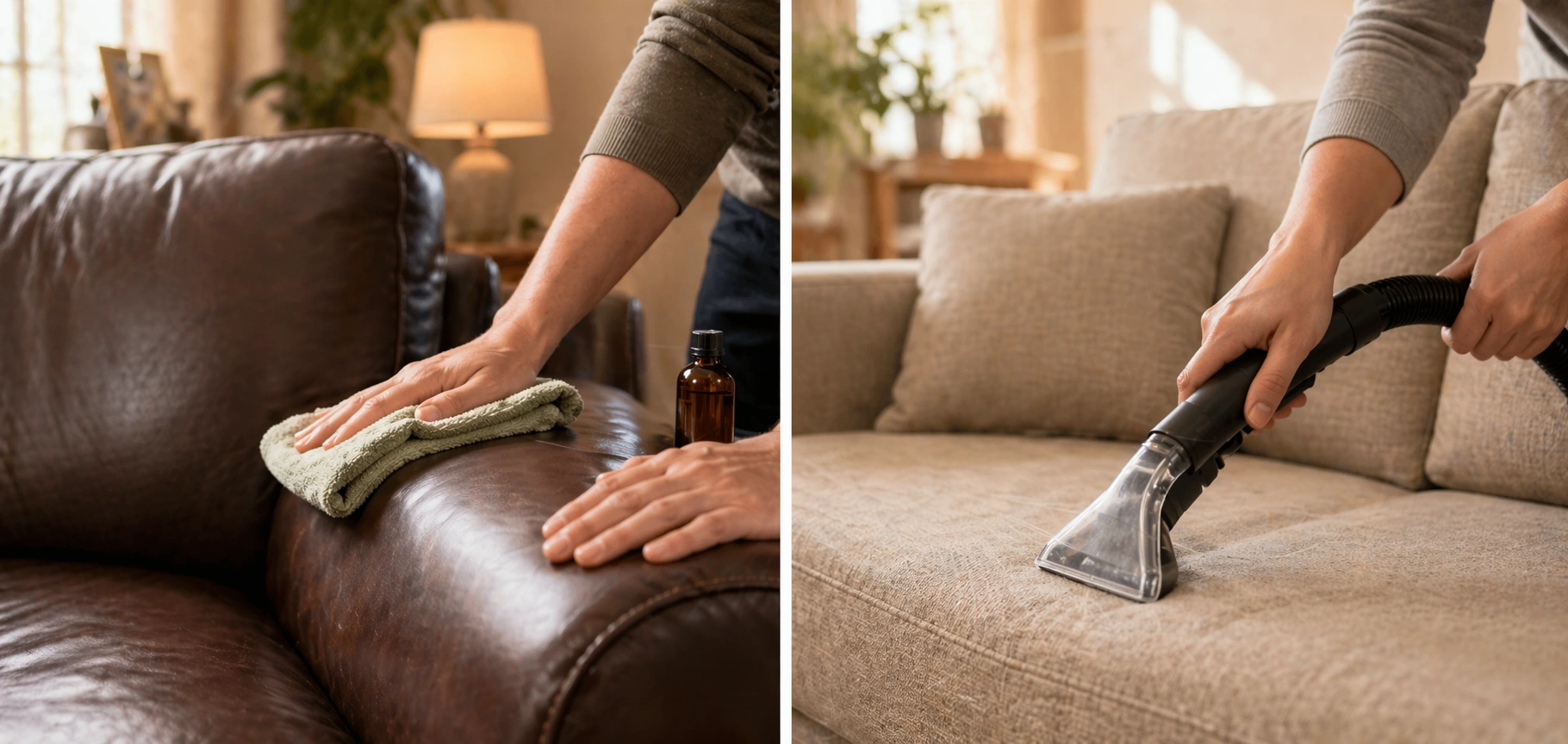
Maintenance is where the leather vs fabric gap becomes most apparent in daily life. A leather sofa requires minimal effort — a weekly wipe with a damp cloth and conditioning twice a year keeps it in excellent shape. Our guide on how to clean a leather sofa walks you through the full routine.
Fabric sofas demand more attention. Regular vacuuming is essential to remove dust, crumbs, and pet hair. Spills must be addressed immediately to prevent permanent staining, and deep cleaning (steam cleaning or professional service) is recommended every 12–18 months. For step-by-step instructions, see our fabric sofa cleaning guide.
Leather conditioning prevents cracking and preserves suppleness — especially important in dry climates. Skip it, and you risk the leather drying out and splitting within a few years. Learn the proper technique in our leather conditioning guide.
For fabric owners, the single biggest upgrade you can make is applying a fabric protector spray or choosing a sofa already treated with stain-resistant technology. Our sofa protection guide covers the best products and methods. If your fabric is already showing wear, a slipcovered sofa or replaceable cover can extend its life dramatically.
🪑 Leather Care Checklist
- Wipe weekly with a damp microfiber cloth
- Condition every 6 months with leather balm
- Blot spills immediately — don't rub
- Keep away from direct heat and sunlight
- Treat minor scratches with leather oil
- Don't use harsh chemical cleaners
🛋️ Fabric Care Checklist
- Vacuum weekly with upholstery attachment
- Blot spills immediately with clean cloth
- Steam clean or deep clean every 12–18 months
- Apply fabric protector spray after cleaning
- Rotate and flip cushions regularly
- Don't saturate fabric with water when spot-cleaning
Price & Long-Term Value
Price is often the first thing people consider — but long-term value matters more. A $1,200 leather sofa that lasts 20 years costs $60 per year. A $500 fabric sofa that lasts 8 years costs $62.50 per year. The math often favors leather when you factor in longevity.
That said, not everyone can or should spend more upfront. If your budget is tight, a well-made fabric sofa gives you immediate comfort and style at a manageable price. Our sofa budget guide and sofa price breakdown help you understand exactly where your money goes.
If you're weighing overall value beyond just the material, our price vs quality sofa guide shows you how to spot the difference between a genuine bargain and a costly mistake.
💡 Value Tip: The best time to buy either type is during major sales events (Black Friday, Labor Day, Memorial Day). Retailers often discount leather sofas by 20–40%, making premium options far more accessible. Check our best time to buy a sofa guide for the full calendar.
Common Myths Debunked
-
Myth
"Leather is too hot for tropical climates."
FactGenuine leather is actually porous and breathes better than faux leather or vinyl. In air-conditioned rooms, leather feels pleasantly cool. The real issue is high humidity combined with body contact — in that scenario, fabric is indeed more comfortable. For naturally ventilated homes in warm regions, breathable fabric is the better practical choice.
-
Myth
"Fabric sofas always stain easily and are impossible to clean."
FactPerformance fabrics like Crypton, Sunbrella, and Revit are engineered to resist stains, moisture, and bacteria — often outperforming even leather in spill tests. The key is choosing the right fabric, not writing off the entire category. Check the Martindale test rating before you buy.
-
Myth
"All leather sofas are expensive."
FactBonded leather and faux leather sofas can cost under $500. However, they don't offer the durability or aging benefits of genuine leather. If you're after real leather value, focus on top-grain options in the $800–$1,500 range. Anything significantly cheaper is likely bonded or synthetic.
-
Myth
"Leather furniture is cruel and bad for the environment."
FactMost leather used in furniture is a byproduct of the meat industry — hides that would otherwise be discarded. That said, the tanning process does use chemicals. If sustainability matters to you, look for vegetable-tanned leather or explore our guide to sustainable sofas for eco-friendly alternatives in both leather and fabric.
-
Myth
"Fabric sofas don't last more than a few years."
FactHigh-quality fabric sofas with performance weaves and sturdy frames can easily last 10–15 years. The frame material and spring system matter just as much as the upholstery. A cheap leather sofa with a weak frame will fail faster than a well-built fabric one.
Real-World Scenarios: What Would You Pick?

Scenario 1 — Young couple, first apartment, mild climate: You're furnishing on a budget and might move in 3–5 years. A quality fabric sofa under $600 gives you comfort and style without a major financial commitment. If you choose a neutral fabric, it adapts to any new space.
Scenario 2 — Growing family, suburban home, dog: Three kids, a golden retriever, and a living room that sees constant action. A top-grain leather sofa handles spills in seconds, wipes free of dog hair, and survives years of heavy use. The higher upfront cost pays for itself in longevity.
Scenario 3 — Single professional, city loft, design-forward: You want your sofa to be a statement piece. A contemporary fabric sofa in a bold color or rich velvet adds the personality your space craves — and without kids or pets, maintenance stays manageable.
Scenario 4 — Retirees, cozy home, hot climate: Comfort and ease of sitting/standing are priorities. A sofa for seniors with firm cushion support and breathable fabric keeps you comfortable year-round without the stickiness leather can cause in heat.
The Bottom Line
There's no universal winner — only the right choice for your home. Both materials excel in different areas, and the best sofa is the one that matches how you actually live.
Choose Leather If...
You value longevity, easy maintenance, and a timeless look. Your home is air-conditioned, you have dogs (not cats), or allergy-friendliness is a priority. You're willing to invest more upfront for decades of use.
Choose Fabric If...
You prioritize comfort, color variety, and affordability. You live in a warm climate, have cats, love changing your décor, or want a softer feel for daily lounging. You're okay with more frequent cleaning and a shorter lifespan.
Frequently Asked Questions
It depends on the type of pet. For dogs, leather is generally better because pet hair doesn't cling and it's easy to wipe clean. However, cats can scratch leather easily. For cat owners, a tightly woven fabric like microfiber is often a safer choice. Alternatively, you can use pet-proof sofa covers to protect either material.
A high-quality leather sofa typically lasts 15–25 years or more, while a fabric sofa averages 5–15 years depending on the material quality and usage. Leather develops a patina over time that can enhance its appearance, whereas fabric may show wear, pilling, or fading more noticeably. For tips on extending your sofa's life, see our sofa maintenance guide.
Yes, leather tends to feel warmer and stickier in hot, humid weather because it doesn't breathe as well as most fabrics. Fabric sofas, especially those made from cotton or linen, allow better air circulation and feel cooler in warm climates. However, leather feels pleasantly cool in air-conditioned rooms.
Yes, minor leather damage like small scratches, scuffs, or cracks can often be repaired with leather repair kits or professional reconditioning. Deep tears may require professional leather tear repair or panel replacement. Fabric damage like tears or burns is harder to fix seamlessly and often requires patching or reupholstering.
Fabric sofas are generally more budget-friendly, with prices starting around $300–$500 for decent quality. Leather sofas start higher, typically $800–$1,500 for genuine leather, and can go well above $3,000 for premium full-grain leather. However, leather's longer lifespan can make it a better long-term investment. Learn more about how much a good sofa should cost.
Microfiber and performance fabrics (like Crypton or Sunbrella) are among the most durable options. Microfiber resists stains, fading, and wear exceptionally well. Performance fabrics are engineered for heavy use and often come with built-in stain and moisture resistance. Check our guide on the most durable sofa fabric for detailed comparisons.
Generally, no. Bonded leather contains only 10–20% actual leather fibers and is prone to peeling, cracking, and flaking within 2–5 years. It's cheaper upfront but offers poor long-term value. If you want the leather look on a budget, high-quality faux leather (PU leather) from a reputable brand tends to perform better than bonded leather.
Ready to decide? You now have the full picture — types, pros, cons, comparisons, lifestyle matches, and real scenarios. If you still need help narrowing it down, our complete guide on how to choose a sofa walks you through every factor step by step. And when you're ready to browse, the recommended picks below are a great place to start.