
Sofa Cushion Fill Types: The Complete Guide
The cushion fill is what you actually sit on — and it makes or breaks your sofa experience. Learn every fill type, what feels best, and which lasts longest.
COMPARE ALL FILL TYPESWhy this matters: Two sofas that look identical can feel completely different based on what's inside the cushions. Understanding cushion fill types is the single most important factor in predicting long-term comfort — and it's something most buyers overlook entirely.

What Is Sofa Cushion Fill?
Sofa cushion fill refers to the material packed inside the removable seat and back cushions of a sofa. It is the layer between the upholstery fabric and the frame that determines how soft or firm the sofa feels when you sit down. While the frame provides structural support, the cushion fill is what your body actually interacts with — making it arguably the most impactful component for daily comfort.
There is no single "best" cushion fill. The right choice depends on your priorities: whether you prefer a sink-in softness or structured firmness, how many hours per day the sofa will be used, your budget, and whether you have allergies or pets. A family room sofa that gets daily wear from kids and pets has very different fill requirements than a guest room sofa used occasionally.
The fill type also directly affects durability. A cheap, low-density foam cushion may start sagging within a year, while a high-quality latex core can maintain its shape for 15 to 20 years. This is why understanding fill types is essential before you buy — it helps you evaluate sofa quality accurately and avoid wasting money on furniture that won't hold up.
1. Polyurethane Foam (Poly-Foam)
Polyurethane foam — commonly called poly-foam — is the most widely used cushion fill in the furniture industry. It accounts for the majority of sofa cushions sold worldwide, found in everything from budget furniture to mid-range pieces. Poly-foam is a synthetic material created by mixing polyols and diisocyanates, resulting in a versatile foam that can be manufactured in varying densities and firmness levels.
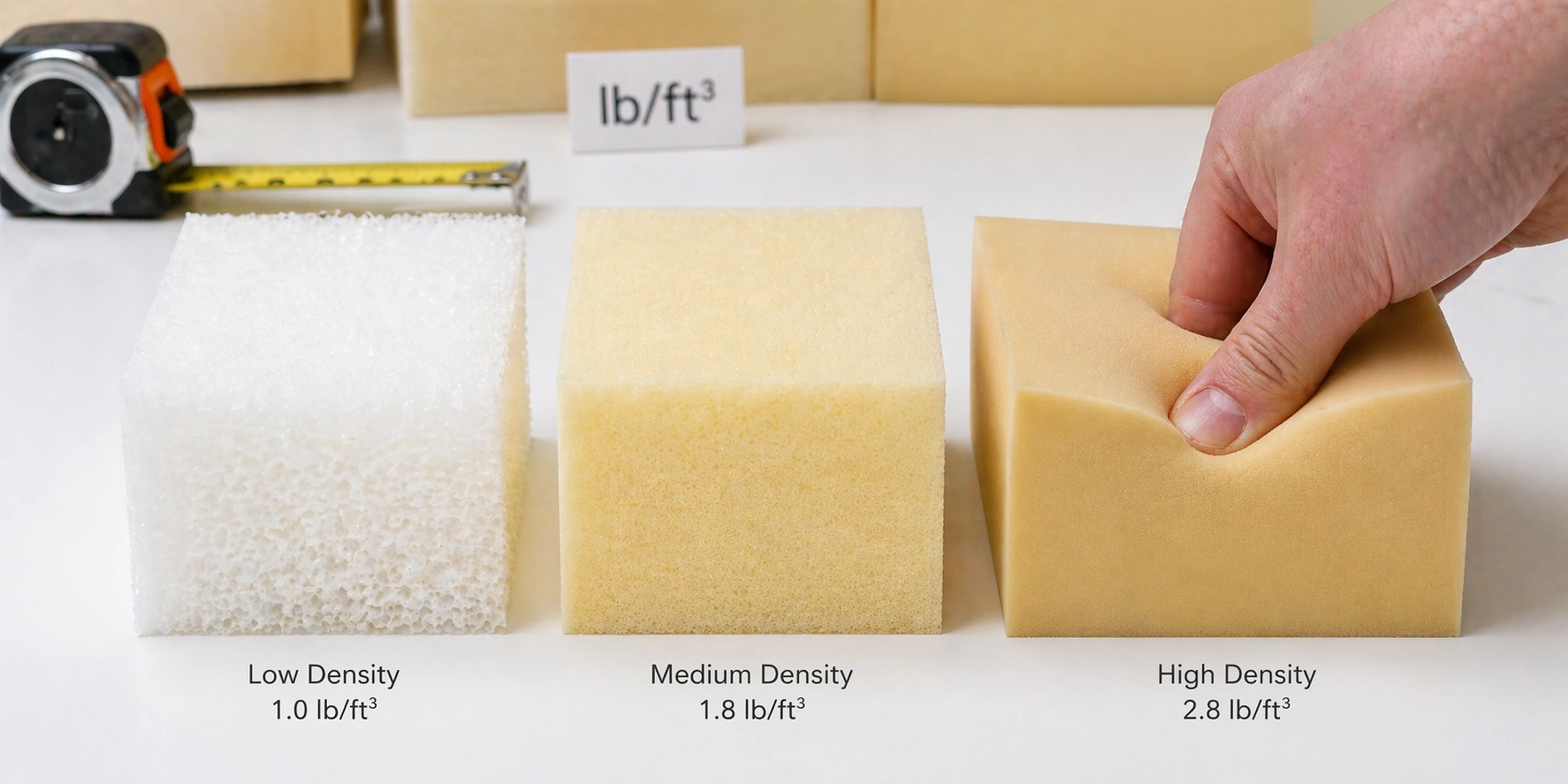
Foam Density: The Most Important Number
Foam density, measured in pounds per cubic foot (lb/ft³), indicates how much actual foam material is packed into a given volume. It is the single best predictor of how long a foam cushion will last before it sags or flattens. Understanding sofa foam density and ILD ratings is critical when comparing poly-foam cushions.
- Low-density (1.0 – 1.4 lb/ft³): Found in budget sofas and cheap imports. Feels soft initially but compresses quickly. Expect noticeable sagging within 1–2 years. Not recommended for daily use.
- Medium-density (1.5 – 1.8 lb/ft³): Common in mid-range sofas. Provides decent comfort with moderate durability. Typically lasts 4–6 years with regular use before showing wear.
- High-density (1.8 – 2.5 lb/ft³): The sweet spot for quality furniture. Offers firm, supportive seating with excellent shape retention. Lifespan of 8–10 years with proper care.
- Very high-density (2.5+ lb/ft³): Used in premium and commercial-grade furniture. Extremely durable but can feel quite firm. May last 10–15 years.
Pros and Cons of Polyurethane Foam
✅ Advantages
- Most affordable fill option
- Available in a wide range of densities and firmness levels
- Consistent, predictable feel
- Hypoallergenic — doesn't harbor dust mites
- Easy to manufacture in custom shapes and sizes
- Good moisture resistance compared to natural fills
❌ Disadvantages
- Low-density versions sag and flatten quickly
- Can feel "hot" — doesn't breathe as well as natural fills
- Off-gassing smell when new (dissipates in a few days)
- Not environmentally friendly — petroleum-based
- Firmness can feel unyielding compared to down or fiber
- Eventually breaks down and cannot be restored once degraded
Best for: Budget-conscious buyers who want decent quality, households that prefer firm seating, and anyone who wants the easiest path to predictable comfort. Pair high-density foam (1.8+ lb/ft³) with a Dacron wrap for the best value. Check out our best budget sofas guide for models that use quality foam without the premium price tag.
2. Memory Foam (Viscoelastic Foam)
Memory foam, technically known as viscoelastic polyurethane foam, was originally developed by NASA in the 1960s to improve seat cushioning and crash protection for astronauts. It responds to body heat and pressure by softening and conforming to your shape, then slowly returns to its original form when the pressure is removed. This unique property makes it exceptional at distributing weight and relieving pressure points.
How Memory Foam Differs from Regular Foam
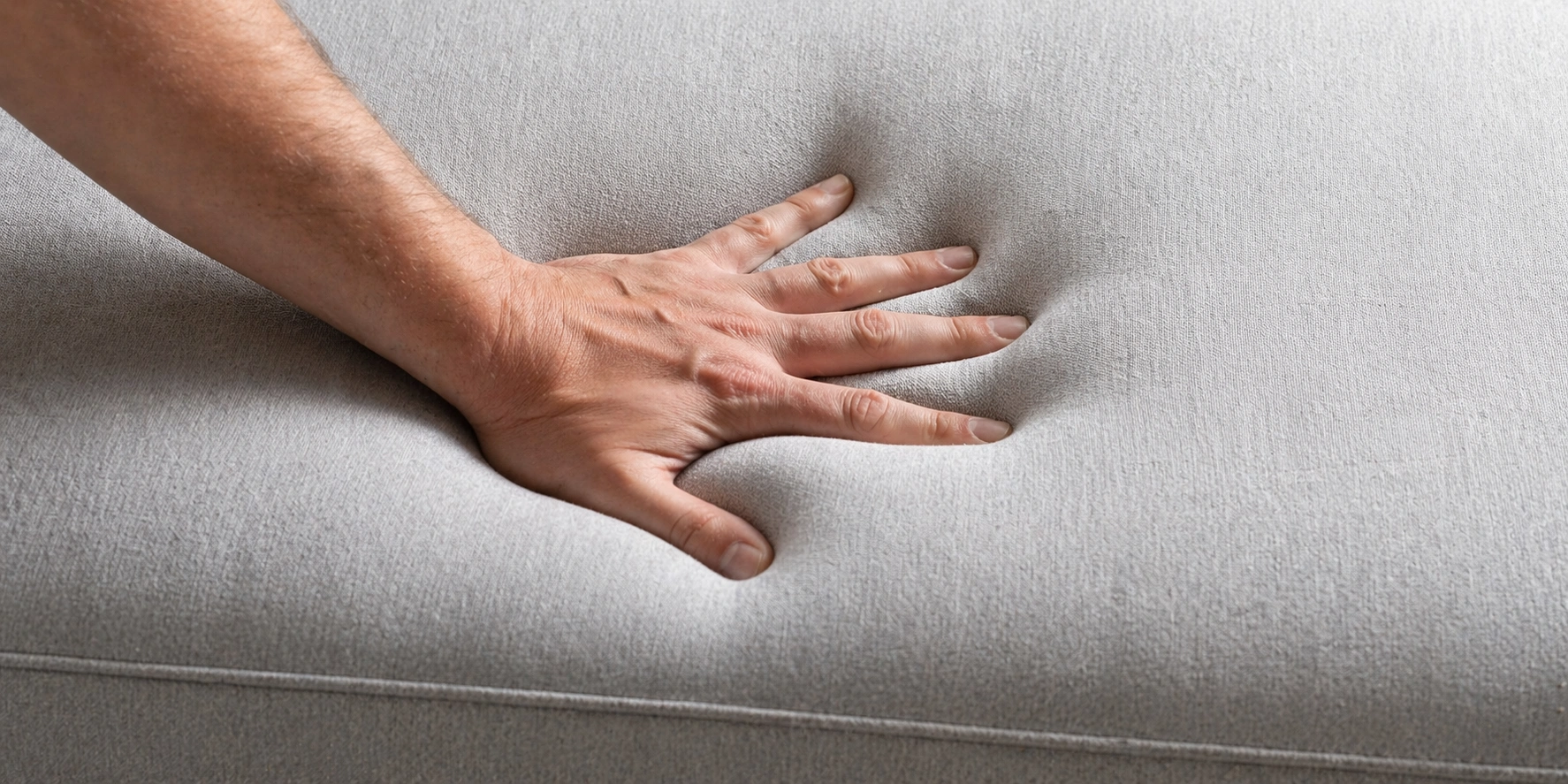
While both are polyurethane-based, memory foam has added chemicals that increase its viscosity and density. When you press into regular poly-foam, it pushes back immediately. When you press into memory foam, it yields slowly and holds the impression for a moment before recovering. This "slow recovery" characteristic is what makes memory foam feel so different — it cradles rather than resists.
For people who experience back pain when sitting, memory foam can be transformative because it eliminates the pressure points that cause discomfort, particularly around the tailbone and lower spine. This also makes it a popular choice for extended lounging sessions.
Pros and Cons of Memory Foam
✅ Advantages
- Superior pressure point relief
- Excellent for back pain sufferers
- Motion isolation — absorbs movement
- Naturally hypoallergenic and dust mite resistant
- Very durable at higher densities (8-12 years)
- Reduces tossing and fidgeting
❌ Disadvantages
- Retains body heat — can feel uncomfortably warm
- Slow response can make it hard to change positions
- Heavy — difficult to move cushions for cleaning
- More expensive than standard poly-foam
- Initial chemical off-gassing odor
- Can feel "stuck" or difficult to stand up from
Best for: People with back or joint pain, those who spend long hours on the sofa (watching TV, reading, or recovering), and anyone who loves that "cradled" feeling. Not ideal for those who prefer to sit upright or who tend to shift positions frequently. See our guide on comfort versus durability tradeoffs to understand how memory foam fits into the bigger picture.
3. Latex Foam
Latex foam is made from the sap of rubber trees (Hevea brasiliensis) and represents the premium end of sofa cushion fills. It can be produced using two methods: the Dunlop process (denser, firmer, more common in furniture) and the Talalay process (lighter, more consistent cell structure, softer feel). Latex has a distinctive "springy" quality — it compresses under weight but pushes back actively, rather than just slowly recovering like memory foam.

Natural vs. Synthetic Latex
- Natural latex (80–100% rubber content): Sourced from rubber tree plantations. More environmentally friendly, naturally antimicrobial, resistant to mold and mildew, and has a distinctive "clean" rubber scent. More expensive but significantly more durable — often lasting 15–20 years.
- Blended latex (50–70% natural): Mixes natural sap with synthetic styrene-butadiene rubber (SBR). More affordable while retaining many of natural latex's benefits. Good middle-ground option.
- Synthetic latex (100% SBR): Entirely petroleum-based. Less expensive but lacks the durability, breathability, and eco-friendliness of natural latex. Identifying synthetic vs. natural can be difficult without manufacturer disclosure.
Best for: Buyers who want the longest-lasting cushion possible, eco-conscious consumers, people who prefer a responsive (bouncy) feel over a sink-in feel, and those with allergies who want natural antimicrobial properties. Latex is an excellent investment that often outlasts the sofa frame itself. Explore our luxury sofa recommendations for models that feature premium latex cushions.
4. Down and Feather Fill
Down and feather fill is the traditional luxury cushion stuffing, used in high-end furniture for centuries. Down refers to the soft, fluffy undercoating of geese or ducks that provides exceptional softness without quills. Feathers have a structured quill shaft and provide more body and resilience. Most quality sofa cushions use a blend — typically 50–75% down and 25–50% feathers — to balance softness with some structure.

The Down-Wrapped Foam Compromise
Pure down cushions have significant drawbacks for everyday use (see below). To solve this, most quality furniture makers offer a down-wrapped option: a firm foam core (usually high-density poly-foam) wrapped in a thick envelope of down and feathers. This gives you the plush, sink-in surface feel of down with the structural support and shape retention of foam. It's the best of both worlds and what we recommend for most people considering down.
Pros and Cons of Down & Feather
✅ Advantages
- Unmatched softness and luxury feel
- Naturally breathable — stays cool in summer
- Conforms gently to body shape
- Biodegradable and natural material
- Down-wrapped versions combine luxury with support
- Quiet — no squeaking or rustling
❌ Disadvantages
- Very expensive — can double the sofa price
- Pure down cushions require daily fluffing
- Lacks firm support — not ideal for elderly users
- Allergy trigger for some people
- Feathers can poke through fabric over time
- Not pet-friendly — claws easily damage down cushions
Best for: Formal living rooms, low-traffic areas, and buyers who prioritize luxury feel above all else. Down-wrapped foam is practical enough for primary living room sofas if budget allows. Avoid pure down cushions in households with pets or young children. If you're comparing comfort levels, our firm vs. plush sofa guide explores the firmness spectrum in detail.
5. Polyester Fiberfill
Polyester fiberfill — often sold under brand names like Dacron, Poly-Fil, or simply "stuffing" — consists of spun polyester fibers that create a fluffy, cloud-like fill. It's the cheapest cushion fill available and is commonly used in back cushions, throw pillows, and budget sofa seat cushions. It can also be used as a wrapping layer around foam cores to soften the initial feel.

When Is Fiberfill Acceptable?
- Back cushions: Perfectly fine. Back cushions don't bear body weight, so fiberfill's lack of structural support isn't a problem. Most sofas use fiberfill in back cushions regardless of what the seat cushions contain.
- Throw pillows and accent cushions: Ideal use case — these are decorative and don't need to support weight.
- As a wrap layer: A 1–2 inch fiberfill wrap over a foam core is standard practice and adds comfort without compromising support.
- Budget seat cushions: Acceptable only for occasional-use furniture. Fiberfill-only seat cushions will flatten within months under daily use.
Best for: Back cushions on any sofa, throw pillows, and as a softening wrap around foam cores. Not recommended as a standalone seat cushion fill for any sofa that will be used regularly. If your cushions have already flattened, you can explore replacement cushion options to upgrade to a better fill.
6. Wrapped Foam (Dacron-Wrapped Foam)
Wrapped foam is not a separate fill material — it's a construction method where a poly-foam core is encased in a layer of polyester batting (usually Dacron). This wrapping serves several purposes: it softens the initial sit feel so you don't feel the hard edge of the foam, it creates a rounder, more upholstered appearance, and it provides a small buffer against foam degradation. This is currently the most popular cushion construction in quality sofas.

The thickness of the wrap typically ranges from 0.5 to 2 inches. A thicker wrap creates a softer, more luxurious initial feel but can mask a lower-quality foam core underneath. This is why it's important to know both the foam density AND the wrap thickness. A sofa with 1.4 lb/ft³ foam and a 2-inch wrap may feel great in the showroom but will disappoint within a year as the foam underneath compresses.
For a proper sofa comfort test in a showroom, press firmly through the wrap layer to feel the foam core underneath. If the core feels mushy or has no resistance, the sofa won't hold up regardless of how plush the exterior feels.
Best for: The majority of households. Wrapped foam with a high-density core (1.8+ lb/ft³) and a moderate wrap (1 inch) is the ideal balance of comfort, durability, and value. This construction works well across all sofa types, from sectionals to recliners.
7. Spring-Filled Cushions (Marshall Coil)
Spring-filled cushions, most commonly using Marshall coil construction, incorporate individual fabric-encased pocket springs inside the cushion. Each spring works independently, similar to a pocket spring mattress. This is a premium cushion technology that provides a level of resilience and support that foam alone cannot match. The springs are typically surrounded by foam or fiberfill layers for comfort.

It's important to distinguish between cushion springs and the sofa's base suspension spring system. The suspension (sinuous springs, eight-way hand-tied, etc.) supports the entire seat from underneath. Cushion springs are contained within the cushions themselves and provide an additional layer of support and bounce.
Pros and Cons of Spring-Filled Cushions
✅ Advantages
- Exceptional resilience — bounces back instantly
- Won't develop the permanent sag that foam can
- Excellent air circulation — stays cooler
- Even weight distribution across the seat
- Very long lifespan (15+ years)
- Luxury hotel and high-end furniture standard
❌ Disadvantages
- Most expensive cushion type
- Heavier than foam cushions
- Can be too firm for some preferences
- Rarely found in budget or mid-range sofas
- Not ideal for very low-profile modern designs
- Difficult to replace or repair if springs fail
Best for: Premium buyers who want hotel-quality seating, households where the sofa gets extremely heavy daily use, and anyone who finds foam cushions too "dead" or unresponsive. Spring cushions are particularly well-suited for large living rooms and formal spaces. Also an excellent choice for daily nappers who want resilient support that doesn't compact over time.
8. Hybrid Cushion Fills
Hybrid cushions combine two or more fill materials in a single cushion to maximize the strengths of each while minimizing their weaknesses. This is increasingly the approach taken by quality furniture manufacturers, as it allows them to deliver a customized sit experience that no single material can achieve alone.
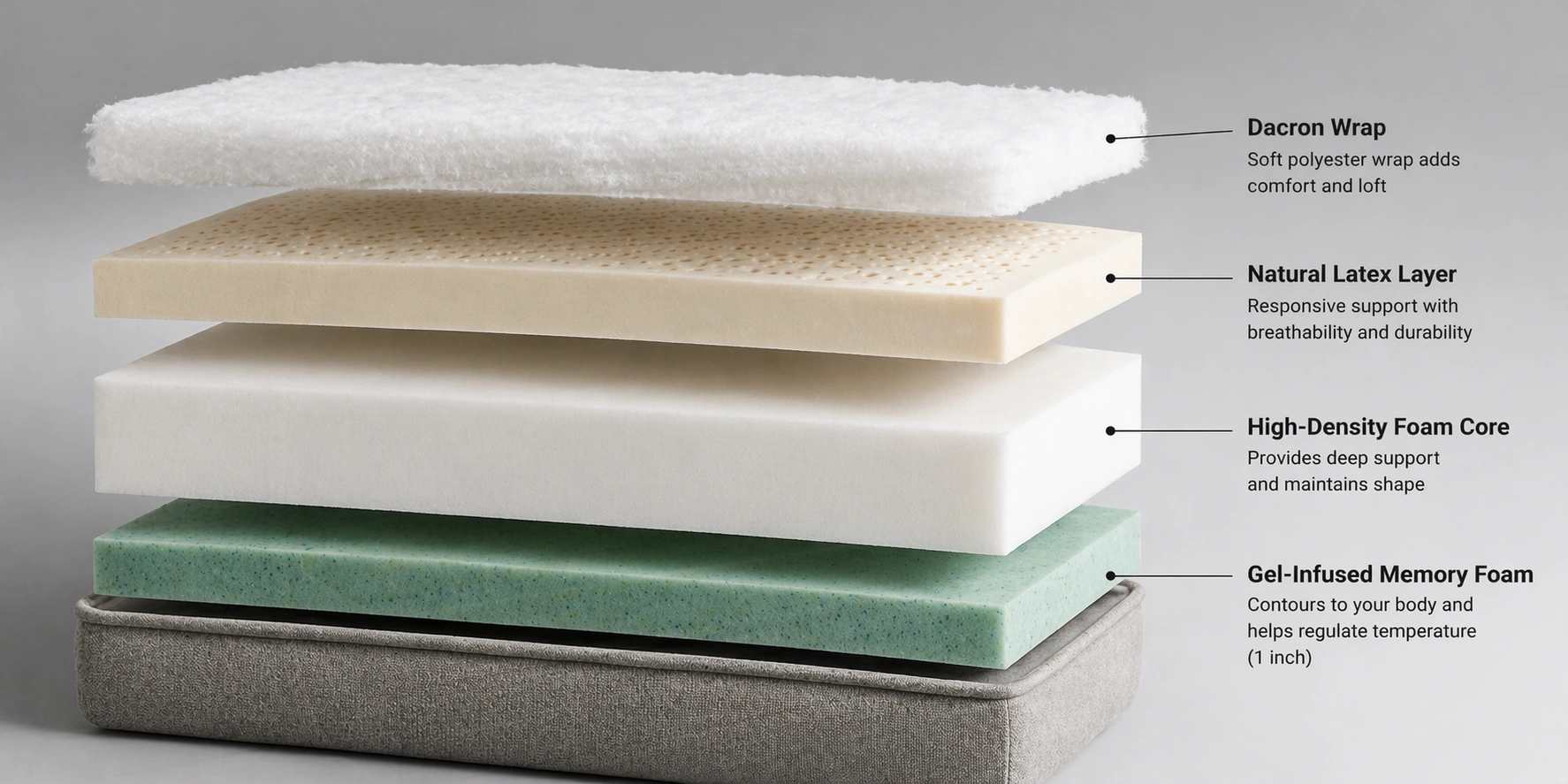
Common Hybrid Combinations
- Memory foam topper + high-density foam core + Dacron wrap: The most popular hybrid. Provides pressure relief on top, structural support in the middle, and a soft initial feel on the surface. Excellent all-around choice.
- Latex core + down wrap: Combines latex's resilience and longevity with down's luxurious surface softness. Very expensive but delivers an exceptional sit experience that lasts for decades.
- Spring core + foam layers + fiber wrap: Uses Marshall coils as the structural foundation with foam and fiber for comfort. Delivers maximum resilience with a plush feel. Found in the highest-end furniture.
- Gel-infused memory foam + high-density foam core: The gel particles help dissipate heat, addressing memory foam's biggest weakness. Good for warm climates or people who sleep hot.
When evaluating hybrid cushions, ask about the specific construction: what is each layer made of, how thick is each layer, and what is the foam density of the core. A well-designed hybrid with a 2.0 lb/ft³ core will outperform a poorly designed hybrid with a 1.4 lb/ft³ core, regardless of how many fancy materials are layered on top. This is an important aspect of understanding price versus quality in sofas — more layers don't always mean better quality if the foundation is weak.
Best for: Anyone who wants the best possible seating experience and has the budget for it. Hybrid fills are the future of quality sofa cushions, offering the most customizable comfort profiles. They're particularly worth the investment for a comfortable sofa that will be your primary seating for years to come.
Full Comparison: All Cushion Fill Types
The table below provides a side-by-side comparison of every cushion fill type across the factors that matter most when buying a sofa. Use this as your quick-reference decision tool.
| Fill Type | Comfort Feel | Durability | Lifespan | Price Range | Best For |
|---|---|---|---|---|---|
| Poly-Foam (Low) | Soft initially, flattens fast | Poor | 1–2 years | $ | Occasional use only |
| Poly-Foam (High) | Firm, supportive | Good | 8–10 years | $$ | Daily use, firm lovers |
| Memory Foam | Conforming, cradling | Good | 8–12 years | $$$ | Back pain, lounging |
| Latex (Natural) | Springy, responsive | Excellent | 15–20 years | $$$$ | Long-term investment |
| Down & Feather | Ultra-soft, luxurious | Fair* | 5–8 years* | $$$$ | Formal rooms, luxury |
| Down-Wrapped Foam | Plush surface, firm core | Very Good | 8–12 years | $$$ | Luxury daily use |
| Polyester Fiberfill | Cloudy, no support | Very Poor | 3–6 months (seats) | $ | Back cushions only |
| Wrapped Foam | Balanced, versatile | Good | 8–10 years | $$ | Most households |
| Marshall Coil | Bouncy, resilient | Excellent | 15+ years | $$$$ | Premium, heavy use |
| Hybrid (Multi-Layer) | Customizable | Very Good | 10–15 years | $$$–$$$$ | Best overall experience |
* Down durability rating applies to pure down cushions. Down-wrapped foam scores significantly higher due to the structural foam core.

How to Choose the Right Cushion Fill for You
With so many options, the decision can feel overwhelming. But it becomes straightforward once you identify your priorities. Answer these key questions to narrow down the best fill type for your situation:
Step 1: How Many Hours Per Day Will the Sofa Be Used?
- 1–3 hours (light use): Medium-density wrapped foam (1.5–1.8 lb/ft³) is sufficient. Suitable for guest rooms or formal living rooms used occasionally.
- 3–6 hours (moderate use): High-density wrapped foam (1.8–2.0 lb/ft³) or a memory foam hybrid. Ideal for most living room sofas.
- 6+ hours (heavy use): High-density foam (2.0+ lb/ft³), latex, Marshall coil, or a premium hybrid. Essential for family rooms, home offices, and households with multiple sitters.
Step 2: What Firmness Level Do You Prefer?
This is highly personal, but understanding the firm versus plush spectrum helps narrow your options:
- Very firm: High-density poly-foam, Marshall coil, latex
- Medium-firm: Wrapped foam, hybrid with foam core
- Medium-soft: Memory foam topper over foam, gel-foam hybrid
- Very soft: Down, down-wrapped foam, thick polyester wrap
Step 3: What Is Your Budget Range?
Cushion fill is one of the biggest cost drivers in sofa manufacturing. Understanding the sofa price breakdown helps you allocate your budget wisely:
- Under $800 total: Look for high-density poly-foam (1.8+ lb/ft³) with a Dacron wrap. This is the best quality you can realistically find in this price range. Avoid fiberfill-only seat cushions.
- $800–$2,000: You should expect wrapped high-density foam as standard. Some brands in this range offer memory foam or down-wrapped options as upgrades.
- $2,000–$4,000: Hybrid constructions, memory foam layers, and down-wrapped foam should be available. Latex options may start appearing.
- $4,000+: Latex cores, Marshall coil cushions, full down wraps, and complex multi-layer hybrids should be standard offerings. Anything less at this price point is overpriced.
Step 4: Special Considerations
- Back pain: Memory foam or latex for pressure relief and support. Avoid soft, unsupportive fills.
- Pets: High-density foam or latex. Down and fiberfill are easily damaged by claws. Consider pet-proof sofa covers regardless of fill type.
- Allergies: Memory foam, latex, or high-density poly-foam. Down and feathers can trigger allergies despite cleaning processes.
- Elderly or mobility issues: Firm, supportive fills that make standing up easier — high-density foam, latex, or spring cushions. Soft, deep fills like down can be difficult to rise from. See our guide to sofas for seniors and easy entry.
- Hot sleepers / warm climate: Latex, spring cushions, or gel-infused foam. Avoid standard memory foam which traps heat.

Extending the Life of Your Cushion Fill
No matter which fill type you choose, proper maintenance significantly extends its lifespan. Here are the most effective practices:
- Rotate and flip cushions weekly: This distributes wear evenly. Most cushions have a preferred sitting side — flipping them prevents one side from compressing while the other stays pristine.
- Fluff fiber and down cushions daily: A few seconds of karate-chop fluffing redistributes the fill and prevents permanent matting. This is non-negotiable for down-filled cushions.
- Don't sit on the edges: Edge sitting concentrates all your weight on a small area of foam, causing uneven compression and accelerated breakdown.
- Use armrests correctly: Leaning heavily on armrests transfers weight to the adjacent cushion corners, causing lopsided wear.
- Keep cushions dry: Moisture accelerates foam breakdown and can cause mold in down and fiberfill. Clean spills immediately and consider fabric protection treatments.
- Avoid direct sunlight: UV rays degrade foam and can discolor natural fills. Use UV protection strategies if your sofa is near a window.
If your cushions have already started to sag, don't automatically replace the sofa. Many cushion issues can be resolved through techniques to fix sagging sofa cushions, including adding a foam booster pad, replacing the insert entirely, or re-stuffing fiberfill cushions. These repairs typically cost $50–$200 versus $1,000+ for a new sofa.


