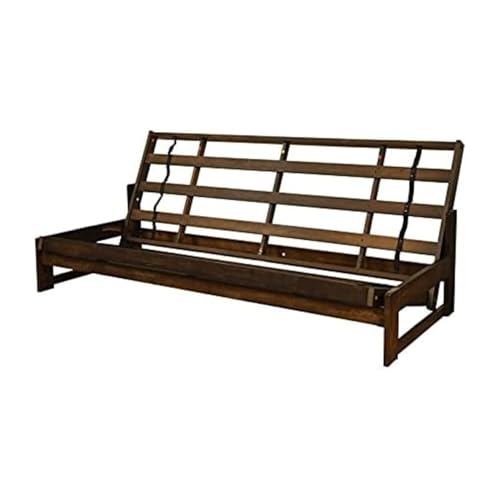
Sofa Frame Materials Guide
The frame is the skeleton of your sofa — it determines how long it lasts, how much weight it holds, and whether it stays structurally sound. This guide covers every material option so you can buy with confidence.
Why Frame Material Matters: Upholstery fades, cushions flatten, and fabric stains — all of these can be replaced or cleaned. But when the frame fails, the entire sofa is usually beyond repair. Understanding frame materials is the single most important factor in choosing a sofa that will last 15+ years versus one that sags within months. This is foundational knowledge before exploring our complete how to choose a sofa guide.
What Is a Sofa Frame and Why Is It Critical?
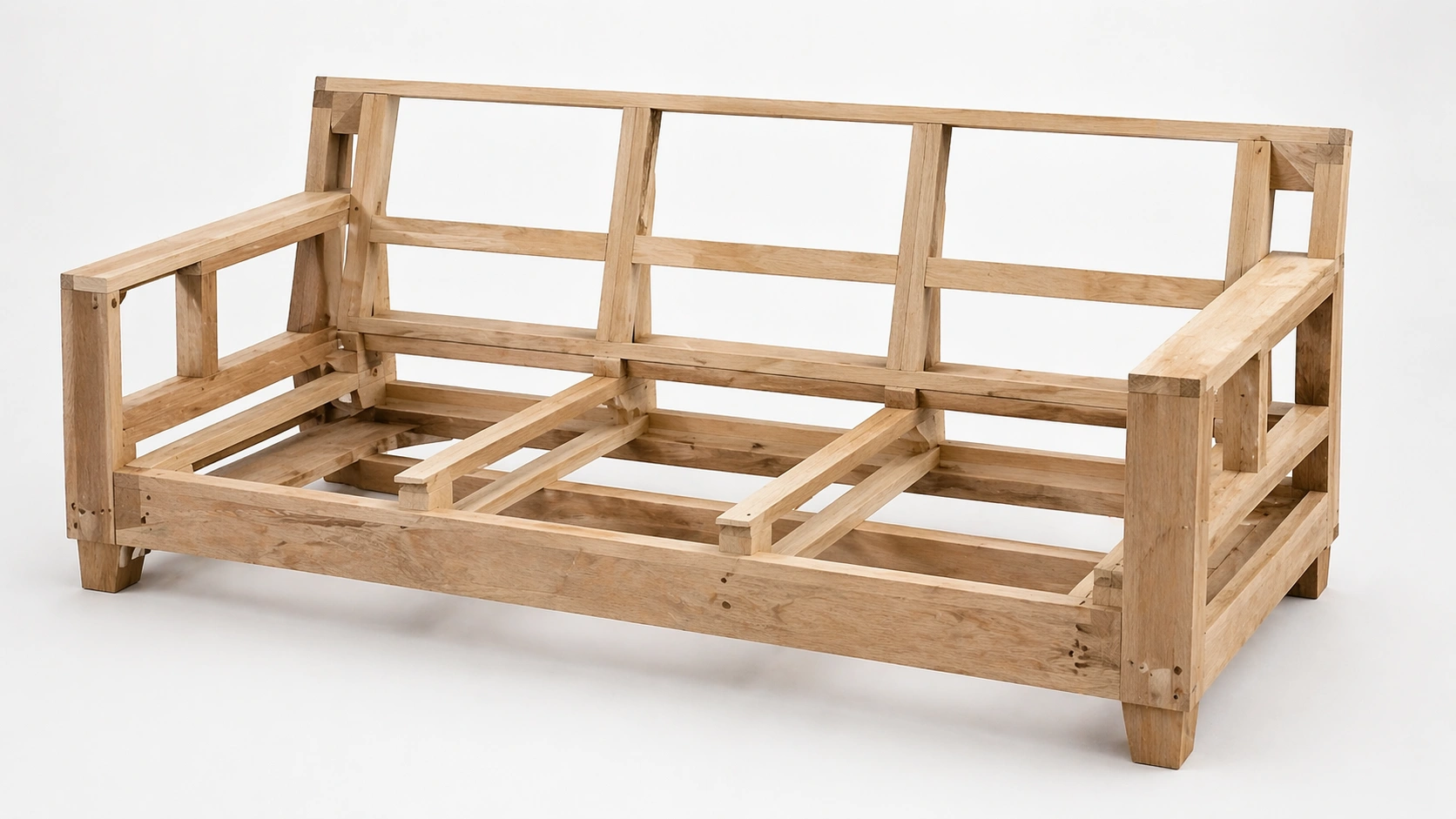
The sofa frame is the internal wooden or metal structure that supports everything else — the cushions, the upholstery, the arms, and the back. It bears the full weight of anyone sitting on the sofa, plus the constant stress of people sitting down and standing up thousands of times over its life. A well-built frame distributes this weight evenly across its structure, while a weak frame concentrates stress at joints, leading to creaking, wobbling, and eventual failure.
Most consumers focus on cushion softness and fabric color when shopping, but these are the most replaceable elements of any sofa. The frame is the one component that, once compromised, makes the entire piece unusable. If you've experienced a broken sofa frame, you already know that repair costs often exceed the value of the sofa itself. Understanding frame materials before you buy is the smartest investment you can make.
Overview of Sofa Frame Materials
There are five primary categories of materials used in sofa frame construction, each with distinct characteristics that affect durability, weight, cost, and longevity. The material alone doesn't determine quality — joint construction and overall design matter equally — but the material sets the ceiling for how long a sofa can possibly last.
| Material | Typical Lifespan | Weight | Cost Level | Warp Resistance | Best For |
|---|---|---|---|---|---|
| Kiln-Dried Hardwood | 15 – 25+ years | Heavy | High | Excellent | Daily use, investment pieces |
| High-Grade Plywood (7+ ply) | 8 – 15 years | Medium | Medium | Very Good | Mid-range sofas, humid climates |
| Softwood (Pine, Fir) | 5 – 10 years | Light-Medium | Low-Medium | Fair | Budget sofas, light use |
| Metal (Steel, Aluminum) | 10 – 20+ years | Very Heavy | Medium-High | N/A (no warping) | Modern designs, outdoor use |
| Particle Board / MDF | 2 – 5 years | Medium-Heavy | Very Low | Poor | Disposable furniture only |
Deep Dive: Each Frame Material Explained
1. Kiln-Dried Hardwood — The Gold Standard
Kiln-dried hardwood is the benchmark against which all other frame materials are measured. The term "hardwood" refers to wood from deciduous trees (oak, maple, ash, birch, beech, walnut) rather than the actual hardness of the wood. The "kiln-dried" part is equally critical — it means the wood has been placed in a temperature-controlled oven to reduce its moisture content to 8-10%, which prevents warping, cracking, and splitting that occurs when green or air-dried wood naturally loses moisture in your home.
Among hardwoods, oak is the most common choice for premium sofa frames due to its exceptional density and grain strength. Maple is slightly harder and offers excellent dimensional stability. Ash is prized for its flexibility under stress (it bends without breaking), making it ideal for curved-frame designs. Birch is a cost-effective hardwood that still delivers excellent durability. All of these are suitable choices for a sofa you intend to keep for 15+ years. If you're investing in a luxury sofa, kiln-dried hardwood should be non-negotiable.
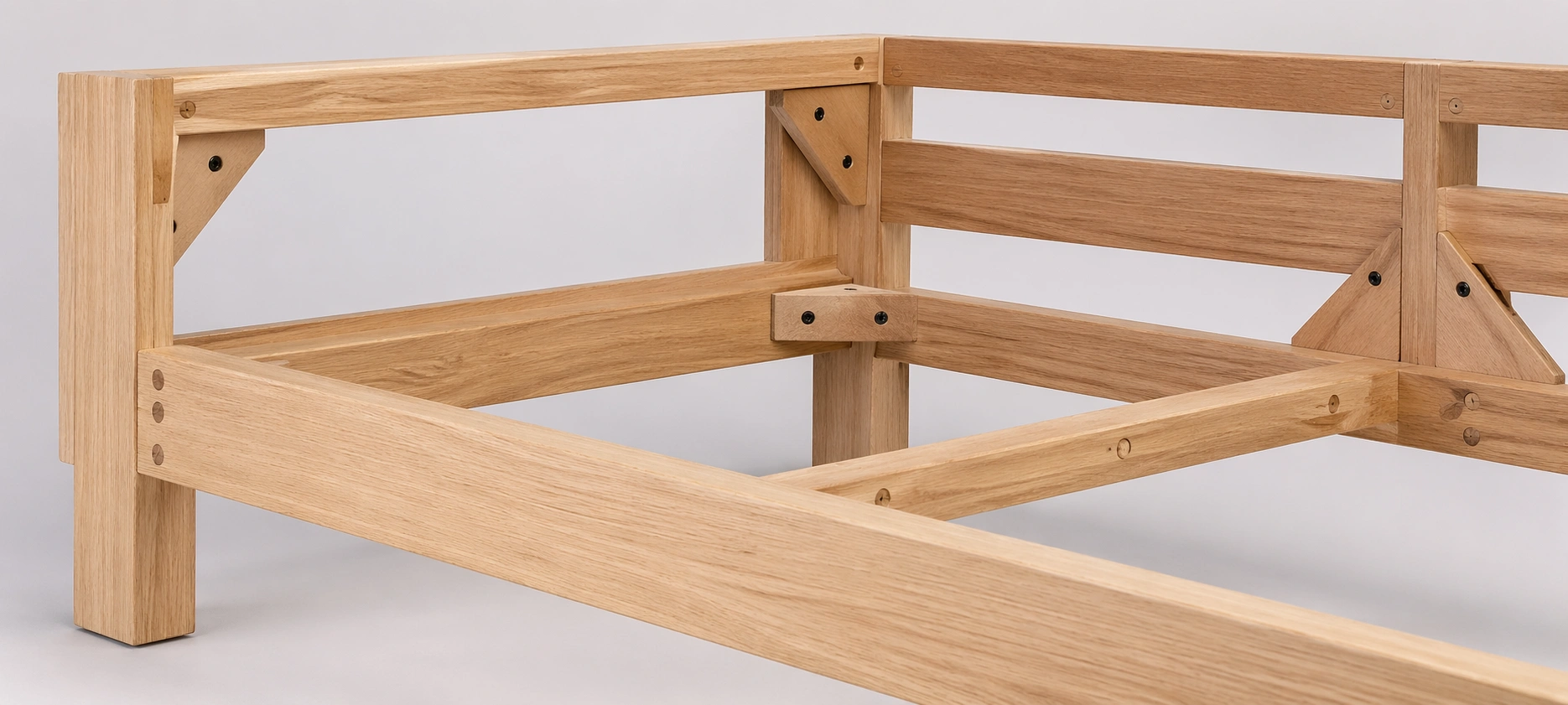
The key advantage of hardwood over other materials is its ability to hold screws, dowels, and glue joints firmly over decades of use. Softer materials gradually loosen at connection points, leading to the characteristic squeaking and wobbling that plagues cheaper sofas. For larger pieces like a 4 seater sofa or a 5 seater sofa, the longer span between armrests makes hardwood especially important — weaker materials will sag at the center over time.
2. High-Grade Plywood — The Practical Alternative
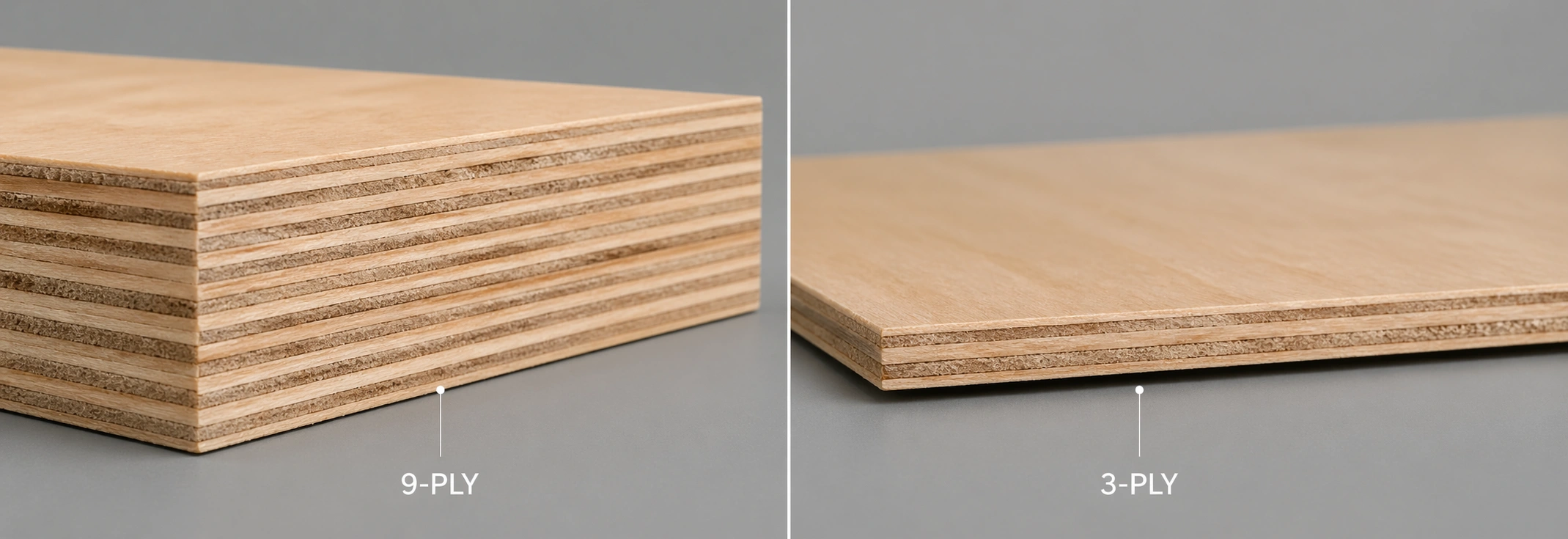
Plywood is an engineered wood product made by layering thin sheets of wood veneer (plies) with adhesive, alternating the grain direction of each layer. This cross-grain construction gives plywood a unique advantage: it is more resistant to warping from humidity and temperature changes than solid wood, because the alternating grain directions counteract each other's natural movement.
However, not all plywood is created equal. The critical factor is the number of plies. 7-ply or higher plywood with hardwood veneer faces approaches solid hardwood in strength and is perfectly suitable for sofa frames. 5-ply plywood is acceptable for lighter-duty applications. 3-ply plywood — often found in the cheapest sofas — is barely stronger than particle board and should be avoided for any sofa intended for daily use. The challenge with plywood is that sellers rarely disclose the ply count, making it harder for consumers to evaluate. This is where knowing how to check sofa quality before buying becomes essential.
3. Softwood (Pine, Fir) — Budget-Friendly but Limited
Softwood comes from coniferous trees — primarily pine, fir, and spruce. It is widely used in budget sofas because it costs significantly less than hardwood and is readily available. Pine is the most common softwood used in furniture framing.
The fundamental limitation of softwood is its lower density, which means it doesn't hold joints as securely over time. Screws and dowels gradually work loose under the repeated stress of daily use. Softwood is also more prone to denting and scratching during the manufacturing process and delivery. While pine frames can be adequate for a 2 seater sofa in a guest room or occasional-use setting, they are a poor choice for a family's primary seating — particularly for a sectional sofa where the frame spans a large area and bears heavy loads.
Some manufacturers use a hybrid approach: hardwood for the primary load-bearing rails (the front, back, and side frames) and softwood for internal cross-members where the stress is lower. This can be an acceptable compromise if the main structure is hardwood, but it's important to ask specifically which parts are hardwood versus softwood.
4. Metal Frames — Modern, Indestructible, but Niche
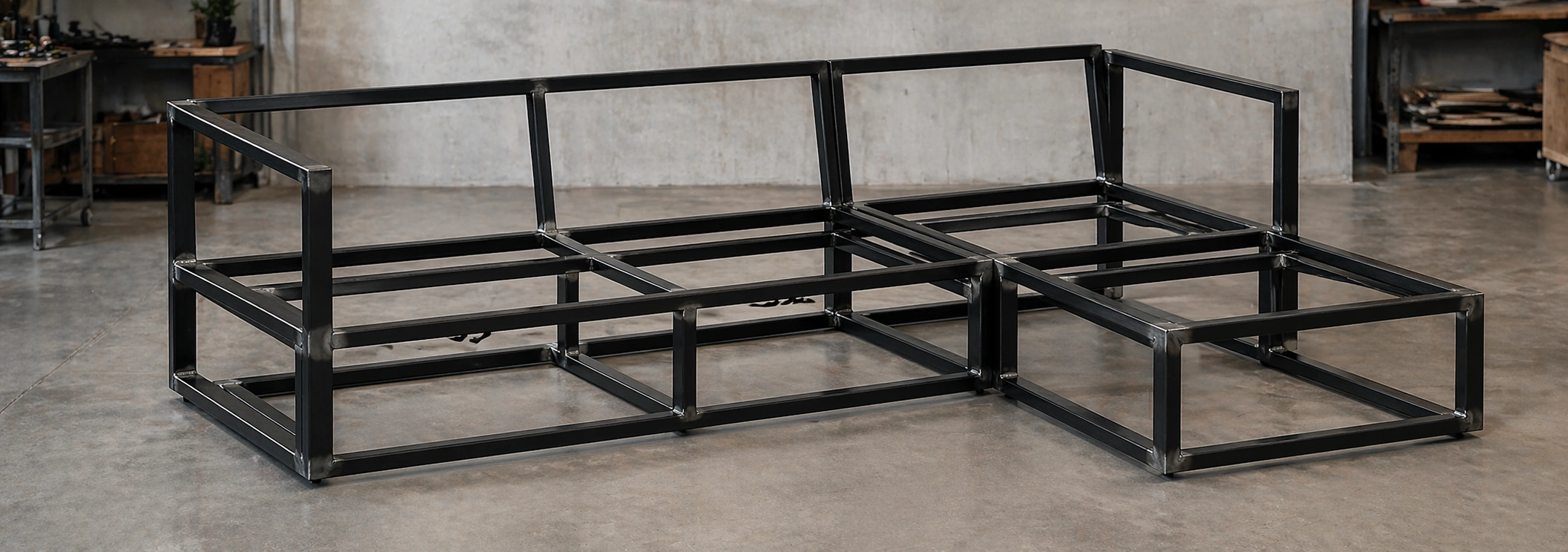
Metal sofa frames — typically made from steel, sometimes aluminum — are used in specific design categories rather than as a mainstream alternative to wood. Steel frames are virtually indestructible and immune to the warping, cracking, and joint-loosening problems that affect wood. They are commonly found in modern sofa designs, industrial-style pieces, and outdoor sofas where weather resistance is essential.
The downsides of metal frames are practical rather than structural. They are significantly heavier than wood, making delivery and rearrangement difficult. They can feel cold and unyielding compared to the slight give of a wood frame. Most importantly, the joint construction differs entirely — metal frames use welded joints or bolted connections rather than the glued-and-doweled joints of wood frames. A poorly welded joint is as weak as a poorly glued wood joint, so quality of construction still matters.
Some manufacturers combine metal and wood — a steel internal frame with wooden outer arms and back — to get the structural benefits of metal with the visual warmth of wood. This hybrid approach is increasingly common in high-end contemporary sofa designs.
5. Particle Board & MDF — What to Avoid
Particle board (made from wood chips pressed with resin) and MDF (medium-density fiberboard, made from wood fibers) are the weakest materials used in sofa construction. They cannot hold screws securely for more than a few months of daily use, they disintegrate when exposed to moisture, and they have no grain structure to provide natural strength. Any sofa with a particle board or MDF frame is essentially disposable furniture, regardless of how attractive the upholstery looks. If a seller cannot confirm the frame material, assume the worst.
Unfortunately, particle board and MDF are common in ultra-budget sofas and flat-pack furniture because they cost a fraction of real wood. The problem is that a sofa with an attractive fabric and plush cushions sitting on a particle board frame will feel fine in the showroom but will begin to fail within 1-2 years of daily use. This is one of the key hidden costs of buying a sofa — a cheap frame means you'll be replacing the entire sofa sooner than expected.
Frame Material Comparison at a Glance
Kiln-Dried Hardwood
Best Choice- Superior strength-to-weight ratio across all wood types
- Moisture content below 10% prevents warping and cracking
- Holds joints securely for 15-25+ years of daily use
- Available in oak, maple, ash, birch, beech, walnut
- Supports heavy-duty applications like sectionals and recliners
High-Grade Plywood (7+ ply)
Good Choice- Cross-grain layers resist warping better than solid wood in humidity
- 7-ply or higher provides adequate strength for most sofas
- More affordable than hardwood — good mid-range option
- Quality varies enormously — ply count is the key metric
- Not as strong at holding screws and dowels long-term
Softwood (Pine, Fir)
Fair Choice- Significantly lower cost — dominant in budget furniture
- Lower density means joints loosen faster under stress
- More susceptible to dents, scratches, and moisture damage
- Acceptable for occasional-use furniture or small pieces
- Hybrid hardwood/softwood frames can be a reasonable compromise
Metal (Steel, Aluminum)
Good (Niche)- Virtually indestructible — immune to wood-specific failures
- Excellent for outdoor, modern, and industrial designs
- Very heavy — difficult to move and deliver
- Welded joints must be high quality or they fail
- Lacks the slight flex/give that wood frames provide
Particle Board / MDF
Avoid- Weakest material — cannot hold joints under daily stress
- Disintegrates when exposed to moisture or high humidity
- Typical lifespan of 2-5 years before structural failure
- Common in flat-pack and ultra-budget furniture
- Cannot be repaired — frame failure means total replacement
Joint Construction: Equally Important as Material
Even the best kiln-dried hardwood frame will fail if the joints connecting its pieces are poorly constructed. The joint method determines how the frame rails, legs, arms, and cross-bars are held together under years of constant stress. Understanding joint types helps you evaluate quality beyond just the material label. This connects directly to the sofa suspension system because weak joints can cause the entire support structure to shift and fail.
Corner Blocks + Glue + Dowels
Wooden blocks glued and screwed into each interior corner where rails meet. Combined with dowels (wooden pegs) inserted into drilled holes. This is the strongest traditional joint method and the mark of a well-built frame.
Dowel Joints + Glue
Wooden dowels inserted into matching holes in both pieces, bonded with industrial adhesive. Very strong when executed precisely. Used in many high-quality and mid-range sofas.
Mortise and Tenon
A protruding tenon on one piece fits into a carved mortise cavity on the other. One of the oldest and strongest wood joints. Common in high-end and artisan-built frames.
Screws Only (No Glue)
Metal screws driven directly into wood without dowels or corner blocks. Acceptable for light-duty frames but screws will gradually loosen over years of use. Common in budget furniture.
Staples Only
Framework held together entirely by pneumatic staples. The weakest construction method — staples pull out under repeated stress. A clear indicator of low-quality, short-lifespan furniture.
Welded Joints (Metal Frames)
Metal pieces fused together with heat. Strong when done properly with full penetration welds. Poor-quality tack welds are a common failure point in cheap metal furniture.
When shopping, ask the seller: "Does this sofa have corner blocks on the frame?" Corner blocks are the single best indicator of frame quality that a consumer can verify. If the answer is yes, you're likely looking at a well-constructed piece. If the seller doesn't know or says no, that's a significant red flag regardless of what frame material they claim. For more evaluation methods, see our full sofa quality checklist.
How Frame Material Affects Different Sofa Types
Not all sofas impose the same demands on their frames. A small accent chair and a large L-shaped sectional experience fundamentally different stress patterns. The sofa size and room guide helps you choose dimensions, but frame requirements scale with size in ways many buyers don't consider.
Sectional Sofas
Sectionals span long distances and have multiple connection points between modules. A weak frame causes the entire sectional to shift and separate at joints. Hardwood is strongly recommended.
Modular Sofas
Individual modules can be moved and reconfigured, which means connection hardware experiences repeated attaching/detaching cycles. The frame material must withstand this extra stress.
Recliner Sofas
Reclining mechanisms add significant mechanical stress to the frame — the frame must support the recliner's weight plus the user's weight in multiple positions. Steel-reinforced hardwood is the standard.
Sleeper Sofas
The fold-out mattress mechanism creates enormous leverage stress on the frame. The frame must support not just sitting weight but a person lying down, plus the mechanism itself.
Wooden / Teak Sofas
In frames where the wood is exposed as a design element (like a wooden sofa or teak sofa, the frame material IS the visual feature, so quality is immediately visible.
Small Sofas (2-Seater, Loveseat)
Shorter spans mean less structural stress. While hardwood is still ideal, high-grade plywood is a perfectly acceptable choice for smaller pieces in low-traffic settings.
How to Inspect Frame Quality When Shopping
You can't always see the frame directly — it's hidden beneath upholstery, padding, and fabric. But there are several practical methods to evaluate frame quality without disassembling the sofa. These techniques take only a few minutes and can save you from a costly mistake. If you're shopping online, focus on asking the right questions to the seller.
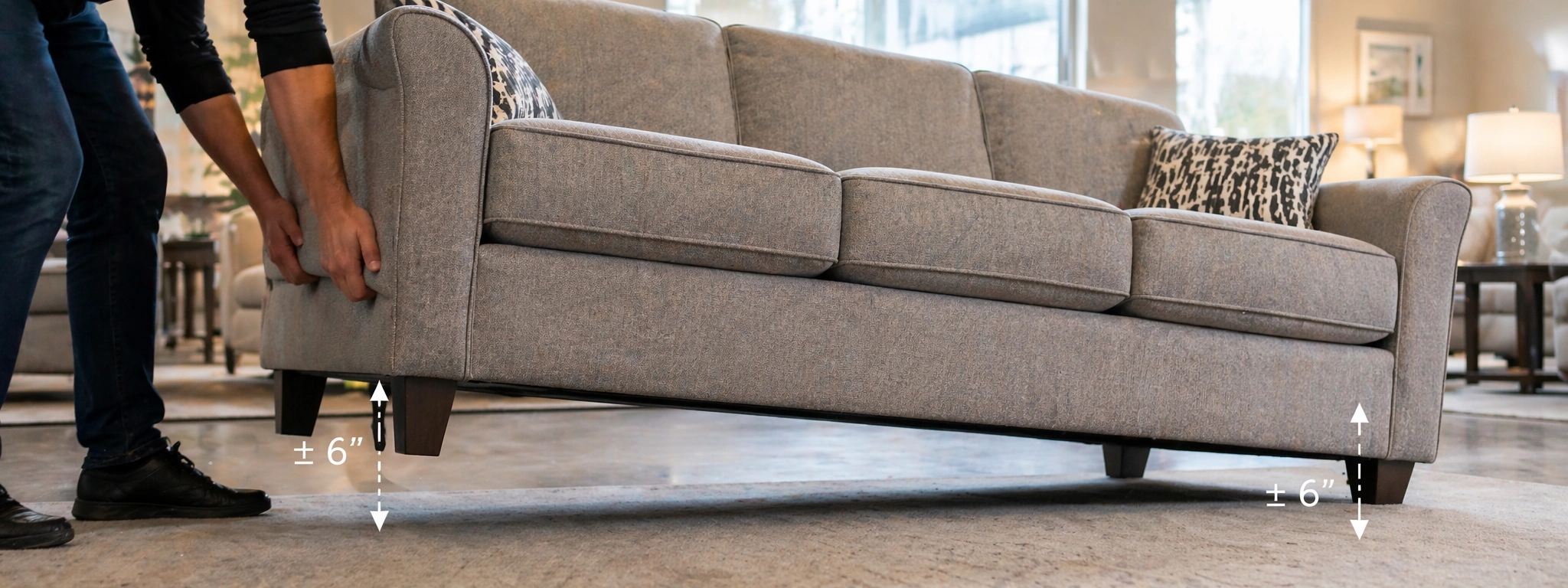
- The Lift Test — Lift one front corner of the sofa about 6 inches off the floor. If the opposite corner on the same end also lifts, the frame is rigid and well-connected. If the opposite corner stays on the ground, the frame is flexing — a sign of weak joints or soft material.
- Feel Underneath — Reach under the sofa and run your hand along the bottom of the frame. You should feel smooth, solid wood or high-quality plywood. If you feel rough, splintered edges, exposed staples, or crumbly material, the frame is low quality.
- Ask for Frame Specification — Reputable sellers will tell you the frame material and joint construction. Ask specifically: "What type of wood is the frame made from?" and "Is it kiln-dried?" and "Does it have corner blocks?" Vague answers like "solid wood" without specifying the type are a concern.
- Check the Weight — A well-built hardwood frame is heavy. If a full-size sofa feels surprisingly light when you try to shift it, the frame is likely softwood or plywood. This isn't definitive (lightweight foam and fabric also affect total weight), but it's a useful signal combined with other checks.
- Sit and Listen — Sit down firmly on different areas of the sofa. Any creaking, groaning, or popping sounds indicate loose joints or flexing frame members. A quality frame should be completely silent under normal sitting pressure.
- Examine the Legs — The legs connect directly to the frame. If legs feel wobbly or are attached with visible screws going into soft material, the frame-to-leg connection is weak. This is one of the most common sofa wobble issues and is directly related to frame quality.
- Look for Certifications — Some manufacturers subject their frames to standardized testing (like the FIRA/Furniture Industry Research Association tests in the UK). A frame that has passed a recognized durability test provides objective assurance beyond marketing claims.
Frame Material and Price: What to Expect
The frame typically accounts for 15-25% of a sofa's total manufacturing cost, making it one of the largest single cost factors alongside the upholstery and cushion materials. Understanding this relationship helps you evaluate whether a sofa's price is justified. Our sofa price breakdown article explores this in full, but here's how frame material correlates with price ranges:
Under $500: Almost certainly particle board, MDF, or softwood with stapled joints. These are disposable pieces — suitable only for temporary furnishing. If you're shopping in this range, understand that replacement within 2-3 years is likely. The price vs quality guide explains why extreme budget options rarely deliver value.
$500 – $1,000: Likely softwood (pine) or 5-ply plywood with screw-only joints. Adequate for light use in a guest room or occasional seating. May last 5-7 years with careful use. Some manufacturers in this range use hardwood for main rails and softwood for cross-members — ask specifically.
$1,000 – $2,500: Should feature kiln-dried hardwood or 7+ ply plywood with corner blocks and doweled joints. This is the sweet spot for a quality daily-use sofa that will last 10-15+ years. Most reputable brands in this range will disclose frame specifications.
$2,500+: Kiln-dried hardwood (often oak or maple) with premium joint construction, corner blocks, and possibly reinforced steel components for mechanisms. This is investment-grade furniture designed to last 15-25 years. At this level, comfort and durability should both be excellent.
If you have a fixed budget, allocate the majority of it to getting the best frame possible, even if it means choosing simpler upholstery or basic cushions. You can reupholster a sofa, replace cushions, and add throw pillows — but you cannot replace the frame without essentially building a new sofa. A well-framed sofa with basic fabric will outlast a beautifully upholstered sofa on a particle board frame every time. For budget planning, see our sofa budget guide.
Common Frame Problems and What They Mean
Recognizing the symptoms of frame failure early can help you decide whether repair is worthwhile or if replacement is the better path. These issues are among the most common entries in our common sofa problems guide:
Squeaking or creaking when sitting down: This almost always indicates loose joints — the frame members are rubbing against each other because screws, dowels, or glue have deteriorated. It's often an early warning sign that can be addressed by tightening joints before the frame fails completely. However, if the frame material is softwood or particle board, tightening may only provide temporary relief. See our sofa squeaking noise troubleshooting guide.
Center sag on a long sofa: If the middle of the seat sags even though cushions are firm, the frame rail spanning between the arms is bowing under weight. This is particularly common on 4 seater and larger sofas built with softwood or low-grade plywood. Adding a center support leg can sometimes help, but the underlying frame weakness remains.
Wobbling or rocking: If the sofa rocks when you sit on one side, the frame has lost its square alignment — joints have loosened to the point where the frame is racking (parallelogramming) under load. This is a serious structural issue. Our sofa wobbles and uneven legs guide covers diagnosis and solutions, but if the frame is particle board or MDF, repair is usually futile.
Creaking when reclining: On a recliner sofa, creaking during the recline motion can indicate either a failing frame at the mechanism mounting points or a worn recliner mechanism itself. Given the extreme stress recliners place on frames, this symptom should be addressed promptly before the frame cracks at the mounting point — a failure that's difficult and expensive to repair.
Sustainability and Frame Materials
For environmentally conscious buyers, frame material choice has significant implications. A sofa that lasts 20 years on a hardwood frame has a far lower lifetime environmental impact than three particle board sofas replaced over the same period, even though each individual particle board sofa uses less wood initially. The sustainable sofas guide explores this in depth, but the key principle is simple: durability is sustainability.
When evaluating sustainability, look for frames made from FSC-certified (Forest Stewardship Council) wood, which ensures the timber was harvested from responsibly managed forests. Kiln-drying itself is an energy-intensive process, but it's justified by the dramatically longer lifespan it provides. Some manufacturers now use sustainably sourced hardwood with low-VOC adhesives in joint construction — worth asking about if environmental impact is a priority for you.
If you're considering a secondhand vs new sofa, frame condition is the most important evaluation criterion. A 10-year-old sofa on a hardwood frame may have decades of life left, while a 2-year-old sofa on particle board may already be failing. When buying used, always perform the lift test and check for frame solidity before considering upholstery condition.
Frequently Asked Questions
Bottom Line: The frame is the most important component of any sofa, yet it's the one most buyers overlook. Kiln-dried hardwood with corner blocks and doweled joints is the standard for a sofa built to last 15+ years. If your budget forces compromises, compromise on fabric or cushion upgrades — never on the frame. A $1,200 sofa with a hardwood frame and basic fabric will outperform a $1,200 sofa with beautiful velvet on a pine frame every single time. When in doubt, perform the lift test, ask about corner blocks, and choose the frame you'd trust to hold your family for the next decade.