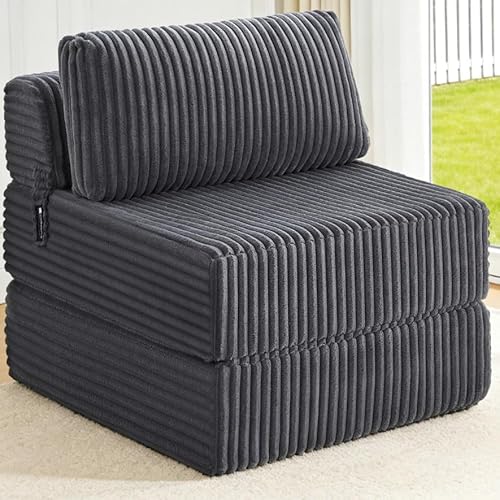
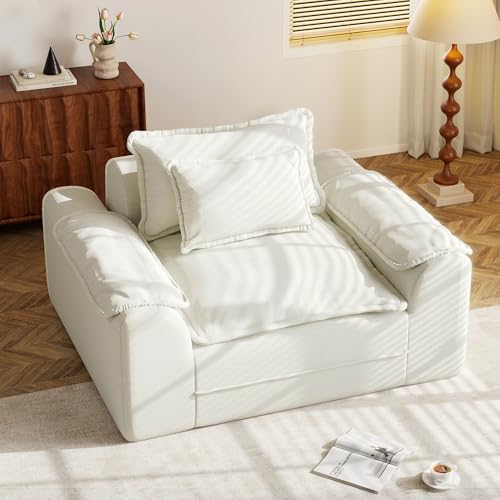
1 Seater Sofa: The Complete Buying Guide
From compact armchairs to plush single recliners — learn everything about choosing the perfect 1 seater sofa for your space, style, and budget
START EXPLORINGA 1 seater sofa — also known as a single sofa, armchair, or accent chair — is one of the most versatile pieces of furniture you can own. Whether you're furnishing a compact apartment, adding a reading nook to your bedroom, or filling an empty corner in your living room, a well-chosen 1 seater delivers comfort without consuming valuable floor space.

Unlike larger 3 seater sofas or sectionals, a single seater gives you flexibility. You can move it easily, pair it with different furniture arrangements, and experiment with bold colors or textures that might feel risky on a larger piece. This guide covers every angle — types, dimensions, materials, comfort factors, styling ideas, and common mistakes — so you can buy with confidence.
What Is a 1 Seater Sofa?
A 1 seater sofa is a single-seat upholstered chair designed for one person to sit comfortably. It typically features a padded seat, backrest, and armrests, built on a frame of wood, metal, or engineered board. While the term overlaps with "armchair" and "accent chair," there are subtle differences worth knowing.
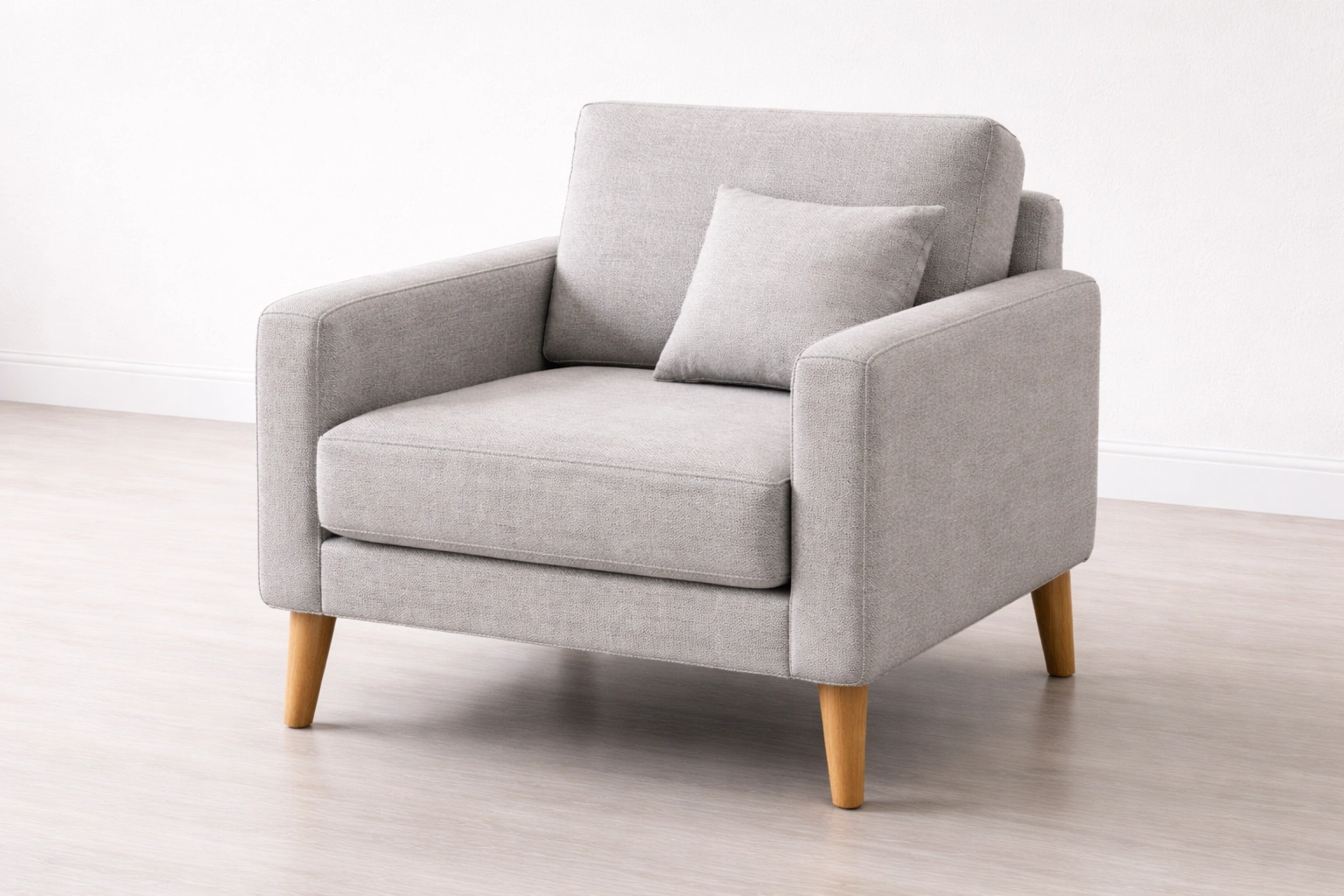
1 seater sofa vs. armchair vs. accent chair: A 1 seater sofa generally has a deeper seat and construction similar to a full-size sofa — think of it as one slice cut from a multi-seat couch. An armchair tends to be more upright with a shallower seat. An accent chair prioritizes style over extended lounging comfort. That said, manufacturers use these terms loosely, so always check dimensions rather than relying on labels alone.
Types of 1 Seater Sofas
Not all single sofas serve the same purpose. Understanding the main types helps you match the right chair to your needs — whether that's sinking into a good book, accommodating overnight guests, or making a design statement.
🛋️ Classic Armchair
Traditional upholstered chair with padded armrests and a medium-firm back. Ideal for living rooms and conversation areas. Pairs well with a matching 2 seater or 3 seater sofa.
🔄 Single Recliner
A recliner for one — leans back with an extendable footrest. Perfect for TV rooms and reading corners. Available in manual and power-operated models.
🛏️ Sleeper Chair
Converts from a chair into a small bed, similar to a sleeper sofa but in single size. Great for guest rooms and studio apartments.
🪑 Accent Chair
Style-first seating that adds visual interest. Often features bold colors, unique shapes, or distinctive legs. Best for occasional seating and decorative impact.
📏 Barrel Chair
Rounded, cozy design that wraps around you. Creates a "cocoon" feel and works beautifully in reading nooks and small spaces.
🔲 Armless Chair
Compact, armless design that saves width. An armless sofa style fits tight spaces and slides neatly under desks or tables. Also explore pros and cons of armless designs.
🏔️ Wingback Chair
Features side "wings" on the backrest — originally designed to block drafts. Today, it's a statement piece with a vintage or contemporary vibe depending on upholstery.
🧘 Floor Chair / Floor Sofa
Low-to-ground seating without legs. Casual, portable, and perfect for meditation, gaming, or basement hangouts.
Standard Dimensions & Size Guide
Getting the size right is the single most important step. A 1 seater that's too large overwhelms a small room; one that's too small looks lost in a spacious area. Always measure your available space before browsing, and review our full sofa size and room guide for detailed methodology.
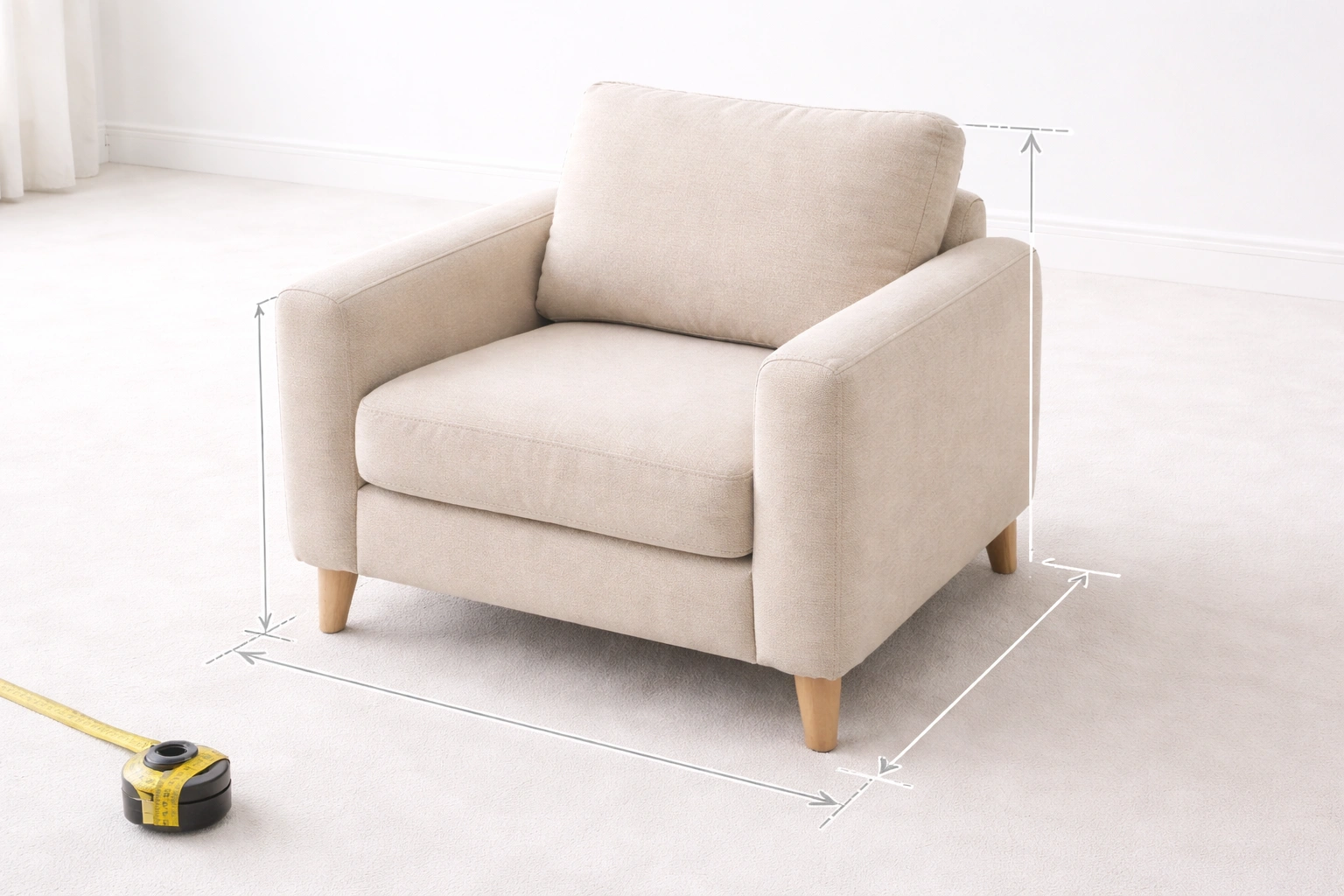
| Type | Width | Depth | Seat Height | Back Height |
|---|---|---|---|---|
| Compact Accent Chair | 26"–30" | 28"–32" | 17"–18" | 30"–34" |
| Standard Armchair | 32"–38" | 32"–36" | 18"–20" | 34"–38" |
| Oversized / Deep Seat | 38"–44" | 36"–42" | 17"–19" | 34"–40" |
| Single Recliner | 32"–40" | 36"–42" (closed) | 19"–21" | 38"–42" |
| Wingback Chair | 30"–36" | 32"–38" | 18"–20" | 40"–48" |
| Barrel Chair | 28"–34" | 28"–34" | 17"–19" | 30"–36" |
💡 Pro Tip: Always leave at least 18 inches of clearance between your chair and a coffee table, and 24–36 inches for walkways. When measuring doorways, remember that some chairs have removable legs for delivery. Learn more about how to measure a sofa properly.
Best Materials for 1 Seater Sofas
The material you choose affects comfort, durability, maintenance, and price. Since a 1 seater is a smaller investment than a full sofa set, many buyers use it as an opportunity to try a premium material they wouldn't risk on a larger piece. For a deep dive, see our sofa materials explained guide.
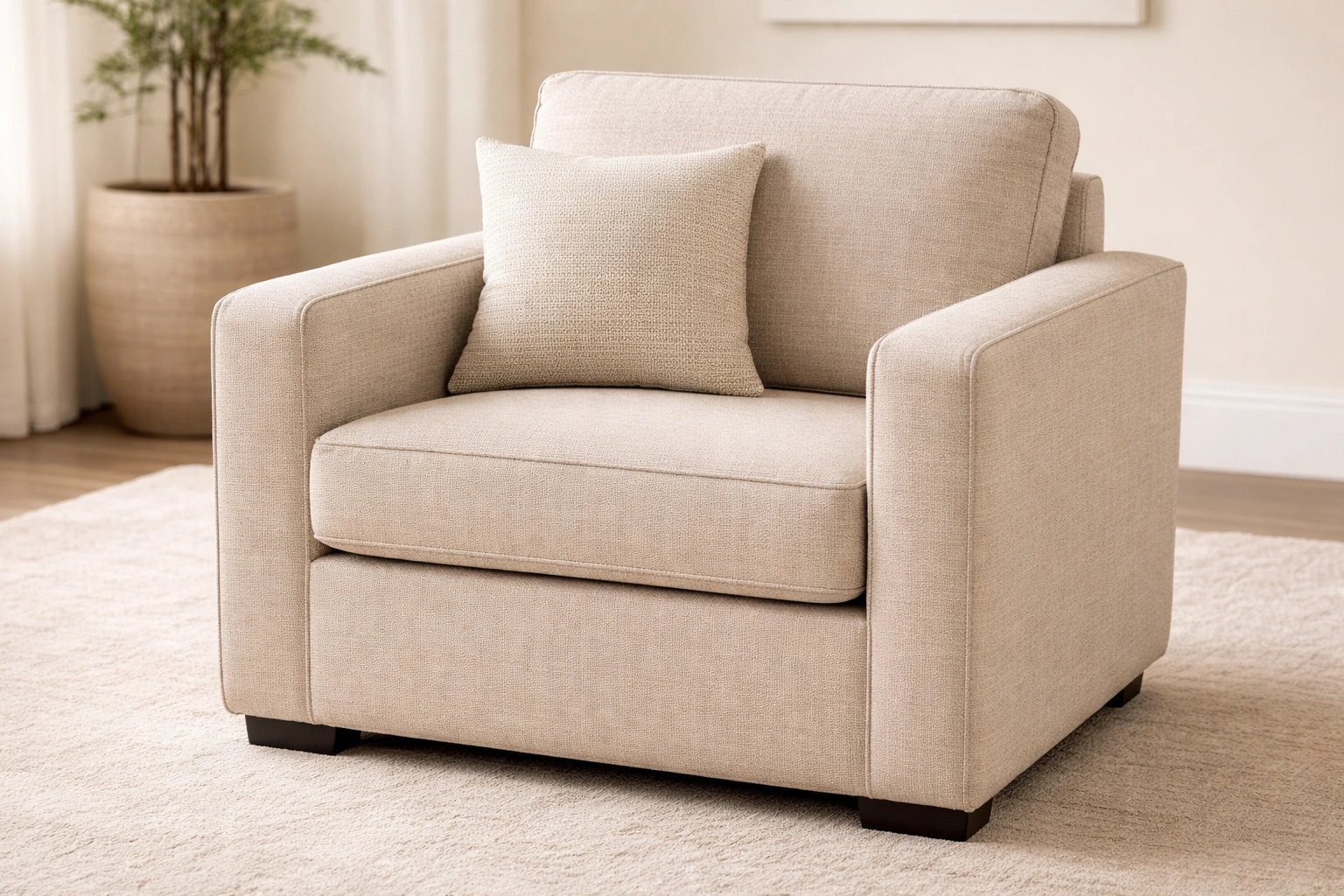
Fabric / Linen
Breathable, affordable, and available in countless colors. Linen offers a refined look; polyester blends resist wrinkles. Check the Martindale rub test rating — aim for 20,000+ for daily use.

Leather
Durable, easy to wipe clean, and develops a beautiful patina over time. Leather sofas are pricier but long-lasting. Understand leather grades — top-grain is the sweet spot for quality and value.

Velvet
Plush, luxurious, and visually striking. Velvet sofas add instant sophistication. Modern performance velvet resists stains better than traditional velvet. Requires specific cleaning methods.
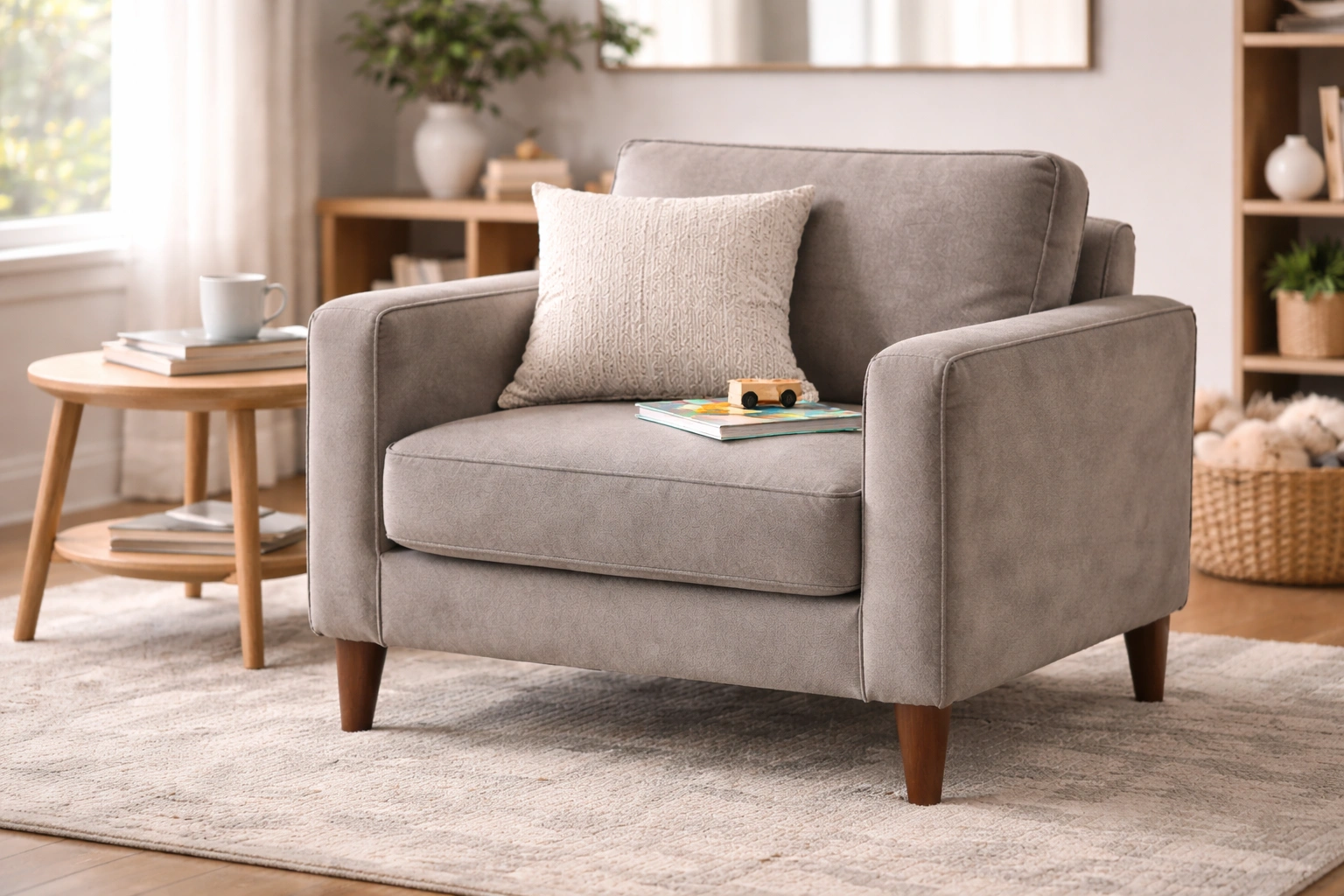
Microfiber
Tightly woven synthetic that resists stains, fading, and pet claws. A top choice for pet owners and families with kids. Budget-friendly and easy to clean.

Performance Fabric
Engineered for real life — spill-resistant, fade-proof, and easy to clean. Performance fabrics like Crypton or Sunbrella cost more upfront but save on maintenance. Ideal for high-traffic or office use.

Bouclé
A textured, nubby fabric trending in modern sofa design. Adds visual depth and a cozy feel. Not ideal for homes with pets that scratch, but stunning in low-traffic, style-forward spaces.
Still unsure between leather and fabric? Our detailed leather vs. fabric sofa comparison breaks down durability, cost, comfort, and maintenance side by side.
Comfort Factors: What Makes a 1 Seater Truly Comfortable?
A beautiful chair that hurts your back is a waste of money. Comfort comes down to a few measurable factors that many buyers overlook. For a broader perspective, read our guide on how to test sofa comfort before purchasing.

Seat Depth
Seat depth determines whether you sit upright or lounge. Standard depth is 20–22 inches. If you prefer curling up with your legs tucked, look for a deep seat (24+ inches). Shorter individuals may find deep seats uncomfortable without a lumbar pillow. Compare standard vs. deep seat sofas to find your fit.
Cushion Fill
The interior of your cushion matters more than the exterior fabric. Cushion fill types range from basic foam (firm, affordable) to down-wrapped foam (plush with structure) to pure down (cloud-like but high-maintenance). High-density foam (2.0+ lb/ft³) resists sagging longest. Learn about foam density and ILD ratings for a technical understanding.
Back Support
Choose between high-back and low-back designs based on your needs. High backs support the head and neck — ideal for reading or if you have back pain. Low backs create a sleeker, more open look but offer less support for extended sitting.
Armrest Height & Style
Armrests should let your elbows rest at roughly 90 degrees. Rolled arms are traditional and comfortable for lounging; track arms look modern and save width. If space is extremely tight, consider an armless design — see sofa without arms pros and cons.
Suspension System
The internal suspension — whether sinuous springs, hand-tied coils, or webbing — affects how the seat feels and how long it lasts. Eight-way hand-tied springs are the gold standard but come at a premium. Sinuous springs offer good support at a lower price point. Learn more about spring systems in our dedicated guide.
Where to Place a 1 Seater Sofa
One of the biggest advantages of a 1 seater is its adaptability. Here are the most common and impactful placements:

🏠 Living Room
Anchor a conversation area by pairing a 1 seater with a 2 seater sofa or as an accent beside a sectional. It adds extra seating without visual bulk. See living room sofa ideas.
🛏️ Bedroom
A single chair in the corner transforms unused space into a reading nook or a spot to put on shoes. Choose something soft and neutral-toned to keep the bedroom relaxing.
🏢 Home Office
An office sofa or armchair provides a break from the desk chair and gives clients a place to sit during meetings. A firm, upright design works best here.
🚪 Entryway / Hallway
A slim armchair near the entrance creates a welcoming first impression and a practical perch for putting on shoes. Pair with a small side table.
🎬 Home Theater
Add a single recliner to your home theater setup for a premium solo viewing experience. Power recliners with USB ports are especially convenient — see sofas with USB ports.
🏢 Lobby / Waiting Area
For commercial spaces, a durable 1 seater adds professional seating. Choose stain-resistant fabric and a sturdy frame. See lobby sofa recommendations.
Styling Your 1 Seater Sofa
A single chair is one of the easiest ways to inject personality into a room. Because you're only committing to one seat, you can be bolder with color, texture, or shape than you might dare with a full sofa.

By Design Style
Modern: Clean lines, tapered legs, neutral tones. Look for track arms and tight-back cushions. See modern sofa ideas.
Mid-Century: Splayed wooden legs, tufted or sculptural backs. A walnut-frame barrel chair is iconic. Explore vintage sofa styles.
Traditional: Rolled arms, skirted base, ornate wooden legs. Pair with classic patterns like herringbone or damask.
Scandinavian: Light wood, pale upholstery, minimalist silhouette. Focus on function and warmth.
Bohemian: Layered textures, warm earth tones, rattan or cane details. See bohemian sofa inspiration.
Industrial: Leather or distressed fabric on a metal frame. Think loft aesthetic — industrial sofas make a statement.
Color Choices
Since a 1 seater is a single piece, it can carry a bold color without overwhelming the room. A green sofa or orange sofa chair can act as a focal point, while a grey or white chair blends seamlessly. For timeless appeal, consider brown leather or black upholstery.
Accessorizing
Complete the look with throws and pillows that complement — not match — the chair. A small side table, a floor lamp, and a textured rug underneath can turn a simple chair into a destination spot in your room.
1 Seater Sofa Buying Checklist
Before you click "buy" or head to the showroom, run through this list. It covers the essentials that separate a smart purchase from a regrettable one. For a broader framework, see our guide on how to choose a sofa.
- Measure your space — width, depth, doorways, and walkways. How to measure →
- Define the primary use — reading, lounging, occasional seating, or sleeping?
- Choose the right type — armchair, recliner, sleeper, or accent based on function
- Pick a material suited to your lifestyle — pets, kids, spills, sun exposure? See most durable fabric
- Test comfort if possible — seat depth, back height, cushion firmness. Read how to test comfort
- Check the frame — solid hardwood (kiln-dried) is best. Avoid particleboard. Frame materials guide →
- Verify cushion quality — high-density foam (2.0+ lb/ft³) with a down wrap offers the best balance
- Set a realistic budget — budget guide | how much should a good sofa cost?
- Read the warranty — at least 1 year on frame and cushions; some brands offer 5–10 years
- Check return policy return policy details matter when buying online
Common Mistakes When Buying a 1 Seater Sofa

1. Ignoring seat depth. A chair that looks great online may have a 16-inch seat depth that's uncomfortable for anyone over 5'6". Always check specs and compare with seat depth recommendations.
2. Forgetting about doorways and hallways. A 40-inch-wide chair doesn't fit through a 32-inch door unless the legs are removable. Measure the delivery path, not just the destination.
3. Choosing style over comfort. An accent chair that looks stunning in a showroom may have rock-hard cushions you avoid sitting on after week one. Find the balance between comfort and durability.
4. Not considering the whole room. A single chair should complement existing furniture, not compete with it. Use our living room layout guide to plan the arrangement before buying.
5. Overlooking frame quality. Cheap frames from particleboard or unsturdy metal wobble within months. Invest in a solid frame — it's the skeleton of your chair. Our frame materials guide explains what to look for.
6. Buying without checking the fabric durability rating. A beautiful linen chair in a home with three cats won't survive. Match fabric toughness to your lifestyle.
Maintaining Your 1 Seater Sofa
A single chair is a long-term companion if you care for it properly. Maintenance requirements vary by material, but these universal practices will keep any 1 seater looking and feeling its best for years.

Vacuum weekly with an upholstery attachment to remove dust, crumbs, and pet hair. This prevents debris from grinding into fibers.
Rotate and flip cushions monthly (if removable) to distribute wear evenly and prevent flattened cushions.
Address spills immediately — blot, don't rub. Follow material-specific cleaning: fabric sofa cleaning, leather sofa cleaning, or velvet sofa cleaning.
Apply fabric protector annually for fabric chairs. See our sofa protection guide for product recommendations.
Condition leather every 6–12 months to prevent cracking. Leather conditioning guide →
Protect from sunlight — UV rays fade fabric and dry out leather. Use curtains or read our UV protection guide.
Fix small issues early. A squeaking noise, wobbly legs, or fabric pilling are easy repairs if caught early. Ignoring them leads to costlier fixes down the line.
1 Seater vs. Other Sofa Sizes
Wondering if a 1 seater is the right size — or if you should size up? Here's a quick comparison to help you decide.
| Feature | 1 Seater | 2 Seater | 3 Seater | Sectional |
|---|---|---|---|---|
| Width Range | 26"–44" | 48"–72" | 72"–90" | 90"–150"+ |
| Seats | 1 | 2 | 3 | 4–8+ |
| Best For | Accent, solo use | Small rooms, couples | Standard living rooms | Large/open spaces |
| Mobility | ★★★★★ | ★★★★☆ | ★★★☆☆ | ★☆☆☆☆ |
| Price Range | $100–$1,500 | $200–$2,500 | $400–$4,000 | $800–$8,000+ |
💡 Key Insight: A 1 seater isn't just for solo dwellers. Even in homes with large sofas, a single chair adds versatility — it can be moved to any room, used as overflow seating, or serve as a design accent. Many designers recommend including at least one 1 seater in every seating arrangement for visual balance and flexibility.
Frequently Asked Questions
What are the standard dimensions of a 1 seater sofa?
A typical 1 seater sofa measures between 30–40 inches in width, 30–38 inches in depth, and 30–36 inches in height. Compact accent chairs can be as narrow as 26 inches, while plush armchairs may reach 42 inches wide. Always check the specific product dimensions and compare them to your available space using our room size guide.
Is a 1 seater sofa good for small apartments?
Absolutely. 1 seater sofas are among the best choices for small spaces and apartments. Their compact footprint fits easily in tight corners, studio layouts, or bedrooms without overwhelming the room. Look for armless or low-profile designs to maximize floor area. Pair one with a small side table for a complete, functional seating zone.
How much does a good quality 1 seater sofa cost?
A good quality 1 seater sofa typically costs between $200 and $800. Budget options start around $100 (often with basic foam and composite frames), while premium designs with high-density foam, genuine leather, or designer branding can exceed $1,500. See our detailed pricing guide and the sofa price breakdown for what you get at each price point.
What is the difference between a 1 seater sofa and an armchair?
While the terms are often used interchangeably, a 1 seater sofa generally has a deeper seat and construction similar to a full-size sofa — think of it as one slice cut from a multi-seat couch. An armchair tends to be more upright with a shallower seat. An accent chair prioritizes style over extended lounging comfort. However, the distinction is informal and varies by manufacturer, so always check dimensions rather than relying on product names alone. Read more about firm vs. plush options.
What material is best for a 1 seater sofa with pets?
For homes with cats or dogs, microfiber and performance fabrics are your best bets. They resist claw snags, repel stains, and are easy to clean. Leather works well for dogs but can show scratches from cats. Avoid velvet, bouclé, and loose-weave fabrics — they attract hair and snag easily. For full recommendations, visit our best sofas for pet owners page and consider pet-proof sofa covers.
Can a 1 seater sofa work as a bed for guests?
A sleeper chair or convertible 1 seater can provide a compact sleeping surface for a single guest — similar to a sleeper sofa but in a smaller package. However, the sleeping surface is typically narrow (around 28–32 inches wide) and best for children or short-term use. For regular guest hosting, consider a dedicated guest room sofa or a futon.
Ready to Find Your Perfect 1 Seater Sofa?
Browse our curated selection of top-rated 1 seater sofas — tested for comfort, durability, and style.
SEE TOP PICKS