Best Sofas for Pet Owners: The Complete Guide
Scratch-resistant fabrics, pet-hair-proof materials, and durable sofas that let your dogs and cats share the couch without destroying it
Owning a pet shouldn't mean sacrificing a beautiful living room. Yet millions of pet owners face the same frustration: a new couch that looks pristine for exactly one week before claws, fur, and muddy paws take over. The solution isn't to ban your pet from the sofa — it's choosing the right sofa from the start.
This guide breaks down exactly what makes a sofa truly pet-friendly. We cover fabric types that resist damage, frame constructions that hold up to jumping pets, colors that camouflage shedding, and specific sofa styles that work best in homes with dogs or cats. Whether you have a 90-pound Labrador who loves to sprawl or a cat who treats every armrest as a scratching post, this guide will help you invest wisely.
After reading, you'll know exactly which features matter, which materials to avoid, and how to maintain your sofa so it lasts for years — even with four-legged family members on board. If you're also shopping for a household with children, our guide to best sofas for families covers additional considerations.

The 4 Challenges Every Pet Owner Faces
Before choosing a sofa, understand what your pet actually does to it. Each challenge demands a different solution:
Scratching
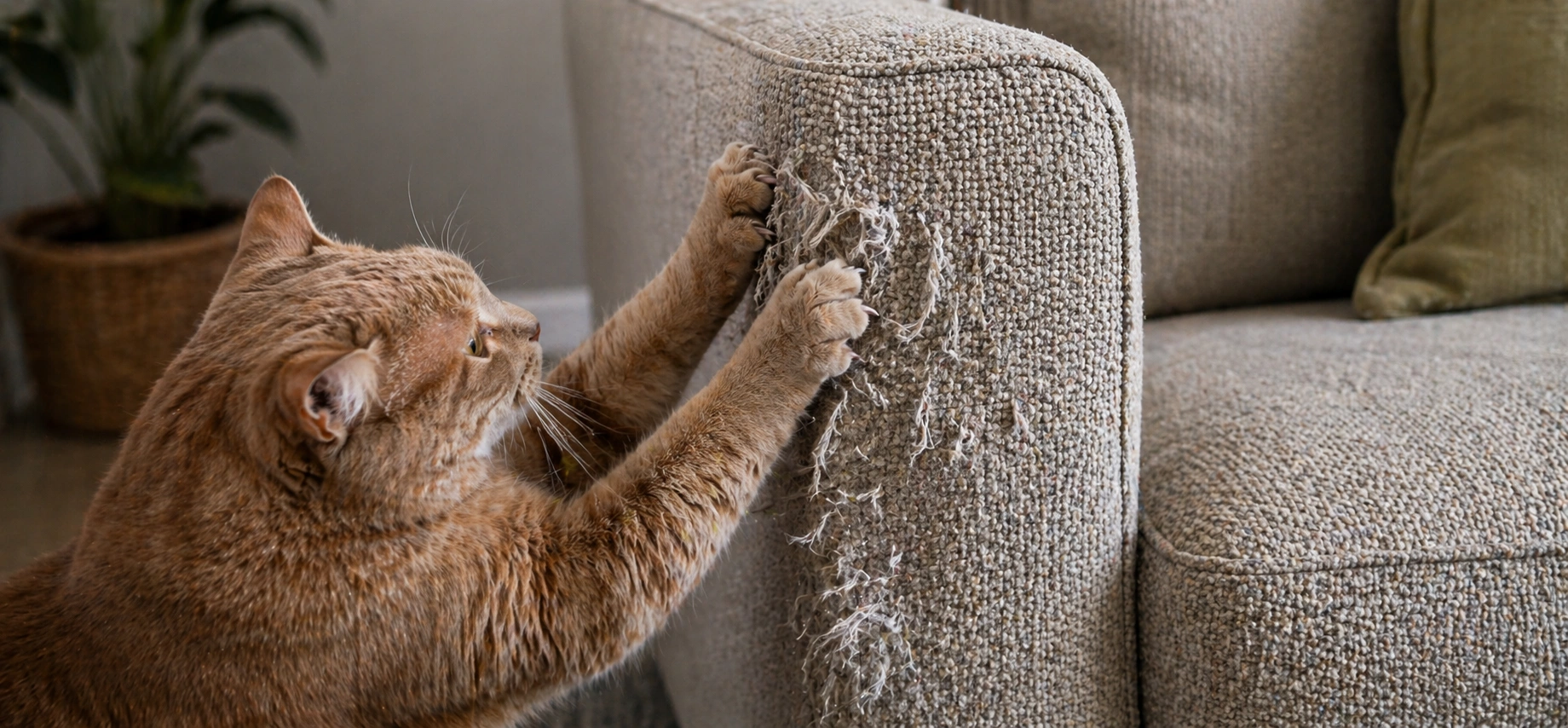
Cats sharpen claws on fabric weave. Dogs dig before lying down. Loop fabrics unravel instantly.
Pet Hair
Short-haired breeds embed fur into fabric. Some materials act like magnets for every loose strand.
Stains & Mud
Wet paws, drool, accidents, and muddy coats leave marks that set quickly if untreated.
Odors
Pet dander, body oils, and accidents seep into cushions and create lingering smells over time.
What to Look For in a Pet-Friendly Sofa
Not every "durable" sofa is pet-friendly. A sofa built for heavy human use might still fall apart under cat claws. Here are the non-negotiable features when shopping with pets in mind:
- Tight-weave or non-woven fabric. Avoid any fabric with visible loops (like bouclé, chenille, or certain wools). Loops give claws something to catch and pull. Tight synthetic weaves have nothing for nails to grip. Learn more about fabric durability testing (Martindale score) to compare options objectively.
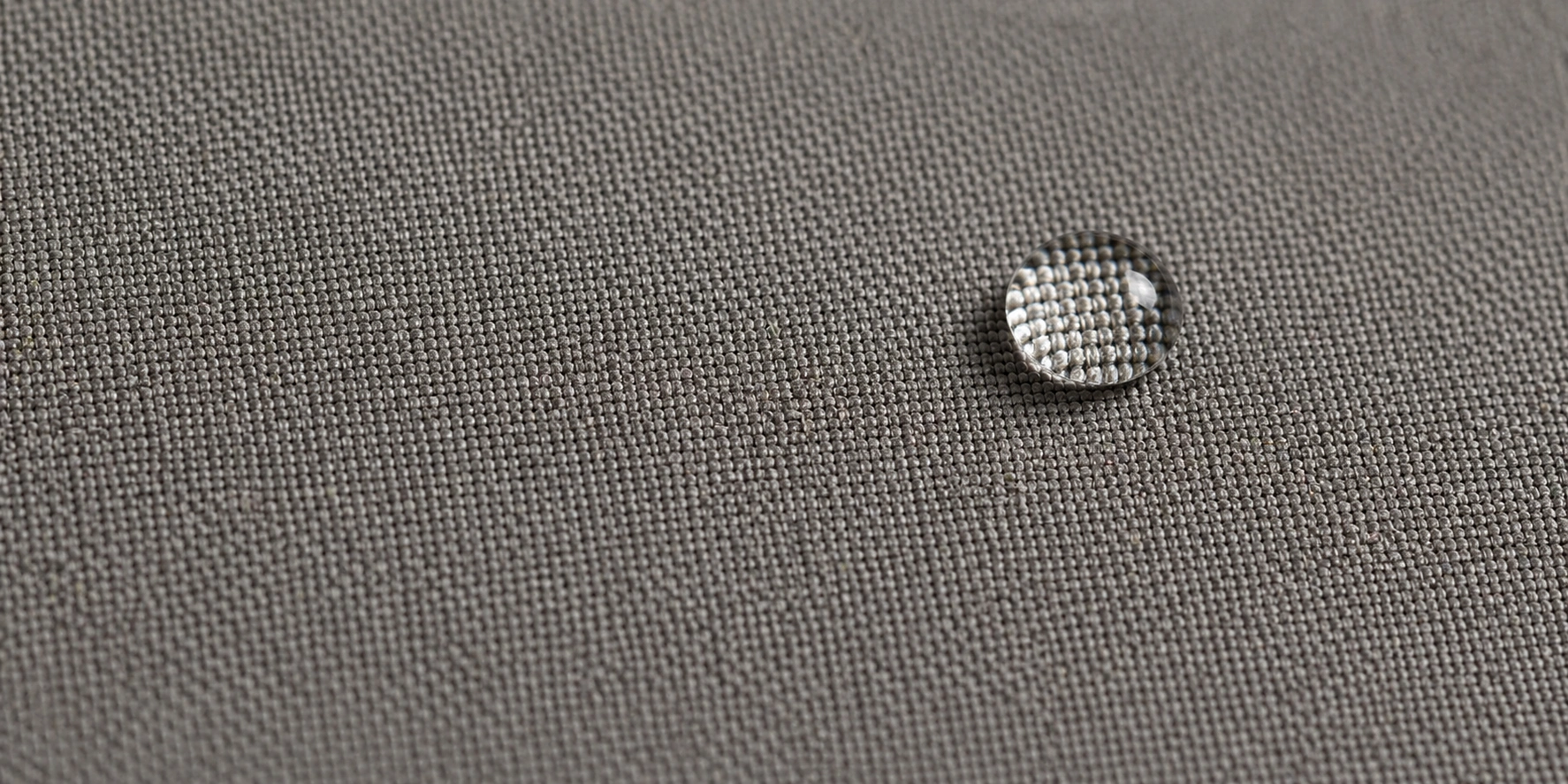
- Stain-resistant or performance fabric. Fabrics treated with stain repellents (like Crypton, Revolution, or Sunbrella) resist liquid absorption. If your dog jumps on the couch after a rain walk, the water beads up instead of soaking in.
- Removable, machine-washable covers. Even the best fabric eventually gets dirty. A washable sofa with zip-off cushion covers lets you deep-clean regularly without hiring a professional. Slipcovered sofas take this further — the entire upholstery can be tossed in the wash.
- Solid, dense frame construction. Pets jump on and off furniture with force. A kiln-dried hardwood frame with reinforced joints handles this better than softwood or particle board. Check our frame materials guide for details on what to ask for.
- Pet-hair-resistant texture. Smooth or slightly textured fabrics (like microfiber) release hair with a quick vacuum. Nubby or rough textures trap hair and require extensive brushing to clean.
- Medium-tone color. Light colors show dark hair and dirt. Very dark colors show light hair and dust. Medium tones like grey, brown, and taupe are the most forgiving. We cover color strategy in detail below.
Pro tip: When testing fabric in a store, run your fingernail firmly across the surface. If the fabric catches, pills, or pulls, imagine what cat claws will do. If your nail glides smoothly, it's a good sign. Also ask the seller for the Martindale rub test score — anything above 30,000 is suitable for pet households.
Best Fabric Types for Pet Owners (Ranked)
Fabric choice is the single most important decision. Here's how the most common options stack up for homes with pets, from best to worst:
Performance Fabric (Crypton, Revolution)
Engineered to resist stains, moisture, and odors. Tightly woven with no loops. Hair doesn't embed. Most brands are machine-washable. The gold standard for pet owners who want real upholstery — not just covers.
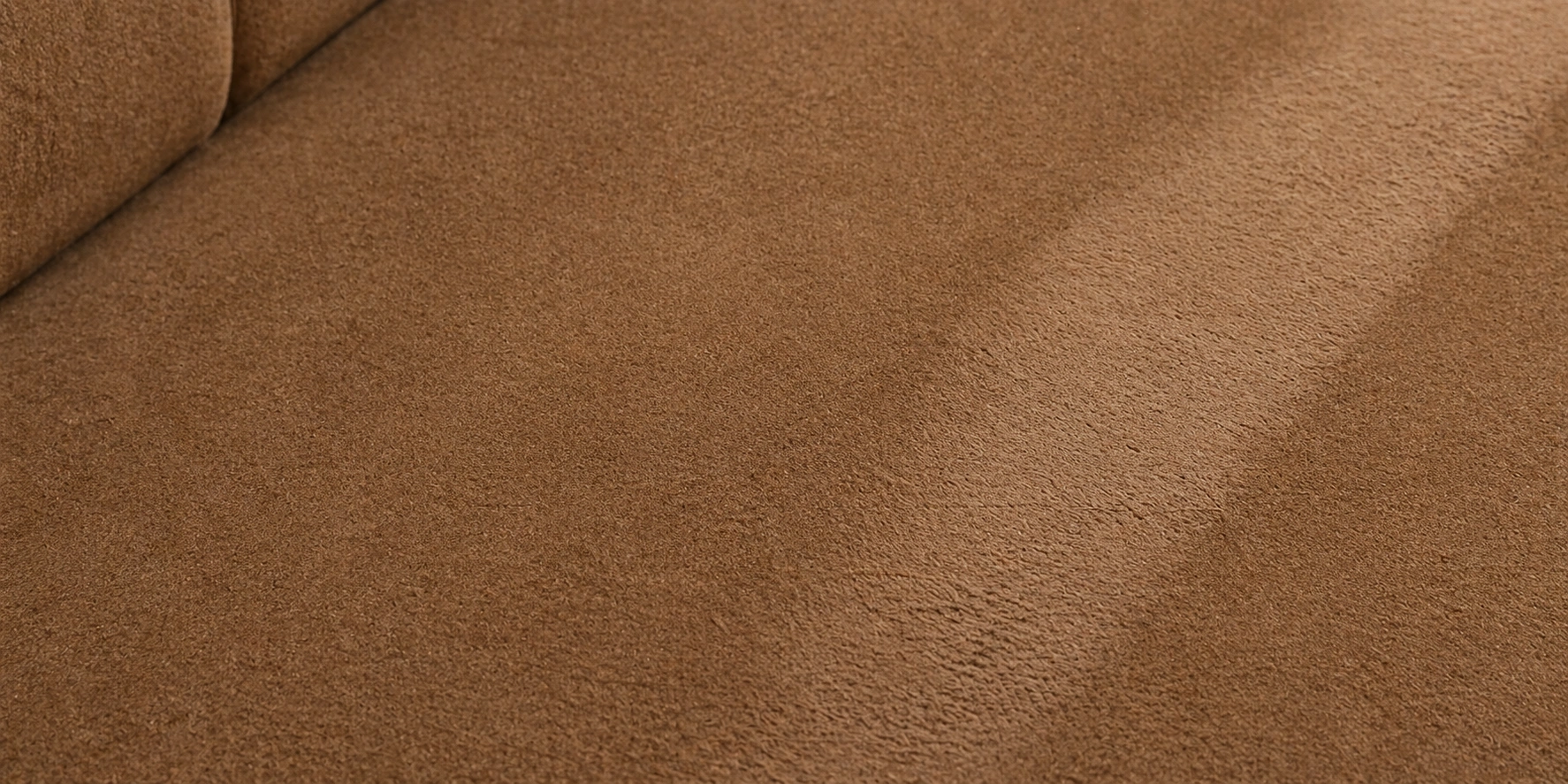
Microfiber
Ultra-fine synthetic fibers create a smooth, tight surface that resists clawing. Pet hair wipes off easily with a damp cloth or rubber glove. Very affordable compared to performance fabrics. Our full microfiber couch guide covers the best options available.
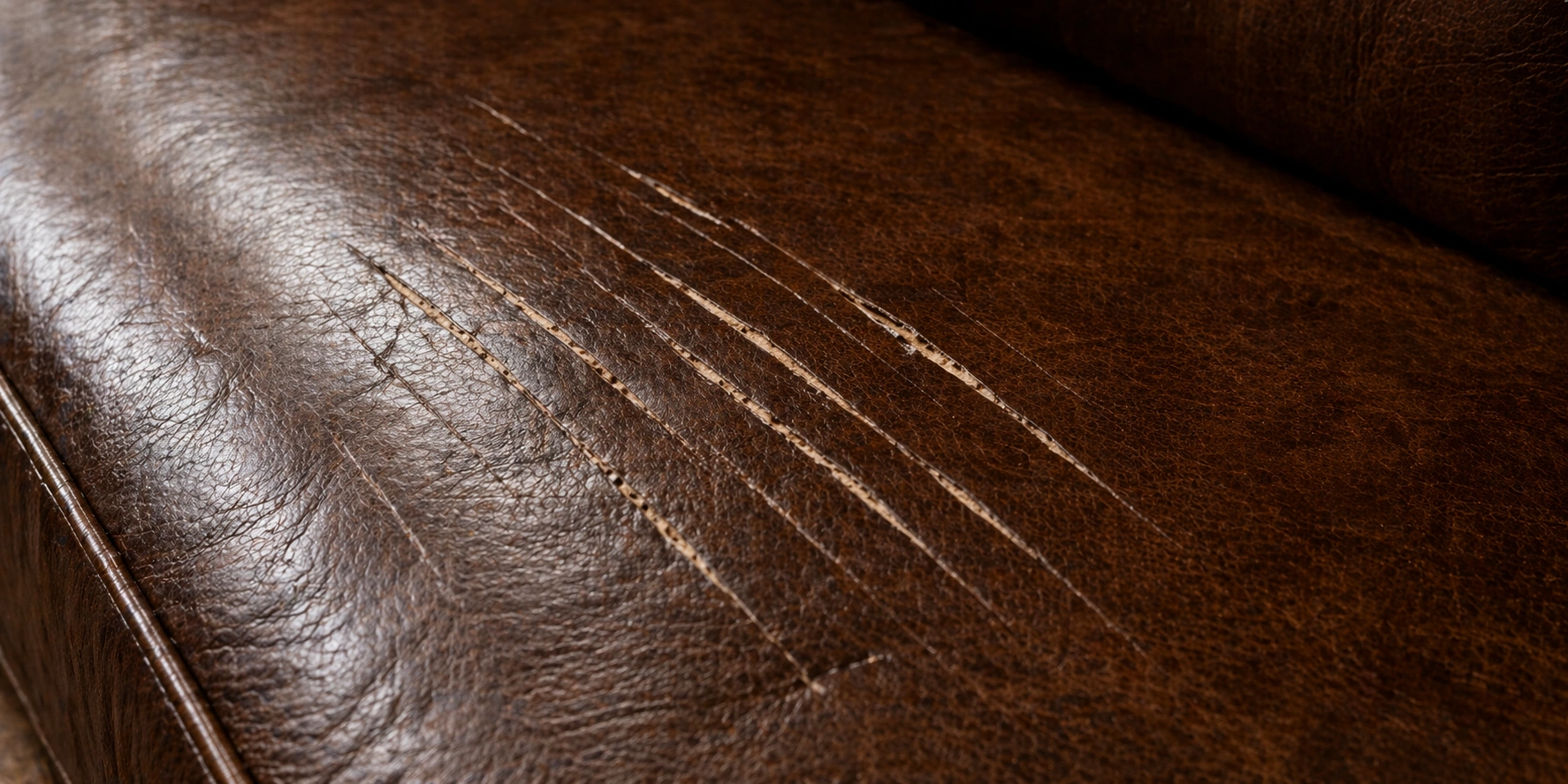
Leather
Excellent for dogs — hair wipes off, no fabric to snag, easy to clean. But cat claws puncture leather easily, and repairs are expensive. If you have cats, skip leather or use pet-proof covers over it. See our leather sofa guide and leather vs fabric comparison.
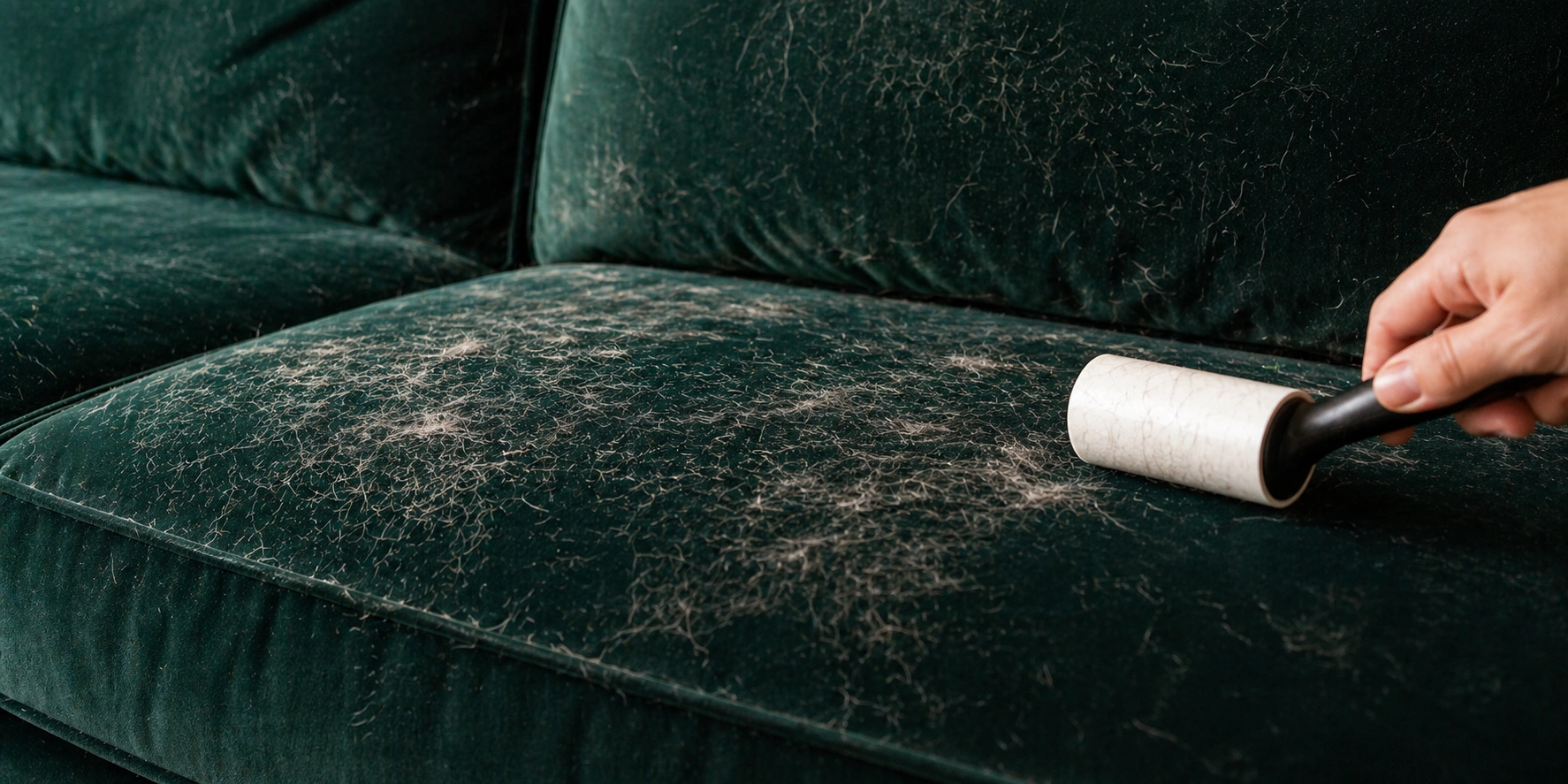
Velvet, Chenille & Bouclé
Velvet's pile traps pet hair like a magnet. Chenille and bouclé have looped textures that cats destroy within days. These fabrics look luxurious but are the worst possible choice for pet households. For more on fabric trade-offs, read our comfort vs durability guide.
Still unsure about fabric? Check our detailed breakdown of the most durable sofa fabrics ranked by real-world testing, including scratch resistance, stain resistance, and ease of cleaning scores.
Sofa Types That Work Best for Pets
Beyond fabric, the sofa's design and structure matter. Some styles naturally cope better with pet life:

Slipcovered Sofas
The entire cover zips off for machine washing. When it gets covered in fur or stained, you swap it out. Brands like IKEA and Pottery Barn offer replacement covers in different colors. The most practical choice for heavy shedders.

Sectional Sofas
Large families with pets benefit from the extra seating space. Dogs can claim one section while humans use the rest. Look for sectional sofas with performance fabric and removable cushion covers. L-shaped sectionals work well in family rooms.

Modular Sofas
Individual pieces can be rearranged to create a "pet zone" away from the main seating. If one piece gets damaged, you replace just that module instead of the entire sofa. Our modular sofa guide explains configurations.

The Color Strategy: Hiding Pet Hair & Dirt
Color is more important than most pet owners realize. The right shade can cut your cleaning effort in half. The wrong shade makes every hair visible from across the room.
The rule is simple: match the sofa color to your pet's hair color, or choose a middle-ground tone that camouflages both light and dark fur. If you have a black Lab, a grey couch or dark sofa works. If you have a golden retriever, a brown couch or tan shade is ideal. Multi-pet households should stick to medium tones. Avoid white couches at all costs unless you plan to use throws and covers religiously.
Patterned fabrics also help — a subtle texture or geometric pattern breaks up the visual uniformity of pet hair, making it far less noticeable than on a solid color. For more on choosing the right look, explore neutral-toned sofas that balance aesthetics with practicality.
Fabric Comparison for Pet Owners
This quick-reference table shows how common fabrics perform against each pet challenge:
| Fabric Type | Scratch Resistance | Hair Release | Stain Resistance | Odor Resistance | Overall Pet Score |
|---|---|---|---|---|---|
| Performance Fabric | Excellent | Excellent | Excellent | Excellent | ★★★★★ |
| Microfiber | Very Good | Very Good | Good | Fair | ★★★★☆ |
| Leather (Top-Grain) | Poor (cats) | Excellent | Very Good | Good | ★★★☆☆ |
| Cotton Blend | Fair | Fair | Poor | Poor | ★★☆☆☆ |
| Velvet | Poor | Poor | Fair | Poor | ★☆☆☆☆ |
| Bouclé / Chenille | Very Poor | Very Poor | Fair | Poor | ★☆☆☆☆ |
Maintenance Tips for Pet Owners
Even the most pet-resistant sofa needs regular care. These habits will dramatically extend your sofa's lifespan:
Vacuum Twice Weekly
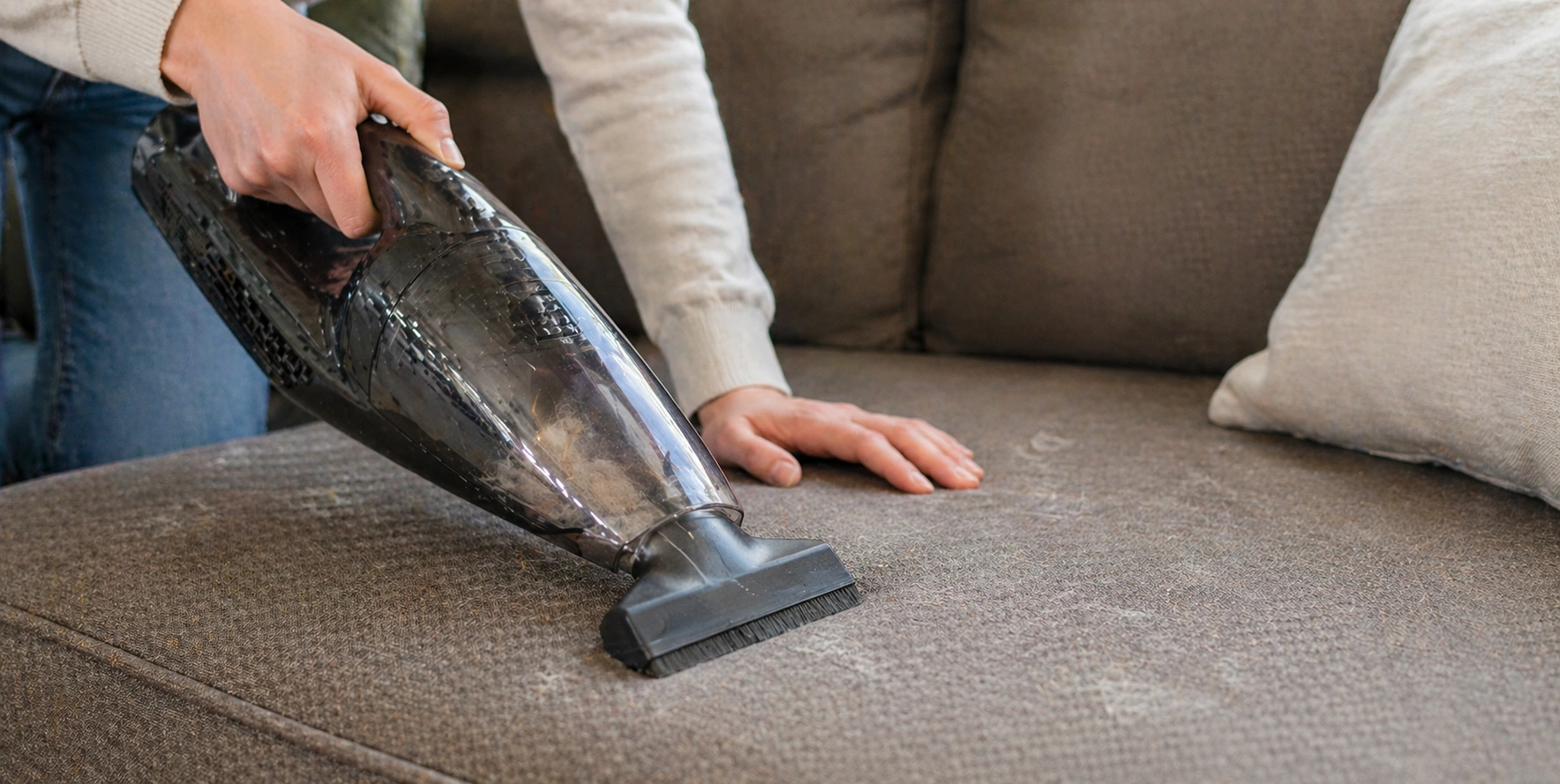
Use a rubber-bristle attachment or a damp rubber glove to lift embedded pet hair. Microfiber and performance fabrics release hair easily with this method. For deeper cleaning, check our fabric sofa cleaning guide.
Treat Stains Immediately
Keep a pet-safe fabric cleaner within arm's reach. Blot (never rub) accidents within 5 minutes. Most performance fabrics only need water and mild soap. For tough stains, our stain removal guide covers specific solutions for urine, mud, drool, and vomit.
Use Pet-Proof Covers Strategically
You don't need to cover the entire sofa. A well-placed pet-proof cover on your pet's favorite spot protects the highest-wear area while keeping the rest of the sofa visible. Remove covers when guests visit.
Apply Fabric Protector Annually
Even performance fabrics benefit from a fresh coat of fabric protectant spray once a year. This restores the liquid-repellent finish. Our fabric protection guide recommends specific products that are safe for pets.
Fluff and Rotate Cushions Monthly
Pets tend to favor one spot, causing uneven wear and sagging cushions. Rotate and flip cushions monthly to distribute wear evenly. If cushions become permanently flat, replacement cushions are far cheaper than a new sofa.
Trim Your Pet's Nails Regularly
This simple habit dramatically reduces fabric snags and scratches. Pair it with a scratching post near the sofa for cats, and train dogs to use a designated ramp or step instead of launching onto the cushions.
Common Mistakes Pet Owners Make When Buying a Sofa
Avoid these costly errors that we see repeatedly:
- Choosing style over function. A tufted sofa looks gorgeous but the deep button tufts trap pet hair, dirt, and dander in crevices that are nearly impossible to clean. Prioritize smooth surfaces over decorative details.
- Buying the cheapest option "because pets will ruin it anyway." This creates a cycle of replacement. A quality pet-friendly sofa costs more upfront but lasts 5–10 years. Cheap sofas need replacing every 1–2 years, costing more in the long run. Read our price vs quality analysis.
- Ignoring the Martindale score. Many sofas are labeled "durable" without specifying how durability was tested. Always ask for the Martindale rub test number — anything below 20,000 will struggle with active pets.
- Forgetting about the frame. Even indestructible fabric won't save a sofa with a weak frame. Large dogs jumping on and off exert significant force. A hardwood frame with corner blocks and glued joints is essential. See our frame materials guide.
- Not considering arm style. Rolled arms invite scratching because the curved fabric is easy for cats to grip. Track arms or armless sofas are much harder for pets to damage.
- Skipping the size calculation for pets. If you have a large dog, you need adequate seating depth. A deep-seat sofa gives big dogs room to sprawl. Measure your pet lying down and add 6–8 inches of clearance. Our sofa size guide covers this in detail.
Dog Owners vs. Cat Owners: Different Priorities
For Dog Owners: Focus on stain resistance, easy hair removal, and frame durability. Dogs are heavy, active jumpers who bring in mud, drool, and odors. Microfiber and performance fabrics in medium-tone colors are ideal. A 3-seater sofa or larger is usually needed for medium-to-large breeds. Leather works well if you don't have cats, since hair wipes off effortlessly and leather cleaning is straightforward.
For Cat Owners: Focus entirely on scratch resistance. Cats will scratch — it's instinctive, not behavioral. Avoid leather (claws puncture it), velvet (hair traps), and any looped fabric. Performance fabric is your best bet. Pair the sofa with a tall scratching post placed right next to it. Slipcovered sofas are also smart because you can replace the cover when it becomes too scratched.
For Multi-Pet Households: You need both scratch and stain resistance. Performance fabric on a sectional or modular sofa with washable cushion covers is the most resilient setup. Add sofa covers on the highest-traffic zones and rotate them weekly.

Worthwhile Accessories for Pet Owners
These add-ons extend your sofa's life significantly and cost a fraction of what a replacement would:
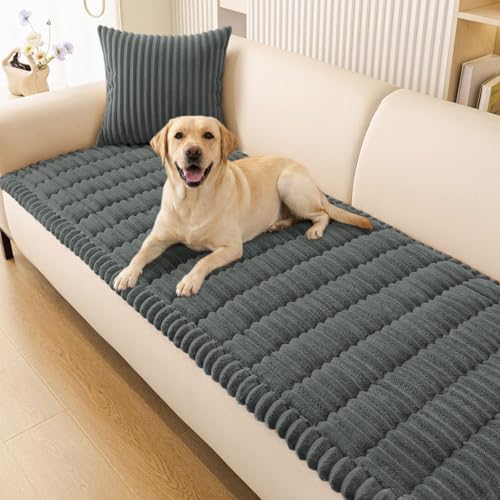
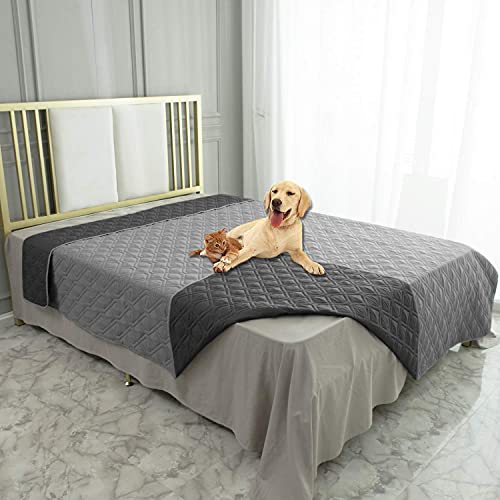
- Pet-proof furniture covers. Waterproof, claw-resistant covers that stay put. Use them on your pet's favorite spot, not the entire sofa. Our pet-proof cover guide compares the best options by material, fit, and durability.
- Waterproof seat liners. Thin waterproof pads placed under cushion covers protect the foam core from accidents and spills. Essential for senior pets or puppies still being house-trained.
- Decorative throws and blankets. Throws and pillows serve double duty: they look great and provide a washable barrier between your pet and the upholstery. Keep 2–3 on rotation.
- Anti-scratch tape or spray. Double-sided furniture tape applied to armrests deters cats from scratching. Bitter-tasting sprays work for some pets. These are temporary training aids, not long-term solutions.
- Lint rollers and rubber brushes. Keep a lint roller in a drawer near the sofa for quick touch-ups. A rubber grooming glove or squeegee removes hair from fabric surfaces faster than vacuuming for daily maintenance.
Frequently Asked Questions
Bottom line: The best sofa for pet owners combines performance fabric (or microfiber), a hardwood frame, removable cushion covers, and a medium-tone color. Slipcovered sofas and modular designs offer the most flexibility. Avoid velvet, chenille, bouclé, and leather (if you have cats). Budget $1,000–$1,500 for a sofa that will last 5–10 years with proper care. The recommendations below meet these criteria and are available through our trusted retail partners.