
Price vs. Quality: Finding the Sweet Spot
Learn how to identify the point where paying more delivers proportionally better quality — and where you're just paying for marketing.
Read more →Every dollar of your sofa price explained — from the hidden frame costs to the retail markup. Know exactly where your money goes before you buy.
SEE THE BREAKDOWNBuying a sofa is one of the most significant furniture investments you'll make for your home. The average American household spends between $500 and $3,000 on a sofa, yet most buyers have no idea how that price is actually calculated. Is a $2,000 sofa really four times better than a $500 one? Where does the money go?
This guide dissects every component that contributes to a sofa's final retail price. We'll examine raw material costs, manufacturing processes, labor differences, shipping logistics, and retail margins. By the end, you'll know exactly how to evaluate whether a sofa is priced fairly — and how to spot a deal that seems too good to be true. For a broader perspective on setting your budget, see our complete sofa budget guide.
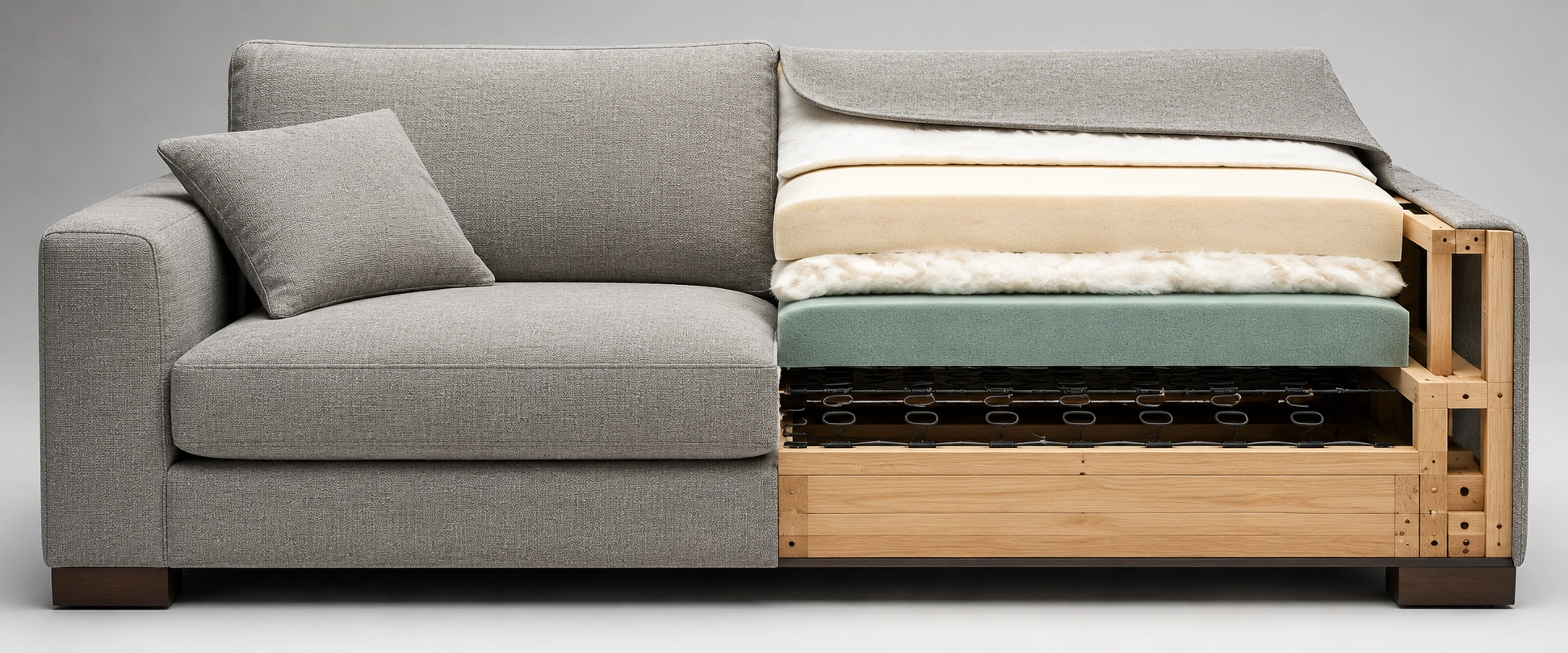
Regardless of whether you're looking at a budget budget-friendly sofa or a premium luxury piece, the same six cost categories apply. The difference lies in the quality tier chosen within each category. Here's an overview of how the average sofa dollar is distributed:
The skeleton — hardwood, plywood, or particle board. The most critical durability factor that many budget sofas compromise on.
The largest variable cost. Can range from $20/meter polyester to $200+/meter top-grain leather. This single choice swings the price the most.
Foam density, down wrapping, spring-filled cushions — the fill determines both initial comfort and how the sofa ages over time.
Springs, webbing, or elastic bands that support the cushions. Eight-way hand-tied springs are the gold standard but add significant labor cost.
Handcrafted vs. machine-assembled, domestic vs. overseas production. This category separates artisan pieces from mass-produced ones.
Showroom rent, sales commissions, marketing, warehousing, and profit margin. Direct-to-consumer brands typically have lower markup.
The table below shows the typical manufacturing cost range for each component across a standard 3-seater sofa (approximately 85 inches wide). These are factory-level costs before retail markup is applied. For more on specific materials, see our complete materials guide.
| Component | Budget Range | Mid-Range | Premium | Luxury | Key Difference |
|---|---|---|---|---|---|
| Frame | $30–$60 | $80–$150 | $180–$300 | $350–$600+ | Particle board → Kiln-dried hardwood |
| Upholstery | $40–$80 | $120–$250 | $300–$600 | $700–$2,000+ | Polyester blend → Top-grain leather |
| Cushion Fill | $20–$40 | $60–$120 | $150–$250 | $280–$500+ | Low-density foam → HR foam + down |
| Springs | $10–$25 | $35–$70 | $80–$150 | $160–$300+ | Drop-in coil → 8-way hand-tied |
| Legs & Hardware | $5–$15 | $20–$40 | $50–$100 | $100–$250+ | Plastic → Solid brass/mahogany |
| Labor (assembly) | $15–$30 | $50–$100 | $120–$250 | $300–$800+ | Machine line → Single artisan |
| TOTAL Factory Cost | $120–$250 | $365–$730 | $880–$1,650 | $1,890–$4,450+ | Before shipping & markup |
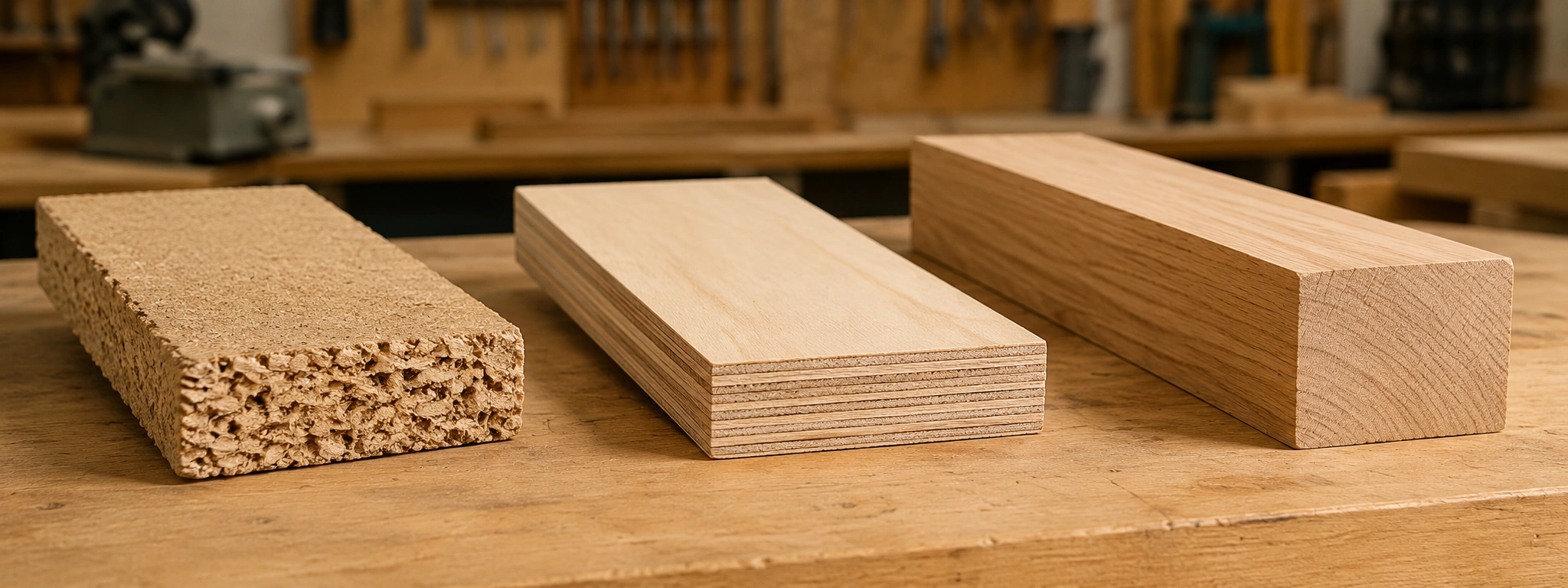
The frame accounts for 15–25% of a sofa's cost, and it's the component that most directly determines longevity. A well-built frame can last 15–25 years, while a cheap frame may start wobbling within 2–3 years. Unfortunately, the frame is completely hidden beneath upholstery, making it the easiest area for manufacturers to cut costs without the buyer noticing. For a deep dive into frame options, read our frame materials guide.
Kiln-dried hardwood (oak, maple, ash, beech) is the gold standard. The kiln-drying process removes moisture to prevent warping, adding $80–$300+ to manufacturing cost but extending frame life dramatically. Plywood with hardwood veneer is a respectable mid-range option at $50–$120. Particle board and MDF are the budget choices at $15–$40, but they're prone to sagging, cracking, and moisture damage — the primary reason cheap sofas don't last. This directly impacts durability, which we explore in our comfort vs. durability comparison.
Joint construction matters equally. Doweled and corner-blocked joints with glue and screws add $10–$30 in material and labor but prevent the frame from loosening over time. Stapled-only joints are the budget shortcut that leads to squeaking and wobbly frames — one of the most common sofa complaints.
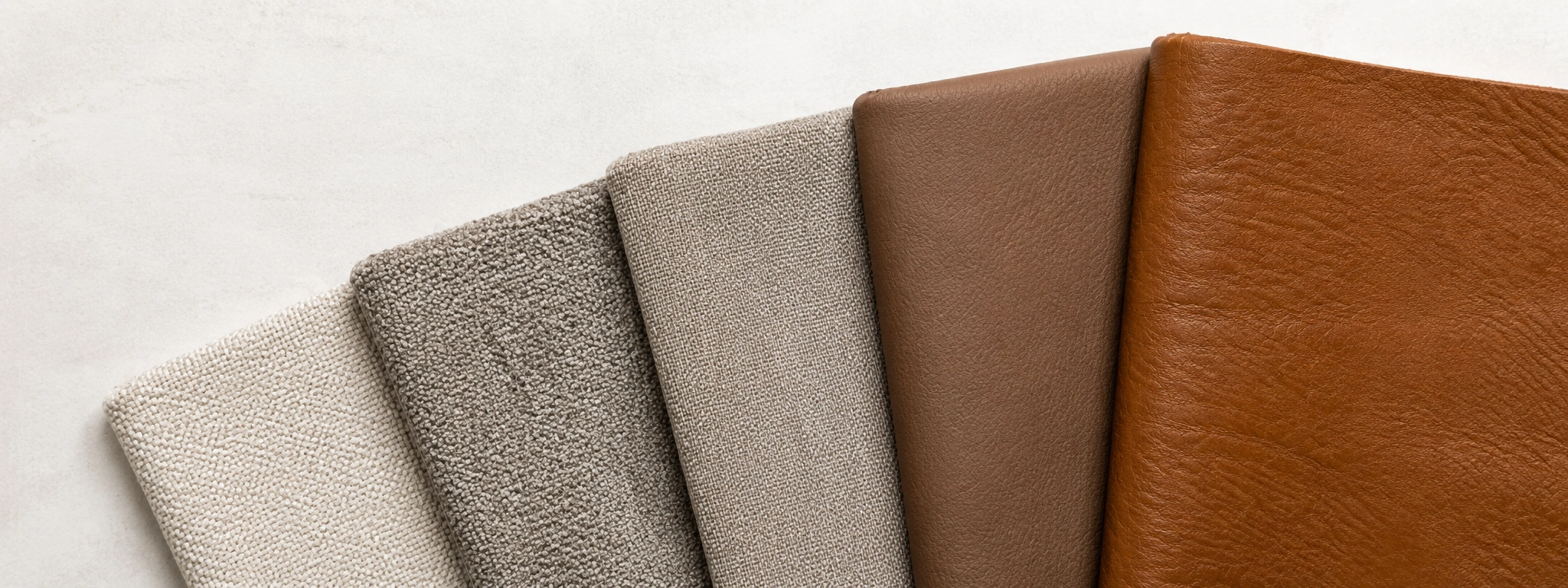
Upholstery is the single largest variable in sofa pricing, typically representing 25–40% of the total cost. The same sofa frame can be covered in fabric that costs $20 per meter or leather that costs $200+ per meter — creating massive price variation for structurally identical pieces. Our leather vs. fabric comparison explores this choice in depth.
Polyester and microfiber fabrics cost $20–$40 per meter and are the standard for budget and lower-mid-range sofas. They're stain-resistant and easy to clean — ideal for families with kids. Performance fabrics (Crypton, Revolution, Sunbrella) cost $50–$100 per meter but offer exceptional durability with 50,000+ on the Martindale abrasion test. Cotton and linen blends range from $30–$80 per meter — beautiful but less durable. Velvet adds $40–$90 per meter for a luxurious look, as seen in popular velvet sofa collections.
On the leather side, bonded leather ($30–$50/meter) is essentially leather scraps pressed together — it peels within 1–3 years. Faux leather ($20–$40/meter) has improved dramatically but still lacks breathability. Genuine leather (split-grain) costs $60–$120 per meter. Top-grain leather, the highest quality, runs $120–$250+ per meter and develops a beautiful patina over time. Our leather grades explainer breaks down the differences in detail.
A typical 3-seater sofa requires 12–18 meters of fabric or 8–12 meters of leather. Do the math, and you'll see how upholstery alone can swing the price by hundreds or even thousands of dollars. This is why the same 3-seater sofa model might be listed at $800 in fabric and $2,200 in leather.
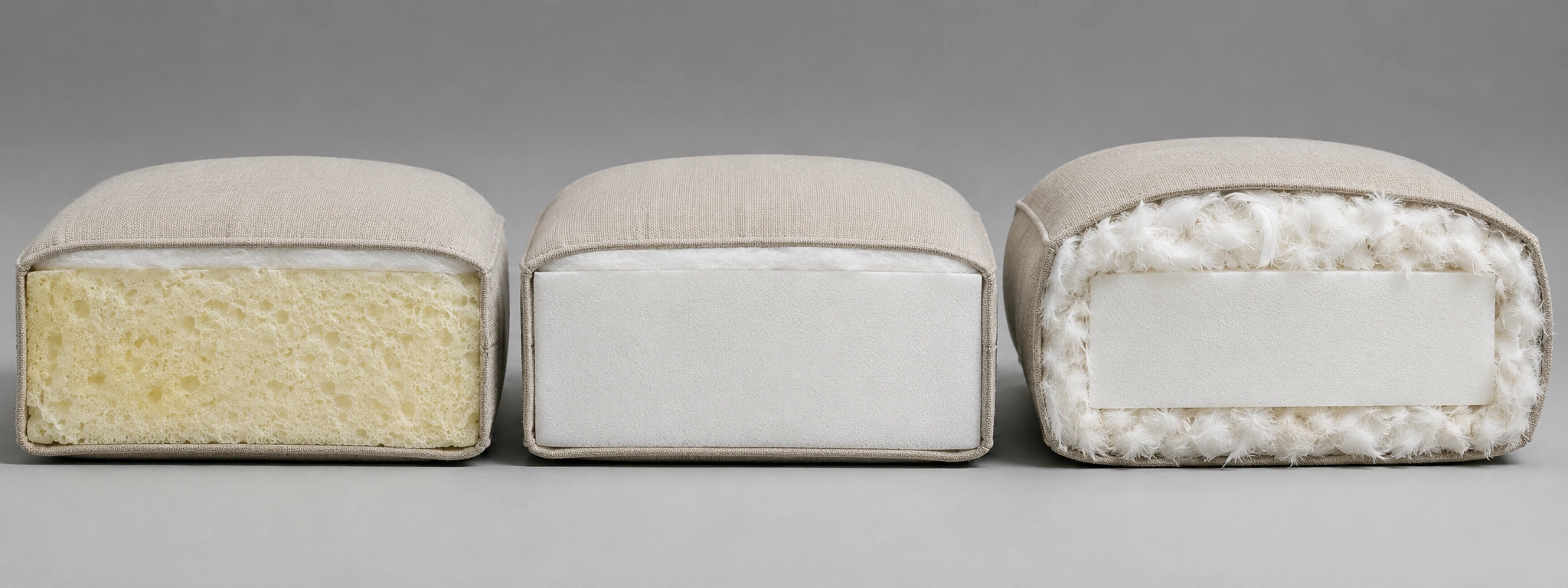
Cushion fill accounts for 10–18% of sofa cost, and it directly affects both comfort and long-term appearance. Cheap foam flattens quickly, leaving your sofa looking saggy and tired. Quality fill maintains its shape and support for years. Understanding foam density ratings is essential here.
Low-density polyurethane foam (1.0–1.5 lb/ft³) costs $5–$15 per cushion but loses 30–50% of its height within 1–2 years — a leading cause of the flattened cushion problem. Medium-density foam (1.8–2.2 lb/ft³) at $15–$30 per cushion offers a reasonable middle ground. High-resilience (HR) foam (2.5–3.0+ lb/ft³) costs $30–$60 per cushion but bounces back beautifully for 7–10+ years.
The premium tier adds down or feather wrapping around the foam core, adding $40–$100+ per cushion for cloud-like softness. Spring-filled cushions (marshal coils wrapped in foam) add another $20–$50 per cushion and are found in high-end sofas. For guidance on choosing the right feel, see our firm vs. plush sofa guide.
The suspension system sits between the frame and cushions, providing the base support that determines seat comfort and longevity. It represents 5–10% of cost but has an outsized impact on satisfaction. Our spring systems guide covers the full range, and the related suspension types article explains how each works.
No-spring / webbing-only construction uses elastic bands or fabric webbing stretched across the frame. It costs just $5–$15 per seat but provides minimal support — common on cheap sofas and some floor sofa designs. Drop-in coil units (prefabricated spring grids attached to the frame) cost $15–$35 per seat and offer decent support for the price. Sinuous wire (S-springs) run front-to-back in continuous S-shapes at $20–$40 per seat — a solid mid-range option used in most quality sofas.
The pinnacle is eight-way hand-tied springs, where individual coil springs are tied to each other and to the frame with twine in eight directions. This costs $50–$120+ per seat due to the skilled labor required but provides the most even, durable, and luxurious support available. It's the hallmark of premium Chesterfield sofas and high-end sofas with chaise lounges.

Labor costs represent 10–20% of a sofa's price and vary dramatically based on manufacturing location and method. A custom sofa built by a single artisan in North America or Europe may carry $300–$800 in labor costs, while a mass-produced sofa assembled on a production line in Southeast Asia may have only $15–$50 in labor.
However, lower labor cost doesn't automatically mean lower quality. Many reputable brands maintain excellent quality control standards at overseas factories. The real difference shows up in details: hand-tied springs, hand-cut fabric patterns, individually positioned nailhead trims on a tufted sofa, and hand-finished leather edges. These details require skilled human hands and add significantly to both cost and character.
Direct-to-consumer brands like those selling cloud couches and modern sofas often eliminate showroom overhead and sell at 30–50% lower markup than traditional retailers, even when using the same quality materials. Understanding this distinction is key to getting the best value. See our guide on where to buy sofas for retailer comparisons.
Rather than thinking about individual components, it helps to understand what a complete sofa looks like at each price tier. Here's a realistic breakdown of what your money buys — from factory cost through typical retail price after markup.
A sofa's sticker price tells you nothing about its real value. The meaningful metric is cost per year of use. A $3,000 sofa that lasts 15 years costs $200/year, while a $600 sofa that sags in 3 years costs $200/year too — but the expensive sofa provides far superior comfort, support, and aesthetics throughout its life. This is a key factor in our how to choose a sofa guide.
Let's trace where every dollar goes when you buy a typical mid-range 3-seater 3-seater sofa at a $1,500 retail price from a traditional furniture store:
Notice that only about $660 (44%) goes toward actual sofa materials and manufacturing. The remaining $840 (56%) covers the entire supply chain, logistics, and retail overhead. This is why direct-to-consumer brands can often offer similar quality for 30–40% less — they eliminate the wholesaler margin, showroom costs, and sales commission. This is especially relevant when shopping for modern sofas and modular sofas, where DTC brands dominate.
The same sofa from a DTC brand might cost $950–$1,100 while containing identical or better materials — because you're paying for the product, not the showroom experience. For tips on navigating these options, check our guide on the hidden costs of buying a sofa.
The sticker price is never the full story. These often-overlooked costs can add $100–$800+ to your total sofa investment:
Free delivery often means the cost is baked into the price. If not, expect $50–$300+ depending on distance and whether it requires a freight carrier for large items like a sectional sofa.
Premium delivery with in-home placement, unpacking, and debris removal costs $100–$500. Essential for heavy recliner sofas and multi-piece sectionals.
Scotchgard, Crypton, or similar treatments cost $50–$200. Some premium fabrics come pre-treated, but many require application. See our protection guide.
Retailers push 3–5 year warranties for $50–$300. Read the fine print — many exclude the most common issues. Check if the manufacturer warranty is sufficient first.
Online purchases: if you need to return, shipping costs $100–$400+ for large furniture. Always check the return policy> before ordering.
Leather conditioner, fabric cleaner, sofa covers, and periodic professional cleaning add $30–$150/year to ownership costs.
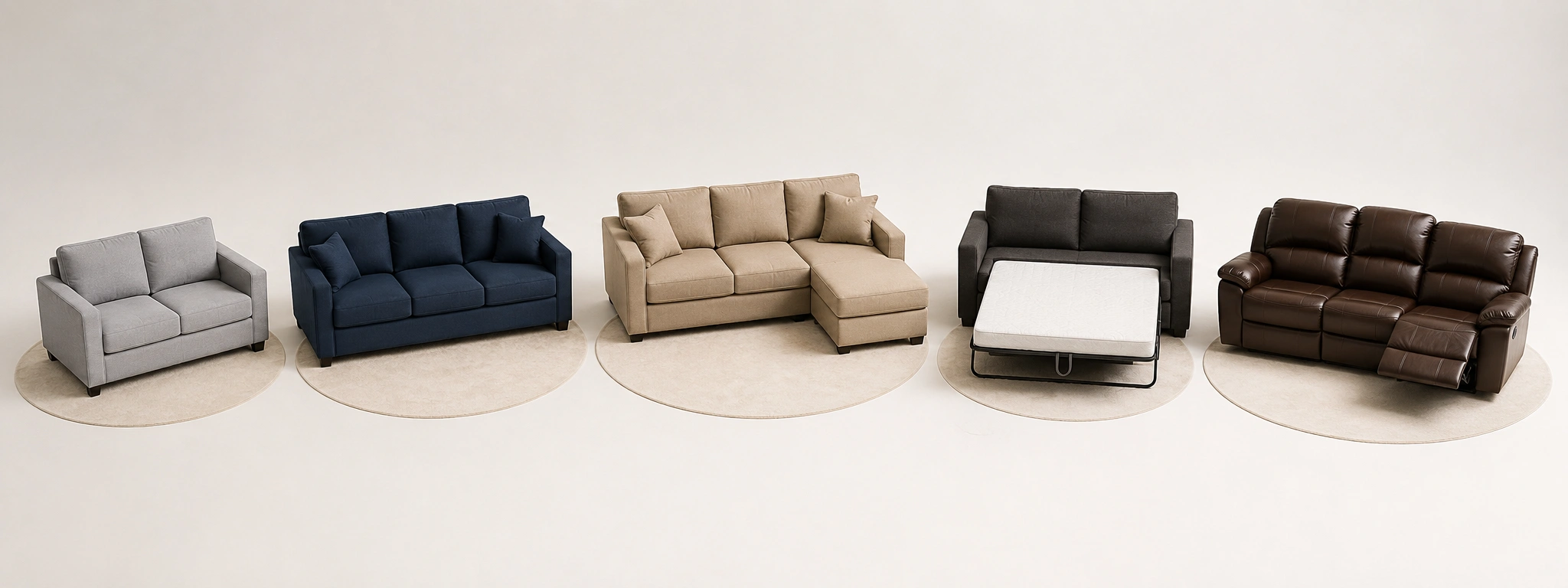
Beyond material quality, the type of sofa significantly affects price due to mechanical complexity, size, and engineering requirements. Here's how different styles impact the cost equation:
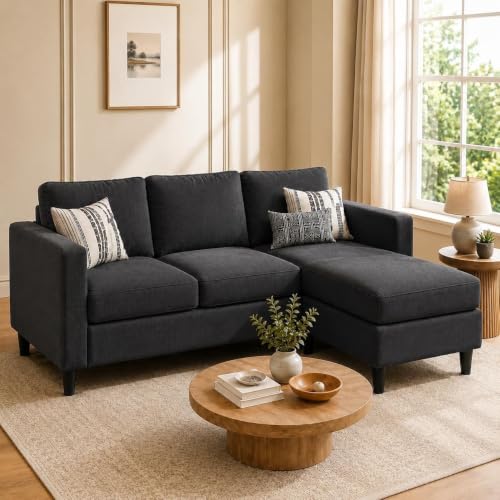
Sectional sofas carry a 40–80% premium over standard sofas of the same quality, simply due to more frame material, more upholstery yardage, and additional cushion and spring units. A 5-seater sectional can easily cost 2–3x more than a 2-seater from the same product line.
Sleeper sofas add $200–$600 for the mattress mechanism alone, plus additional frame reinforcement. Recliner sofas add $150–$500 per reclining seat for the mechanism and motor (if power). Modular sofas carry a 20–40% premium for the precision engineering required to make pieces connect securely and seamlessly.
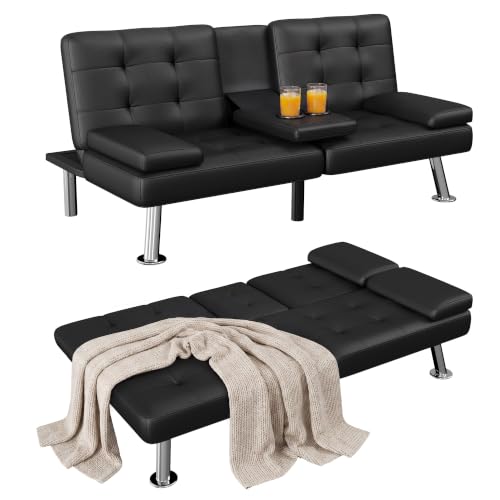
At the other end, loveseats and 1-seater sofas cost 30–50% less than a standard 3-seater because they use fewer materials. Futon sofas and inflatable couches represent the budget extreme, often under $300, but with significant durability trade-offs. Our sectional vs. traditional comparison explores the value proposition in detail.

Quality sofas depreciate 40–60% within the first 3 years of ownership, making the secondhand market an excellent value play. A premium sofa that originally cost $3,000 can often be found for $800–$1,200 in gently used condition — giving you premium construction at mid-range prices. Our secondhand vs. new comparison explores this in depth.
The key is knowing what to look for. Check the frame for solidity (sit on it — no creaking or wobbling), inspect cushions for even support and no permanent indentations, and examine upholstery for stains, tears, or pet damage. A professional fabric cleaning ($80–$150) can refresh many secondhand sofas to near-new condition. For leather, conditioning treatment ($30–$80) can restore suppleness and color.
The risk with secondhand is that you can't verify the frame material or cushion density without disassembling the sofa. Stick to recognizable brands and reputable sellers. A used sofa from a known quality brand is generally a safer bet than a new sofa from an unknown manufacturer at the same price.
Now that you understand where your money goes, explore these related guides to make a fully informed purchase decision:
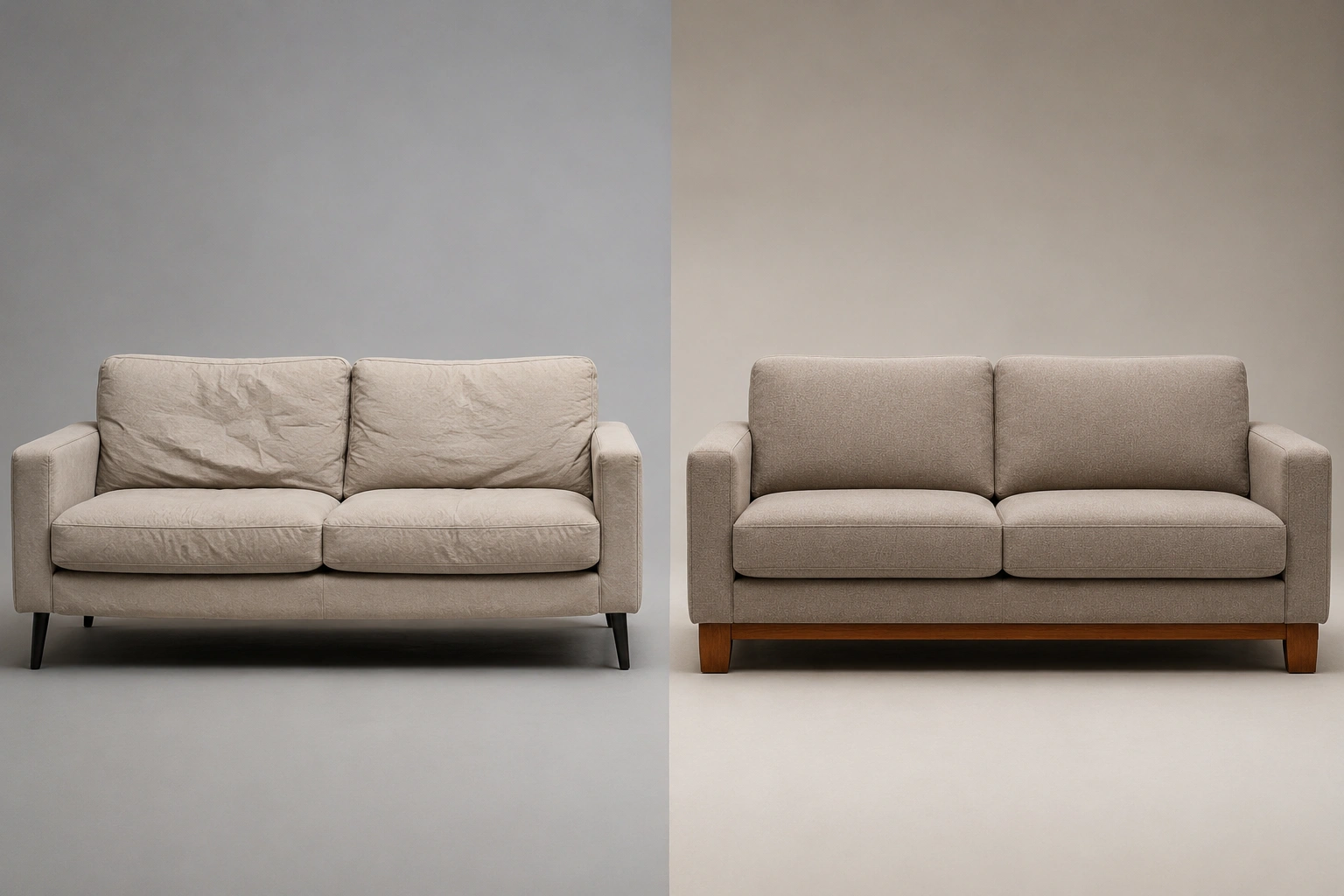
Learn how to identify the point where paying more delivers proportionally better quality — and where you're just paying for marketing.
Read more →
How to set a realistic sofa budget based on your household size, usage patterns, and how long you plan to keep it.
Read more →
Delivery fees, return policies, protection plans, and maintenance — the expenses that catch buyers off guard.
Read more →⚠️ AFFILIATE DISCLOSURE: This website contains affiliate links. As an Amazon Associate, we earn from qualifying purchases. If you make a purchase through these links, we may receive a small commission at no additional cost to you. Read our full affiliate policy.




Information on this site is generated by AI and is intended for general informational purposes only. We do not guarantee its accuracy and disclaim any responsibility for losses resulting from its use. Please consult a professional before making decisions. By using this website, you agree to this disclaimer and release us from any claims. If you do not agree, please do not use the information on this website. Read the full disclaimer.